Applied Case: Last Look
An open webpage has not finished loading.
There is an empty rectangle where an advertisement might go.
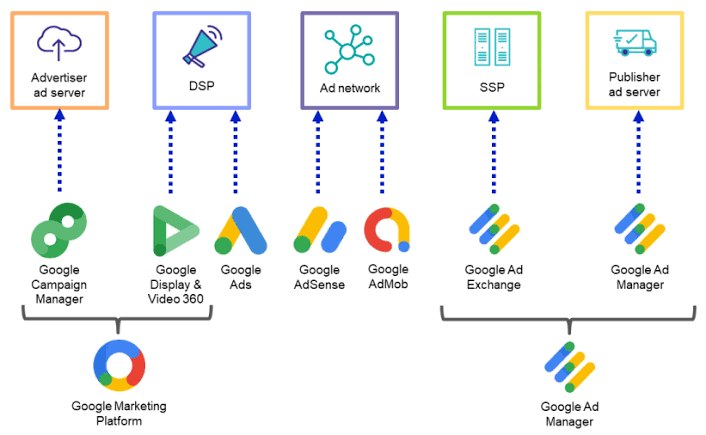
The publisher’s ad server sends the opportunity toward several exchanges. Advertisers decide what the impression may be worth. The publisher has a floor. Bids arrive. Bids below the floor disappear. The highest eligible offer wins.
The rectangle fills.
 Aidan Edward Lawson (Author) Format: Paperback
All of this can happen before the reader has finished noticing the page exists. One witness in the federal antitrust trial against Google described an exchange completing an auction within about 250 milliseconds, billions of times an hour.
Publishers, advertisers, exchanges, servers, networks, data, contracts, and money have found one another in less than half a second.
Nobody stationed guards outside the auction.
 Aidan Lawson
Nobody needed to.
The Market’s Strongest Case.
This is an extraordinary coordination machine.
A publisher has an advertisement slot whose value changes with the page, the reader, the hour, and the available buyers. Advertisers have different products, budgets, audiences, and judgments about what one impression is worth.
No ministry could intelligently assign each of these encounters in advance.
The market does not have to.
Publishers can set prices and refuse weak offers. Advertisers can compare opportunities. Exchanges can put rival bids into competition. Participants experiment. They substitute. They discover that an audience is worth more or less than expected. A small advertiser can reach a publication no national planner would have known to pair with it.
Scale can improve the process. More transactions produce more evidence about prices, fraud, targeting, and matching. Better systems can learn from those encounters and make future ones more useful.
The open web grew alongside this arrangement. Advertising has paid for reporting, reference works, entertainment, communities, specialist publications, and an insane quantity of strange human enthusiasm without charging every visitor at the door.
- The bargain has injuries.
- The coordinating achievement is real.
Markets earn their place through distributed search. Many people can attempt different plans without first convincing one office that their plan deserves to exist.
After a week spent watching command accumulate in emergency offices, warning systems, and revolutionary governments, the appeal should be obvious.
 Aidan Lawson
Perhaps nobody needs to inherit the throne.
Let the plans meet. Let the bids decide.
Before the First Bid
The auction still starts surprisingly late.
Before the advertiser can bid,
- a payment system has to recognize the money.
- Law has to make some agreements enforceable.
- Technical standards decide which messages can reach the auction before its deadline.
- Contracts identify the publisher, exchange, advertiser, and intermediary.
- Software determines the sequence.
- Infrastructure carries the message.
- Data determines what the bidder can know.
- Permission determines who is allowed into the room.
The visible exchange comes after all of that.
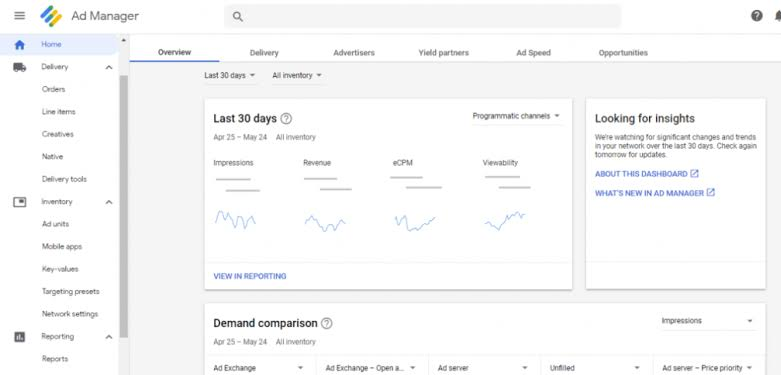
Call this arrangement the market gate: the institutions that determine which people, needs, offers, harms, and futures can reach market selection in a form the market knows how to recognize.
- The advertiser arrives carrying a funded bid.
- The publisher arrives carrying recognized inventory and a floor price.
- The exchange arrives carrying contractual and technical authority to rank the bids.
- The reader creates the valuable event and contributes the attributes that make this impression different from another.
- The reader places no bid.
- The reader creates the valuable event and contributes the attributes that make this impression different from another.
That does not make the auction fake. That tells us what the auction can hear.
Demand is a real signal. It can show scarcity, enthusiasm, substitution, and willingness to pay under present conditions.
It cannot tell us that everything outside the signal is unimportant.
The market only hears what can reach its gate.
Writing Code Around the Gate.
One of the market’s great defenses is exit.
- Bad intermediary?
- Find another.
- Bad price?
- Refuse it.
- Bad platform?
- Build around it.
Publishers tried.
They set floors. They used competing exchanges. They developed a practice called header bidding, which let them solicit bids outside Google’s advertising architecture before sending the best rival offer into Google’s publisher ad server.
They did not wait for the dominant intermediary to become kinder.
They wrote code around it.

This is exactly the corrective mechanism the market promises.
Then the correction met the infrastructure.
The federal court found that publishers faced substantial switching costs, few competitive alternatives for publisher ad servers, and dependence on advertiser demand uniquely available through Google’s AdX exchange. Google argued that publishers using header bidding could choose not to request an AdX bid.
Technically, they could.
For large publishers, the court found that choice financially nonviable.
- The door existed.
- Walking through it threatened the revenue keeping the publication alive.
Exit is a material transition, not a menu option.
Last Look.
Then there was the auction itself.
Header bidding let a publisher collect offers from rival exchanges and send the leading bid into Google’s publisher ad server.
Google’s AdX could see that rival result before submitting its own final offer.
Picture a sealed auction where one bidder is allowed to open the envelope containing the best competing bid before writing its number.
The court illustrated the advantage with a simple example.
- Suppose an advertiser using AdX is willing to pay $1.50 per thousand impressions.
- The best rival exchange offers $1.00.
- In an ordinary simultaneous contest, the $1.50 willingness to pay would enter the auction.
- Under Last Look, AdX could see the $1.00 rival offer and bid $1.01.
- AdX wins.
- The publisher receives $1.01 from an advertiser willing to pay $1.50.
Nothing malfunctioned.
The bid won according to the operating rule.
The operating rule had stopped the auction from discovering the available price.
That is the constitutional hinge. A market can produce an exact winner while the rule producing the winner deserves rejection.
The Winner and the Arena
Google deserves a stronger defense.
Integration can improve a market.
One technical stack can reduce latency, control fraud, protect privacy and security, finance infrastructure, improve matching, and lower transaction costs. Scale can make experimentation better. Acquisition can produce useful products. Technical excellence is not an antitrust violation.
The court itself drew those distinctions. It rejected part of the government’s case, including its proposed advertiser-ad-network market, and did not treat the DoubleClick and Admeld acquisitions as independently anticompetitive.
The problem arrived elsewhere.
The court found monopoly power in the defined open-web publisher-ad-server and ad-exchange markets and found unlawful tying between Google’s publisher ad server and exchange. It found that practices including Last Look reduced publisher revenue, weakened rival exchanges, reduced price competition, and helped entrench Google’s position.
The important distinction is larger than Google.
- Success inside a market can be deserved.
- Success can finance better infrastructure.
- Better infrastructure can attract more users.
- More users can make the service even better.
- Better infrastructure can attract more users.
- Success can finance better infrastructure.
The promotion occurs when that success becomes control over the conditions through which the next competitor must succeed.
- The bidder is playing the game.
- The infrastructure operator is helping write the game.
 Aidan Lawson
When those positions converge, winning can begin reproducing the conditions of winning.
A monopoly is not automatically a sovereign.
Market power is not automatically sovereignty.
A private platform does not become a state because it is very large.
The narrower constitutional warning is enough:
A participant has begun governing the field when it can alter the terms by which later participants become competitive.
Control over the rules can matter more than the bid.
Artificial Intelligence Tightens the Loop.
Artificial intelligence strengthens both sides of this market.
More auction data can improve matching, detect fraud, forecast value, and help buyers and publishers find agreements no person could search manually.
The same learning advantage compounds around the gate.
- An intermediary that sees more transactions gets more evidence from which to train.
- If rivals receive fewer transactions, they receive less evidence.
- Less evidence can produce weaker models.
- Weaker models make the incumbent perform better.
- Less evidence can produce weaker models.
- If rivals receive fewer transactions, they receive less evidence.
The market then appears to confirm that users prefer the superior system.
Perhaps they do.
The question is whether superiority emerged through open competition or through an arrangement that also determined what rivals were allowed to learn from.
- Artificial intelligence can lower the price of search.
- It can also lower the price of governing access to search.
The constitutional question is not whether the model picked the winner. It is who controls the field from which the model learns what winning looks like.
The Ruling.
Last Look does not prove that markets are fraudulent, prices are meaningless, integration is domination, or successful firms should be punished for succeeding.
The market was doing real work.
So was the price. So was competition.
The failure came when one participant could use infrastructure control to alter how later competition occurred.
A market is a search instrument inside the field. It is never the field’s moral verdict.
Last Look produced an exact winner under Last Look.
Exactness inside a rule cannot legitimate the rule.
The answer is not to destroy distributed search and ask an office to choose every advertisement.
- Keep the search.
- Keep prices where prices carry useful information.
- Keep refusal, substitution, experimentation, entry, and competition.
- Then refuse the promotion.
A winner inside the market does not acquire title to the admission, information, ranking, or infrastructure through which future challengers must pass simply because it won.
The winner does not get to own the rules of winning.
And the gate begins before Google.
An advertiser reaches the auction carrying money.
A publisher reaches it carrying inventory.
Another person may reach an equally consequential allocation carrying a need the system has no transactional form in which to hear.
Before a market can compare two claims, both claims have to arrive in a language the market recognizes.
Some arrive already carrying force.
Others wait outside for law, a budget, or another institution to translate them.
The auction starts when the bid arrives.
The constitution has already decided who can carry one.