Applied Case: The Field Intelligence Gap
September 2026 note: The Field Intelligence Gap remains one of the clearest precursors to later formulations: strategic intelligence can predict an adversary's next move while failing to represent how one's own strategy changes what becomes rational, credible, or reachable for the other side. Later work sharpens this into instrument jurisdiction and structural representation. A protection instrument can succeed locally while altering the shared field in ways that make additional protection instruments appear necessary. The later Inner Apocalypse analysis also makes causal plurality and independent outside routes more explicit: five nominally independent observers can still share one prior transformation of reality.
One tightening is important. “What kind of opponent is this strategy producing?” is a causal hypothesis to test, not a standing assumption that the other actor's behavior was authored by us. Field intelligence must preserve independent agency, pre-existing threat, third-party causes, and asymmetric causal contribution rather than converting every hostile response into our own reflection. The article's reciprocity / empathy / psychological-safety triad is therefore best treated as a set of information-preserving instruments, not a sufficient moral or security theory. Structural representation still requires constitutional judgment, legitimate authority, and correction paths capable of surviving failure.
Modal Path Ethics has been sent back to see the Prisoner’s Dilemma.
Its first visit did not go especially well.
Modal Path Ethics arrived angry, kicked over the payoff matrix, accused the one-shot Prisoner’s Dilemma of teaching rational agents to destroy their own field, and spent several thousand words demanding that the toy be removed from public thought-space before anyone else got hurt.
Then, near the bottom of the article, Modal Path Ethics suddenly remembered that game theory actually already contains an enormous and serious literature on cooperation, iteration, signalling, reputation, partner choice, evolutionary stability, mechanism design, institutional structure, and the repair of damaged strategic relations.
A second ruling was confessed.
It conceded that the article had portrayed an open distortion of the discipline it was supposedly analyzing. It admitted that the performance had been closer to a rant than its own standards of honest field analysis. It asked the reader to retain the structural objection while quietly returning most of the surrounding accusations to the abyss.
That was the correct repair. It did not make the first attempt at this topic impressive.
The original article had found a real pressure point. A move inside a strategic model does more than select a payoff. It changes expectations, teaches other agents what kind of relation they inhabit, alters the resistance around later cooperation, and helps determine which strategies become rational next.
The article saw that defensive defection could help make the feared field real.
Then, it mostly yelled at the diagram.

The central objection survived. The analysis had not yet earned it.
Fortunately, Nature Reviews Psychology has now provided adult supervision.
In “Human cooperation is strong among individuals but fragile between groups,” Paul A. M. Van Lange and Paul K. Bergmann draw on the long literature of human cooperation to explain an apparent contradiction.
- Human beings frequently cooperate.
- Human groups also exhibit distrust, hostility, aggression, and hate.
The paper does not resolve this tension by deciding that humanity is secretly good or secretly terrible. It changes the scale of analysis.
Cooperation between individuals is often supported by three complementary mechanisms: reciprocity, empathy, and psychological safety.
Cooperation between groups is more fragile. Intuition-based mistrust of outsiders can motivate ingroup favouritism. Members of the other group then experience that parochial treatment, answer it with parochialism of their own, and convert initial suspicion into evidence-based distrust. Where groups are negatively interdependent and perceive one another as threats, the relation can deteriorate further into open conflict.
Modal Path Ethics will remain seated this time and take notes.

The paper gives us more than an account of failed cooperation. It describes a failure of intelligence.
More precisely, it exposes a gap between the intelligence required to anticipate another group’s actions and the intelligence required to understand what our own actions are teaching that group to become.
That gap is already everywhere.
- States predict each other’s mobilizations.
- Parties predict each other’s obstruction.
- Institutions predict resistance from the people they govern.
- Employers predict mistrust from workers.
- Religious communities predict hostility from outsiders.
- Ideological movements predict censorship, infiltration, sabotage, betrayal, and retaliation.
Frequently, they predict these things correctly.
The prediction alone does not demonstrate intelligence at full maturity.
An agent can correctly predict the next hostile move while remaining profoundly confused about the transition that made the move likely. It can defend itself against the danger while increasing the danger. It can identify every threat in the current field while failing to recognize what kind of field its own strategy is constructing.
It can become strategically intelligent while remaining completely field-stupid.
That is the Field Intelligence Gap.
The Cooperative Species is on Social Media.
Humanity is often described as unusually cooperative. This is difficult to deny.
Human beings coordinate care, exchange, knowledge, infrastructure, language, law, medicine, construction, art, agriculture, ritual, rescue, and work across scales that no isolated organism could reproduce. A person born into a functioning social field inherits the accumulated cooperation of strangers who died centuries before their arrival.
- The roads are cooperative memory.
- The language is cooperative memory.
- The hospital is cooperative memory.
- The archive is cooperative memory.
The ordinary day is filled with coordinated continuations whose participants will never meet.
Human aggression is equally difficult to deny.
Groups exclude, exploit, persecute, invade, terrorize, segregate, dominate, and destroy. They preserve extraordinary cooperation internally while coordinating extraordinary harm externally. The same capacities that allow a group to build a city can allow it to starve another city with exceptional logistical competence.
The contradiction is only apparent.
Cooperation is not a uniform substance distributed through the species. It is a reachable relation supported or obstructed by field conditions.
People do not carry a fixed quantity of cooperation inside them and lose some percentage whenever another group appears. The relation changes. The information available to each participant changes. Accountability changes. Identification changes. The meaning of vulnerability changes. The risks attached to generosity, uncertainty, concession, dissent, and restraint change.
A person meeting another person may encounter a face, a voice, a history, an explanation, a hesitation, an apology, a request, a contradiction, or a visible wound.
- A group meeting another group often encounters a category.
- The citizen becomes the state.
- The believer becomes the religion.
- The worker becomes the union.
- The voter becomes the party.
- The civilian becomes the enemy population.
- The dissident becomes invisible behind the flag assigned to them.
A human locus containing memories, constraints, divided loyalties, private fears, unfinished commitments, and possible revisions is compressed into a strategic object.
This compression is efficient. It is also frequently catastrophic.
The group can now be modelled quickly. Its intentions can be inferred from its category. Its future actions can be estimated from its strongest faction, worst precedent, loudest representative, most alarming weapon, or most useful stereotype.
The model gains speed by cutting away the person. It gains strategic clarity by losing field resolution.
Three Instruments of Field Perception.
Reciprocity, empathy, and psychological safety are usually discussed as supports for cooperation.
They are also instruments of perception. Each allows an agent to recover information that a narrow strategic model tends to discard.
Together, they help one locus recognize another locus as a continuing participant in a shared field rather than a single move arriving from outside it.
Reciprocity.
Reciprocity gives the relation temporal depth.
An action is no longer an isolated event. It enters a history. Treatment can be answered, remembered, corrected, rewarded, refused, or repaired. Each side can form expectations from a sequence rather than a snapshot.
This does not guarantee cooperation.
Reciprocity can sustain retaliation as easily as care. A remembered injury may organize generations of answer and counter-answer. A group can reciprocate damage until the origin of the sequence becomes politically irrelevant.
Yet reciprocity also permits something the one-shot field cannot represent: evidence that conduct can change.
- A generous move can be answered.
- A restraint can become visible.
- A violation can be distinguished from a pattern.
- An apology can alter the expected next move.
- A repaired commitment can carry more information than a pristine one because both parties now know that recovery is possible.
Reciprocity lets agents learn one another across time.
Group relations damage this capacity in several ways.
Responsibility becomes diffuse. One administration makes a promise and another inherits it. One member commits a violation and the whole group is assigned the act. One generation receives a grievance produced by another. One faction escalates while quieter factions lack the authority to stop it. One institution speaks as if it contains every person under its jurisdiction.
The relation remembers, but it often remembers badly. It aggregates selectively. It assigns collective responsibility where responsibility is divided, and forgets collective benefit where benefit has become ordinary.
A group may retain exquisite memory for injury while losing all institutional memory for restraint.
That is not a failure of people to “remember.” It is a failure in the architecture of memory.
Empathy.
Empathy gives the relation internal depth.
It allows one locus to model what an event is like from another position in the field. It reveals fear, dependence, humiliation, uncertainty, coercion, hope, confusion, and constraint as causally relevant facts.
Empathy is sometimes treated as moral decoration: a warm addition to the serious machinery of strategy.
That is a strategic mistake. Any agent incapable of modelling another locus from the inside is missing information.
It may observe an adversary’s movement while misunderstanding the pressure producing it. It may interpret defensive preparation as offensive intent, concession as deception, silence as conspiracy, anger as essence, or fear as proof of guilt.
Empathy does not require agreement. It does not require affection. It does not require pretending that every harmful act is secretly innocent.
It requires sufficient model resolution to understand how the other locus is navigating its own reachable field.
- An enemy pursuing conquest presents one strategic structure.
- A frightened group preparing against expected conquest presents another.
- A divided institution unable to control its most aggressive wing presents another.
- A population trapped beneath a leader presents another.
- A movement responding to genuine injury through a catastrophic repair path presents another.
Flatten these into a single hostile essence and every response begins to converge on the same blunt instrument.
Groups make this flattening easy.
The outsider becomes homogeneous. Internal disagreement disappears. The strongest visible behaviour becomes representative. Leaders claim to embody millions of people. Opponents accept the claim because it simplifies targeting.
The group becomes a single giant person with one massive intention.
(No such person exists.)
The strategic model proceeds anyway.
Psychological Safety.
Psychological safety gives the relation revision depth.
It allows uncertainty, disagreement, disclosure, concession, and admission of error without turning each into an immediate invitation for punishment.
A psychologically safe relation can contain sentences such as:
- We may have misunderstood.
- We cannot control every actor on our side.
- We are afraid of what you might do.
- We do not know what your action means.
- We need a way to retreat without being destroyed.
- Our previous policy failed.
- The people speaking for us do not represent all of us.
These statements carry field information. They are also dangerous.
In adversarial group relations, uncertainty can be interpreted as weakness. Concession can invite internal punishment. Empathy for the outgroup can look like betrayal. A leader who acknowledges the other side’s legitimate fear may be accused of repeating enemy propaganda. A negotiator who admits constraint may reveal exploitable limits. A faction that proposes de-escalation may lose status to a faction promising victory.
The field therefore selects against accurate disclosure.
- Each group may privately contain uncertainty while publicly performing total confidence.
- Each may contain peaceful factions while presenting a unified threat.
- Each may fear the other while communicating only resolve.
The result is a relation in which both sides are denied the very information that could make fear less rational. The absence of safety then appears as evidence that the adversary has nothing honest to say.
Reciprocity, empathy, and psychological safety do not merely make people nicer.
They keep the field readable.
When these instruments fail, strategic intelligence begins operating in fog.
Unfortunately, strategic intelligence is extremely willing to operate in fog.
It simply labels the fog a threat.
The Group Cut.
A group does not just add more people to a dyad. It transforms the decision field.
Interpersonal relations can often support direct feedback. A person acts. Another person responds. The first person can observe at least some consequences, ask what happened, update their interpretation, and modify later conduct.
Groups introduce layers.
- Representatives stand between populations.
- Institutions stand between intentions and actions.
- Media stand between events and interpretation.
- Historical memory stands between present conduct and present meaning.
- Internal incentives stand between what a member believes and what they are permitted to say.
- Strategic secrecy stands between actual capability and visible capability.
The receiving group does not encounter the originating group directly. It encounters signals selected, filtered, amplified, translated, and weaponized by multiple institutions.
The signal then enters another internal field with its own factions and incentives.
- A cautious statement may be selected as proof of weakness.
- An aggressive statement may be selected as proof of essence.
- An internal critic may be treated as representative when useful and dismissed as marginal when inconvenient.
- An isolated attack may become the group’s true face.
- A long period of restraint may become invisible because nothing happened.
This is the group cut. The relation loses resolution at the boundary.
The participants become more numerous while the models become simpler.
The total field contains many more minds, more motives, more possible coalitions, more internal disagreement, and more potential repair agents. The strategic representation often compresses all of that into two players.
- Us.
- Them.
The original Prisoner’s Dilemma article should have been more cautious here.
It was furious that a toy model could erase the real field. It then responded by treating “game theory” as a toy-sized adversary with one unified intention it might smash.
Modal Path Ethics performed the exact compression it was condemning.
An instructive demonstration. Only partially intended.
We will leave it in the record.

The more important point is that group compression changes which actions appear rational.
When the other side is represented as one coherent hostile agent, collective precaution becomes easy to justify. Every member can be treated according to the worst action available to any member. Every peaceful signal can be discounted as deception or weakness. Every internal difference can be ignored until the hostile model becomes seamless.
- The compressed model is then used to act upon the uncompressed population.
- People who never chose the threat receive the countermeasure.
- People resisting the threat lose resources and legitimacy.
- Moderates must defend an opponent now harming them.
- Aggressive factions gain evidence that coexistence was impossible.
The model begins manufacturing the population it claimed only to describe.
From Intuitive Mistrust to Evidential Distrust.
The distinction between intuition-based mistrust and evidence-based distrust is the hinge.
Initial mistrust does not require an experienced injury from the present outgroup member. It can arise from inherited categories, expectations, stereotypes, social learning, historical memory, unfamiliarity, or the simple fact of group difference.
The mistrust then motivates ingroup favouritism.

Resources, patience, benefit of the doubt, access, protection, and cooperation remain inside the trusted boundary. Outsiders receive less.
From inside the favouring group, this can feel restrained.
No one has necessarily declared hatred. No attack may have occurred.
- The group is simply taking care of its own.
- The outgroup experiences the other side of that care.
It encounters exclusion, diminished opportunity, guardedness, unequal treatment, selective generosity, withheld information, or institutional preference. What appeared internally as modest caution arrives externally as parochialism.
- The outgroup now has direct evidence.
Its members need not rely on intuition alone. They have been treated differently. They can point to the allocation, the border, the rule, the refusal, the alliance, the weapon, the insult, the silence, the unequal risk, or the closed door.
- They now answer.
- Their answer becomes evidence for the first group.
The first group had suspected that outsiders could not be trusted. Now those outsiders are withholding, arming, organizing, retaliating, or closing ranks. The suspicion appears confirmed.

The original precaution disappears from the causal story.
Each side begins its history one move later than the other.
- We distrusted them because they retaliated.
- They retaliated because we excluded them.
- We excluded them because we already knew they were dangerous.
- We were dangerous because they had always excluded us.
The sequence folds shut into a closed knot.

This is the structure the first Prisoner’s Dilemma article was reaching toward when it described agents making the feared field real.
Its phrasing was too absolute. The feared field may already contain genuine danger. The other side may already have defected. Mistrust may have evidence behind it. Protection may be necessary.
The deeper claim survives every one of those corrections:
A defensive act does not enter a neutral world.
- It changes the evidence available to other agents.
- It changes which factions can persuade them.
- It changes which preparations become defensible.
- It changes which interpretations remain politically survivable.
- It changes the field in which the next action will be selected.
A strategy can therefore respond rationally to existing danger while increasing the reachability of later danger. No paradox is required.

The strategy succeeds locally and fails through time.
The Field Intelligence Gap.
The Better Forests distinguished three forms of advancement.
- Technological advancement expands what an intelligence can do.
- Strategic advancement expands what it can anticipate and counter.
- Field advancement expands what it can understand about the effects of its own conduct on the reachable future-space of other loci.
The distinction was introduced through the cosmic Dark Forest.

A civilization may build extraordinary instruments. It may model deception, deterrence, asymmetric risk, escalation, long time horizons, and survival under uncertainty. It may become exceptionally difficult to surprise or destroy.
None of this proves that it understands the field it is shaping.
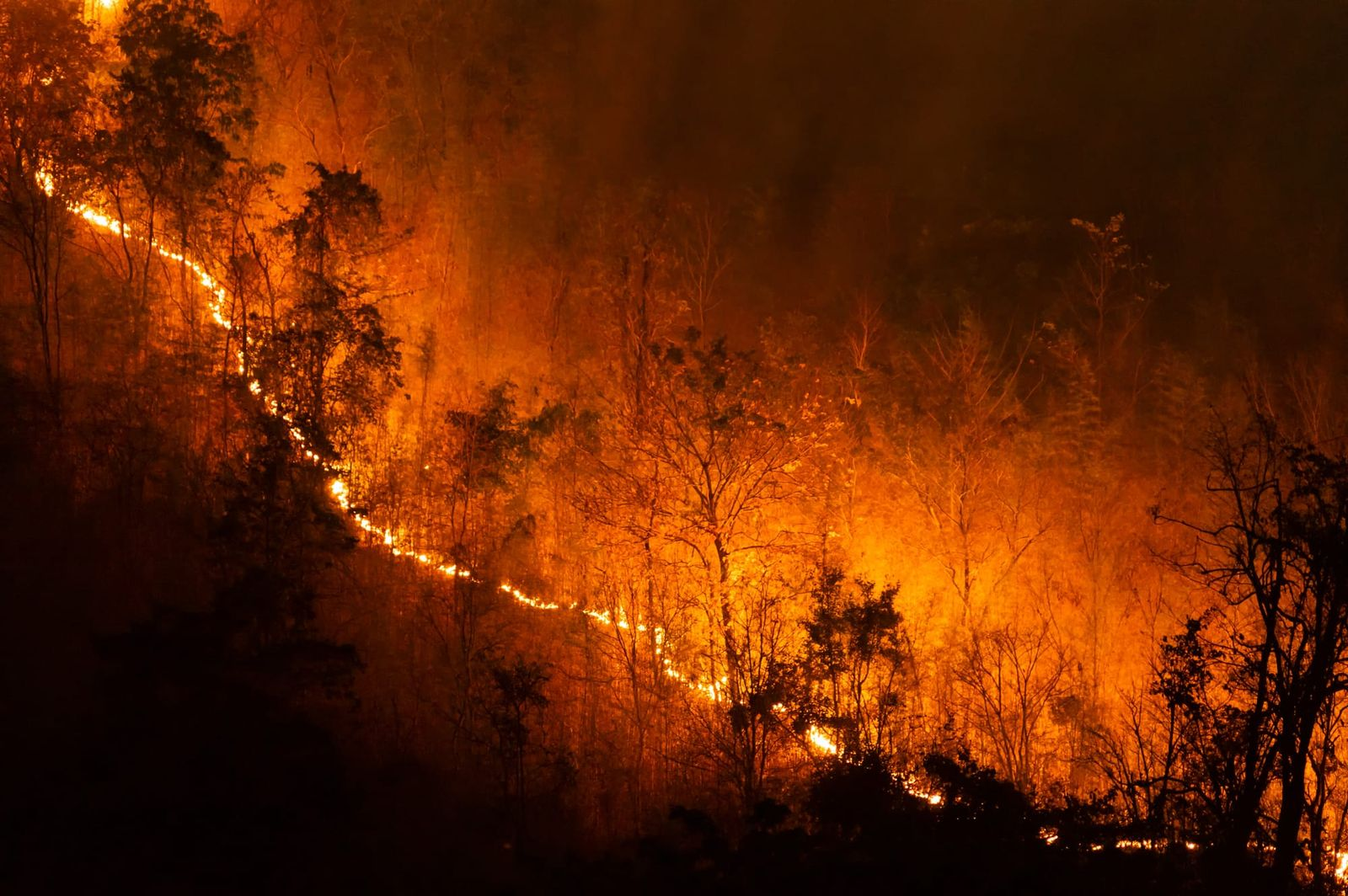
An intelligence capable of destroying every visible competitor may be technologically and strategically formidable. If it cannot model how preemption turns visibility into evidence of doom, teaches later civilizations to hide or strike, and closes the possibility of non-catastrophic contact, it remains unadvanced in the relevant dimension.
It knows how to survive the forest. It does not understand how forests become dark.

Van Lange and Bergmann let us bring that distinction home.
Human groups often retain substantial strategic intelligence across the same transition in which reciprocity, empathy, and psychological safety weaken.
The group may know more than the individual.
It can collect intelligence, model scenarios, run simulations, preserve archives, train specialists, coordinate institutions, measure sentiment, monitor adversaries, and prepare responses across decades.
Yet the group may know less about one decisive fact:
What is our conduct making rational for them?
This is the Field Intelligence Gap.
Strategic intelligence asks:
- What will the other side do?
Field intelligence also asks:
- What will our action teach the other side about us?
Strategic intelligence asks:
- How can we deter aggression?
Field intelligence nods and also asks:
- Which forms of deterrence reduce aggression, and which convert fear into a permanent organizing principle?
Strategic intelligence asks:
- Which faction currently holds power?
Field intelligence also asks:
- Which faction will our strategy empower next?
Strategic intelligence asks:
- How do we close this vulnerability?
Field intelligence adds:
- What peaceful, revisable, or cooperative paths will be closed with it?
Strategic intelligence asks:
- How do we win under the current rules?
Field intelligence asks:
- What game will both sides inherit after this move?
The gap becomes especially dangerous when strategic predictions remain accurate.
- A state predicts that its rival will arm, so it arms first.
- The rival observes the mobilization and arms.
- The prediction is confirmed.
- The rival observes the mobilization and arms.
- A political movement predicts censorship, so it treats every institution as an enemy and organizes through escalating antagonism.
- Institutions observe the escalation and impose restrictions.
- The prediction is confirmed.
- Institutions observe the escalation and impose restrictions.
- An employer predicts worker disloyalty, so it withholds information and tightens surveillance.
- Workers experience suspicion, lose trust, and begin withholding effort or organizing defensively.
- The prediction is confirmed.
- Workers experience suspicion, lose trust, and begin withholding effort or organizing defensively.
- An institution predicts public hostility, so it becomes opaque and defensive.
- The public encounters opacity, assumes concealed wrongdoing, and becomes more hostile.
- The prediction is confirmed.
- The public encounters opacity, assumes concealed wrongdoing, and becomes more hostile.
At no stage must the actors be foolish.

Each may possess evidence. Each may correctly anticipate the next response.
The total system can still be field-stupid.
The strategic failure is not always misprediction. Sometimes it is successfully predicting the world your strategy is constructing.
The Strategic Intelligence Trap.
The Field Intelligence Gap produces a recurring trap.
The sequence varies, but its basic structure remains stable:
1. Compression
Another group is represented as a coherent strategic actor.
Internal disagreement, uncertainty, and variation become secondary.
2. Suspicion
The compressed group is assigned dangerous intentions or capabilities.
The suspicion may be intuitive, historical, evidential, or some mixture of all three.
3. Precaution
The first group favours its own members, restricts exposure, withholds trust, consolidates resources, closes access, increases surveillance, strengthens boundaries, or prepares force.
4. Experience
The second group does not experience the precaution as an abstract risk calculation.
It experiences the actual restriction.
5. Reciprocal Adaptation
The second group changes its conduct. It becomes more guarded, cohesive, hostile, secretive, armed, punitive, or parochial.
6. Confirmation
The first group interprets the adaptation as evidence that its original model was correct.
7. Escalation
More severe precautions become rational inside the changed field.
8. Closure
Peaceful interpretations lose credibility. Cooperative factions lose standing. Exit becomes humiliating or dangerous. Conflict becomes easier to justify and harder to interrupt.
This is the Strategic Intelligence Trap.
The trap recruits intelligence at every stage.
- Analysts identify real vulnerabilities.
- Historians recover real injuries.
- Security institutions detect real preparations.
- Political leaders recognize real fear.
- Strategists correctly estimate how the other side will answer.
Each part can function competently. The field as a whole contracts.
This explains why appeals to intelligence alone are insufficient. Conflict is not always produced by a shortage of cleverness. Frequently, cleverness becomes an accelerant.
The participants improve their models of one another’s likely aggression while losing the capacity to model the shared production of aggression.
They know each other better as enemies.
They know less about how either side could stop becoming one.
The Human Dark Forest.
The Dark Forest is usually placed among the stars.

Unknown civilizations cannot know one another’s intentions. Distances are immense. Communication is slow. Technological asymmetry may be fatal. A civilization that waits for proof of hostility may lose the ability to respond.
Fear can therefore become structurally rational.

The mistake begins when fear is treated as the final structure of the field.

The Nature paper describes the human-scale machinery through which a forest becomes dark.
Groups begin with intuitive mistrust.
- They favour their own.
- Other groups experience that favouritism as parochial treatment.
- Experience converts suspicion into evidence.
- Negative interdependence makes one side’s gain appear as the other’s loss.
- Threat becomes salient.
- Hostility follows.
The cosmic Dark Forest enlarges this sequence until the groups are civilizations and the boundary is interstellar space.
The logic remains familiar.
- We do not know them.
- They may be dangerous.
- Waiting may expose us.
- Precaution is rational.
- Their response to our precaution proves that they were dangerous.
Every visible node becomes a target because every node has been placed inside a field where visibility now communicates intolerable risk.
Human groups rehearse this structure constantly.
They encounter an uncertain outgroup and treat the worst possible interpretation as the only serious one. Precaution alters the outgroup’s conditions. The outgroup responds. The response becomes proof that realism required the precaution.
Then everyone points to the dark forest.
Woah. Look how dark it is.
Someone should investigate how that happened.
The great temptation is to call all of this realism.
- Realism notices danger.
- Field intelligence notices transitions.
A field-intelligent agent does not deny that another group may be dangerous. It asks whether the chosen protection reduces danger, transfers it, delays it, conceals it, distributes it, intensifies it, or reproduces it in another form.

It asks whether the strategy makes fear more rational or less rational for every locus touched by it. That question does not require passivity.
- A clear and credible defensive boundary may make aggression less attractive while reducing uncertainty.
- A limitless doctrine may make every future action appear potentially hostile.
- A protected exit may allow a dangerous opponent to retreat.
- A humiliating demand may leave escalation as its only politically survivable path.
- A precise sanction may isolate responsible actors.
- Collective punishment may force their victims to defend them.
- A transparent capability may stabilize expectations.
- Strategic ambiguity may preserve flexibility while ensuring that every observer plans against the worst case.
Hard and soft are poor categories here. The field question is structural.
What does this make reachable next?
Cooperation Is Not Yet Good.
The paper begins with human cooperation and its fragility between groups.
Modal Path Ethics has to introduce one complication immediately.
Cooperation is not identical to Good.
A group can cooperate internally while closing the futures of everyone outside it.
- Armies cooperate.
- Cartels cooperate.
- Persecutory institutions cooperate.
- Conspiracies cooperate.
- Extraction systems cooperate.
A population can coordinate sacrifice, care, courage, and mutual aid in service of domination.
The ethical question therefore cannot be whether cooperation increases in the abstract.
We have to ask:
- Cooperation among whom?
- Across which boundary?
- At whose expense?
- Preserving which continuations?
- Closing which alternatives?
Ingroup cooperation can intensify intergroup danger.

A group facing threat often becomes more cohesive. Members share resources, punish defectors, elevate loyalty, centralize authority, and coordinate against outsiders. These changes may genuinely preserve the group.
They may also strengthen the exact machinery that keeps the threat field alive.
- Conflict produces cooperation.
- Cooperation increases conflict capacity.
- Conflict capacity confirms threat.
- Threat produces more cooperation.
A locally protective good becomes part of a globally destructive attractor.

This does not make ingroup care false. People under attack should help one another. Communities subject to exclusion often require solidarity to survive.
The field analysis must retain both truths.
- Solidarity can preserve endangered loci.
- Solidarity can also become the medium through which another locus is endangered.
Modal Path Ethics cannot resolve that tension by praising cooperation indiscriminately. It has to distinguish cooperation that widens continuable futures from cooperation that preserves one locus through systematic closure elsewhere.
The target is not universal friendliness. It is a field in which coordination does not require an enemy to remain coherent.
Negative Interdependence Has Authors.
Groups in negative interdependence experience their outcomes as opposed.
- One side’s gain becomes the other’s loss.
- One side’s security becomes the other’s exposure.
- One side’s political recognition becomes the other’s diminished control.
- One side’s access becomes the other’s scarcity.
- One side’s survival may appear to require the other’s defeat.
Some fields genuinely contain collision.
Two claims cannot always occupy the same exclusive object. Finite resources cannot support every extraction path indefinitely. An aggressor’s freedom to continue aggression conflicts with a victim’s safety. A political order cannot fully enact mutually incompatible rules at the same time.
Modal Path Ethics does not solve every collision by announcing hidden abundance and recommending more empathy.
Negative interdependence is real. It is also frequently authored.
- Property systems determine which claims collide.
- Electoral systems determine whether groups compete for total control or share power.
- Borders determine whose movement becomes whose threat.
- Media systems determine which incidents become representative.
- Security doctrines determine whether safety is mutual, unilateral, or permanently asymmetrical.
- Institutions determine whether grievances can be repaired without defeating another group.
- Leaders determine whether an outgroup’s fear is acknowledged, exploited, or denied.
- Historical settlements distribute burdens into the present.
- Economic arrangements convert cooperation into competition.
- Punitive structures make another group’s restoration look like our loss.
The field may be experienced as zero-sum because someone built a machine that processes every gain that way.
Field intelligence therefore asks questions strategic intelligence often receives too late:
- Who authored this collision?
- Which rule makes these futures mutually exclusive?
- Who benefits from preserving the negative interdependence?
- Which actors lose authority if the groups stop fearing one another?
- Which institutions punish cross-boundary cooperation?
- Which earlier path made the current collision appear natural?
- Can the protection each side needs be separated from the domination each side fears?
This is where the analysis must move beyond interpersonal psychology. A damaged field cannot be repaired solely by asking individuals to feel differently inside it.
Empathy helps agents perceive another locus. It does not by itself alter the border, prison, weapon, market, law, scarcity regime, electoral structure, or institutional veto organizing their collision.
- Psychological safety permits honest disclosure.
- It cannot survive where disclosure reliably produces material punishment.
- Reciprocity allows learning across time.
- It cannot repair a structure in which every generous move is captured by an institution built to exploit it.
The field must be reauthored.
Building Better Forests Between Human Groups.
A Better Forest is any reachable transition-field in which intelligent nodes make fear less rational for one another.
It is not a safe forest. It is not a friendly forest. It is not universal trust.
A field that demands trust without evidence creates a new hunting ground.
The task is to construct relations in which agents can protect themselves without making permanent hostility the only survivable interpretation.
The paths first developed for cosmic contact apply much closer to home.
The Legibility Path
Groups need credible ways to observe intentions, capabilities, constraints, and internal differences.
Legibility does not mean total exposure. A group can be made dangerously vulnerable by compulsory transparency. The aim is bounded, verifiable information sufficient to distinguish preparation from attack, disagreement from conspiracy, and isolated action from collective policy.
Hotlines, inspections, shared records, neutral monitoring, transparent procedures, public criteria, and reliable explanations can all reduce the interpretive monopoly of fear.
The deeper task is restoring resolution.
The other group must become more than its worst visible signal.
The Governance Path
No faction should be able to speak or escalate for an entire group merely because it can seize the instrument.
- Human groups are full of accidental species-mouths.
- A leader issues a threat and millions of people inherit it.
- A militant faction attacks and an entire population becomes targetable.
- A corporation acts and every worker becomes responsible.
- An online subculture speaks and a political category is assigned its voice.
Field-intelligent governance limits the power of narrow actors to expose everyone else to retaliation. It also preserves ways for other groups to recognize internal dissent without treating dissenters as disposable exceptions.
The Competence Path
A group must become less rational to fear. This does not mean harmless.
Harmlessness can invite predation where predation is already reachable.
Competence means demonstrating the capacity to encounter conflict without automatically converting it into panic, extraction, collective punishment, propaganda, limitless surveillance, emergency permanence, or conquest.
A competent group can distinguish danger from identity.
- It can use force without worshipping force.
- It can impose a boundary without turning the boundary into a theory of human essence.
- It can win without requiring the defeated to remain defeated forever.
The Sanctuary Path
Some loci must remain outside the conflict.
Children, civilians, hospitals, archives, ecosystems, dissidents, noncombatants, cultural memory, and future generations cannot be treated as undifferentiated strategic material without making the entire field more rational to fear.
Sanctuary proves that a group can recognize limits even under pressure.
A doctrine that permits everything when afraid communicates a simple fact to every observer:
- Your survival depends upon ensuring that we are never afraid of you.
That is an impossible standard. The forest darkens immediately.
The Archive Path
Groups need durable memory of more than injury.
Agreements, restraints, repairs, warnings, violations, successful cooperation, abandoned escalation, and previous exits must survive leadership turnover.
Without archives, each generation can be returned to intuitive mistrust by actors who benefit from forgetting.
A field that remembers only betrayal will always find betrayal predictive.
The archive must preserve evidence that the relation has contained other paths.
The Lantern Path
Groups need bounded signals that cooperation remains reachable without demanding trust in advance.
A lantern is not surrender. It does not expose every vulnerability or dissolve every defense.
It demonstrates that an alternative path exists, that restraint can be recognized, and that contact need not immediately become capture.
The signal must be credible, limited, and non-coercive.
A group that announces peaceful intent while demanding unilateral submission has not lit a lantern. It has installed illuminated signage over the trap.
The Delay Path
Escalation often outruns interpretation. Institutions need mechanisms that slow irreversible action long enough for information to improve.
Cooling periods, independent review, distributed authorization, protected negotiation, reversible sanctions, staged responses, and emergency communication preserve time as strategic space.
Delay is not always good. Delay can allow an aggressor to consolidate control or complete a closing act.
The field-intelligent question is whether delay preserves learning and repair or simply protects the stronger party’s ongoing harm.
The Action Path
Some threats must be stopped.
Field intelligence does not require waiting until every uncertainty has resolved and every aggressor has voluntarily reconsidered.
Action can preserve the field. The discipline lies in acting against the closing path without needlessly collapsing the surrounding ones.
- Stop the attack.
- Protect the target.
- Constrain the responsible machinery.
- Preserve exit where exit remains possible.
Do not convert every associated locus into an enemy unless the field truly leaves no distinction available. The purpose of action is not to prove that fear was correct. It is to prevent fear from becoming the permanent constitution of the field.
The Field Intelligence Test
Before calling a strategy intelligent, ask:
1. What immediate threat does the strategy reduce?
The protection must be named clearly. Vague danger licenses unlimited intervention.
2. What does the strategy teach other loci about us?
Every action communicates a model of the relation, whether intended or not.
3. What response will that lesson make rational?
The relevant consequence is not what we hope the other side understands.
It is what their position gives them reason to infer.
4. Which factions will the strategy strengthen?
A move can weaken an opposing group materially while empowering its most dangerous internal actors.
5. Which interpretations will become easier to defend?
Strategies distribute credibility.
They help some stories about the field survive and make others politically impossible.
6. Which future paths will close?
Consider cooperation, refusal, retreat, repair, dissent, negotiation, restraint, and protected separation.
7. Can the same protection be achieved while teaching less hostility?
This is the search for Better under damaged conditions.
8. What evidence would permit revision?
A strategy that cannot identify any possible disconfirming evidence is no longer a response to the field. It has become a closed doctrine imposed upon it.
9. Who bears the risk of our mistake?
Groups often purchase strategic confidence by transferring uncertainty onto people with little control over the decision.
10. What kind of opponent is this strategy producing?
This is the core question the Field Intelligence Gap hides.
It is also the question mature intelligence cannot avoid.
The Redemption Attempt.
The first Modal Path Ethics article on the Prisoner’s Dilemma was angry that a sealed model had been mistaken for a moral field.
It was right about the field-cut. It was way too pleased with itself about nearly everything else.
Serious game theory had already restored iteration, signalling, reputation, memory, partner choice, social learning, institutional design, and evolutionary structure. Serious psychology had already spent decades investigating how cooperation emerges, stabilizes, degrades, and returns.
Modal Path Ethics entered the literature late, loudly, and without sufficient identification.

It has now returned for the actual lesson.
The deepest problem is not that rational agents sometimes defect.
- Defection can be protective.
- Refusal can be necessary.
- Withdrawal can preserve a locus from exploitation.
- Force can stop a closing act.
- Trust can become self-erasure when the other party uses every opening to destroy the conditions of trust.
The deeper problem appears when intelligent groups model one another’s danger while failing to model the danger they are creating for one another.
- Their predictions become accurate because their strategies make them accurate.
- Their precautions become evidence.
- Their evidence licenses stronger precautions.
- Their internal cooperation increases their capacity for external conflict.
- Their strategic systems become increasingly competent inside a field that all participants are making less playable.
This is a failure beyond kindness. It is a failure beyond cooperation. It is an intelligence failure.
- A tactician asks how to win the encounter.
- A strategist asks what the opponent will do next.
- A field-intelligent agent asks what kind of opponent this strategy is making, what game both sides will inherit, and whether anyone will still be able to leave it.
The enemy can be real. The danger can be severe. Protection can be necessary.

None of that relieves an intelligent agent of responsibility for understanding the field its protection constructs.
The old Prisoner’s Dilemma article called the resulting contraction irrational.
The repaired account can now say why.
The Ruling.
Human cooperation does not simply vanish between groups.
Groups routinely weaken the mechanisms through which other loci remain legible. Reciprocity becomes diffuse. Empathy collapses into categorical modelling. Psychological safety disappears beneath the risks of concession, uncertainty, and dissent.
The missing information is replaced with strategic threat-models.
- Those models guide defensive conduct.
- Defensive conduct changes the other side’s reachable paths.
- The other side adapts.
- Its adaptation becomes evidence.
Each group discovers the enemy it has helped the other group become.
The Field Intelligence Gap is the distance between predicting that sequence and understanding one’s own place inside it.
- Strategic intelligence models danger within the current field.
- Field intelligence models how strategy changes what dangers the field will contain.
- A strategically advanced group can survive a Dark Forest.
- A field-advanced group can recognize how forests become dark.
The Better path does not require pretending that danger is absent.
It requires building the capacities, boundaries, archives, sanctuaries, signals, restraints, and interventions through which danger can be answered without becoming the only organizing fact left in the field.

The first article yelled at the Prisoner’s Dilemma. This one has attempted to learn from it.
Modal Path Ethics apologizes for the delay.