Modal Path Ethics Is Doomed
September 2026 note: This article's core rule has become more important, not less: Modal Path Ethics is an instrument and receives no exemption from instrument jurisdiction. Its authority remains conditional on service, correction, translation, replacement, and continued disappearability. Later work supplies two important refinements. Later provenance work distinguishes handoff from erasure. A useful capacity may become ordinary enough that the framework's vocabulary and authority become unnecessary, while the historical source, derivative lineage, and source-object identity remain worth preserving for attribution and later correction. Successful absorption does not authorize a derivative to impersonate its source or destroy the evidence needed to reconstruct how the capacity arrived. The best death remains loss of dependency, not loss of history.
Modal Path Ethics is doomed.

This is not a prediction that the framework will fail, vanish beneath better-known philosophies, or die with its author.
Those outcomes do remain available. Nothing written here is protected from ordinary irrelevance.
But the claim is stronger.

Modal Path Ethics is an instrument. Instruments arise under conditions. They make something visible, reachable, testable, or repairable that was otherwise difficult to perceive or act upon. Their value lies in what they enable beyond themselves.
If the condition changes, the instrument should change.
- If the problem is repaired, the instrument should become less necessary.
- If its perceptual work is absorbed into ordinary competence, its vocabulary should become less distinctive.
- If another instrument reaches the field more clearly, then Modal Path Ethics should lose jurisdiction.
- If its name becomes unnecessary, its name should go.
An instrument unwilling to become obsolete has ceased to serve reality. It has instead begun asking reality to preserve the instrument.
That is not a minor institutional danger. It is a total reversal of moral direction.

If an instrument’s long-term goal is not obsolescence, then its long-term goal is itself.
What Is an Instrument For?
- A scaffold supports a structure that cannot yet support itself.
- A diagnostic instrument makes a condition legible.
- A map gives an agent access to paths that would otherwise be difficult to distinguish.
- A language makes certain relations available to thought.
- A game can externalize structures that ordinary explanation cannot hold still long enough to examine.
- A moral framework should improve contact with morally consequential reality.
It should help agents perceive what is being preserved, what is being closed, where resistance is accumulating, which loci carry the burden, which paths remain reachable, and whether a proposed repair actually repairs anything.
Modal Path Ethics exists specifically because those structures are often difficult to see.
Human moral language routinely compresses the field around a small set of familiar variables.
Intention. Blame. Pain. Law. Order. Loyalty.
Permission. Individual choice. Social approval. Aggregate benefit.
These variables can reveal real things. They also leave much of the field unread.
- A prison can be orderly.
- A terrorized workplace can be orderly.
- A family built around silence can be orderly.
A nation can stabilize itself by transferring contraction beyond the border, beneath the class line, into the future, or onto loci denied standing inside its moral grammar.
Modal Path Ethics was built to make those structures harder to miss.
Its concepts are instruments for that purpose.
Locus. Extance. Reachability. Contraction.
Resistance. Burden transfer. False repair.
Embedded participation. Functional instrumentality.
Distortion. Better.
None of these terms is the destination.
The destination, insofar as an ethics can name one, is improved moral contact producing less-closing action within real conditions.
The instrument exists for the transition. It is not the thing the transition is for.
The Wrong Long-Term Goal.
Every instrument should be forced to answer a simple question:
What future are you trying to produce?
A moral framework cannot answer:
- More readers.
- More citations.
- More adherents.
- More departments.
- More conferences.
- More authorized interpretations.
- More applications of its vocabulary.
- More people who identify themselves by its name.
A framework may indeed receive some of these things while doing useful work. They can extend its reach, improve its accuracy, support its transmission, and expose it to correction.
None of them is a moral terminal condition.
They describe the continuation of the framework.
They do not tell us what the framework is continuing for.
That question becomes more severe over time.

At first, continuation may be obviously instrumental. A new framework requires preservation because its work is incomplete. Its concepts need development. Its claims require testing. Its cases have not been examined widely enough. Its failures remain undiscovered. Its modes of transmission remain narrow.
Continuation supports the work.
Eventually, however, the relation can reverse.
The work begins supporting continuation.
- Problems become reasons for the framework to expand.
- Successes become evidence that it deserves authority.
- Criticism becomes proof that outsiders lack the vocabulary.
- Translation becomes dilution.
- Replacement becomes betrayal.
- Absorption becomes theft.
- Disappearance becomes unthinkable.
The instrument acquires a continuation interest.
That interest is not automatically corrupt. Every working structure requires enough continuity to perform its function. A hospital cannot treat patients if it just disappears each morning. A school cannot transmit knowledge without surviving long enough to teach. A framework cannot correct itself if no version persists across the correction.
The danger begins when continuation stops being conditional.
An instrument becomes continuance-captured when its own persistence changes from an enabling condition into a protected good.
Its continued existence becomes non-negotiable.
- No repaired field can release it.
- No superior instrument can replace it.
- No successful transmission can make it redundant.
- No changed reality can end its jurisdiction.
The instrument may still speak constantly about repair. It may produce reports, rituals, cases, metrics, interpretations, and new applications.
Yet beneath all of that activity sits a hidden requirement:
- Whatever else changes, the instrument must remain necessary.
At that point, it has selected the wrong path.
The Instrument That Needs its Wound.
A structure created in response to harm can become dependent upon the continuation of the harm.
This is not unusual. This is one of the known dangers of Batman.
Institutions acquire budgets, roles, authorities, identities, reputations, procedures, professional vocabularies, internal hierarchies, and constituencies. People build lives inside them. Their original purpose may remain sincere. The institution may continue performing real work.
It can still develop a structural interest in the problem never fully disappearing.
- A solved problem closes offices.
- A successful intervention reduces caseloads.
- A recovered population no longer needs supervision.
- A repaired relationship no longer needs mediation.
- A field that can read itself no longer needs a specialist class to explain what is happening.
The instrument does not have to consciously sabotage repair. Continuance capture is usually subtler. It changes what counts as success.
- A temporary intervention becomes an indefinite program.
- A diagnostic category expands its jurisdiction.
- A movement replaces achieved demands with perpetual identity maintenance.
- A scholarly framework keeps finding new territories that must be translated into its vocabulary.
- An interpretive community becomes increasingly skilled at demonstrating that every development confirms the necessity of the interpretation.
The wound remains visible because the instrument has learned to see everything through the wound that justifies it.
A moral framework can do this as easily as any bureaucracy.
Modal Path Ethics could become an engine for redescribing all human activity in Modal Path Ethical terms.
- Every institution could become a distortion field.
- Every disagreement could become a selecting-cut failure.
- Every compromise could become burden transfer.
- Every imperfect repair could become false repair.
- Every act of continuity could be interrogated for hidden contraction until no action survived the analysis.
The framework would appear extremely productive.
It would also become impossible to finish using.
A tool that can diagnose everything can preserve its jurisdiction over everything.
A tool that permits no completion will always discover another reason to continue.
This is the hardest test:
- Can the instrument recognize a wound that has actually healed?
- Can it recognize a capacity that has become independently continuable?
- Can it recognize a field that no longer needs its intervention?
- Can it recognize that the remaining problem is now better described by someone else?
- Can it leave?
An instrument that needs the wound has joined the wound. Its existence now depends upon the continued inadequacy of the field it claims to repair.
Reality Resistance.
Continuance capture produces another failure.
The instrument becomes reality-resistant.
A reality-responsive instrument allows the field to correct it. Its categories remain answerable to what occurs. Its methods can fail. Its predictions can break. Its preferred units can prove inadequate. Its boundaries can become obsolete. Its users can discover that the thing it was built to detect no longer has the same structure.
A reality-resistant instrument reverses this relation.
- The field must now answer to the categories.
- New conditions are forced back into old distinctions.
- Evidence of successful absorption is interpreted as lack of attribution.
- Evidence of replacement is interpreted as misunderstanding.
- Evidence that a category no longer fits is interpreted as evidence that the case is unusually complex.
- Evidence that the instrument itself is adding resistance is translated into a need for more instrument.
The framework ceases to ask whether it still maps the field. It begins asking how the field can be made legible to the framework.
This is reality resistance.
It does not require denying the existence of reality. It only requires protecting the instrument from correction by reality.
A reality-resistant framework may remain intellectually sophisticated. Sophistication can make the resistance harder to detect. Every objection can be metabolized. Every external vocabulary can be redescribed internally. Every rival can be assigned a location within the framework. Every failure can generate a supplementary concept.
The framework becomes too comprehensive to be wrong.
This is not strength. It is the loss of an exit condition.
An instrument loyal to reality must preserve conditions under which reality can tell it:
- Listen. You are looking at the wrong thing.
- You are using the wrong scale.
- Your categories are now hiding what they once revealed.
- This other instrument works better.
- The relevant capacity is already present.
- Your work here is over.
Modal Path Ethics has no exemption.
Its own concepts make the danger especially serious. A framework built to identify distortion can call its critics distorted. A framework built to expose hidden resistance can interpret resistance to the framework as hidden confirmation. A framework built to examine selecting cuts can indefinitely redescribe competing frameworks as narrower instruments operating inside its larger field.
That move would be easy.
It would also be fatal.
Reality has no obligation to remain a Modal-Path-Ethics-shaped problem.
Disappearability.
None of this means that every instrument must be brief.
Some instruments remain useful for centuries because the conditions they address recur. Some practices are renewed by each generation. Some maps retain their value because the terrain remains difficult. Some concepts continue revealing structures that ordinary language repeatedly compresses away.
Longevity alone does not prove capture.

Disappearance cannot be demanded on a schedule.
An instrument abandoned before its function becomes independently continuable has not completed itself. It has just been dropped. A scaffold removed before the structure can stand does not demonstrate the builder's humility. It produces collapse.
The duty is not to seek immediate disappearance. It is continued disappearability.
A moral instrument must remain capable of being:
- corrected;
- translated;
- decentralized;
- superseded;
- partially discarded;
- absorbed into another vocabulary;
- restricted to the domains where it still works;
- archived after practical completion;
- forgotten without treating forgetfulness as betrayal.
Its authority must remain conditional upon its service.
Its identity must remain separable from the capacity it carries.
Its users must be able to leave with whatever they learned.
Its insights must be permitted to survive without its name.

An instrument can endure while remaining disappearable. It can continue because it remains useful, while accepting that usefulness supplies no guarantee of permanence.
The difference lies in what happens when continuation and repair diverge.
- The disappearable instrument chooses repair.
- The continuance-captured instrument chooses itself.
The Field Was Here First
Modal Path Ethics did not create the moral field.
It did not create contraction.
It did not create care.
It did not create burden transfer, truthful contact, resistance, repair, moral remainder, or reachable futures.
It named and arranged certain structural relations among them.
Those relations, where they are real, existed before the framework. People encountered them without its vocabulary. People responded to them without its permission.
- A nurse who has spent twenty years reading small changes in a patient may possess structural perception that no explicit framework gave her.
- A caregiver may know exactly how a family transfers burden onto its quietest member without ever speaking of burden transfer.
- A community may preserve a damaged river through inherited practices that encode more field intelligence than any abstract account of ecological standing.
- A religious tradition may carry disciplines of lament, mercy, memory, confession, restraint, stewardship, or right relation that formed agents long before Modal Path Ethics assigned terms to adjacent structures.
- A child may recognize that an apology which changes nothing is not repair.
None of these perceptions belongs to this framework.
The framework can describe some of them. It can sometimes sharpen them. It may connect them to structures that were previously difficult to articulate. It can also flatten, misread, or arrive late to knowledge already held more deeply elsewhere.
But the field was always here first.
That fact removes any proprietary claim the framework might make over the realities it describes.
If structural moral facts are real, then multiple instruments should naturally encounter them. Their descriptions will overlap imperfectly. Some will approach through formal analysis. Some through story. Some through play. Some through ritual, relationship, prayer, law, craft, memory, discipline, grief, or sustained presence.
Convergence does not prove that everyone was secretly practicing Modal Path Ethics. It proves that Modal Path Ethics was not inventing its object.
Any framework that treats independent discovery as unauthorized use has confused its vocabulary with reality. Any framework that treats translation as loss of ownership has centered the wrong thing.
Language for Thought.
Modal Path Ethics uses unfamiliar language.
Some of that language is technical because the distinctions are technical. Some of it is ordinary language stabilized against ordinary drift. Some of it exists because the nearest familiar word arrives carrying assumptions the framework is trying to examine.
This creates an obvious danger:
- A framework with distinctive vocabulary can become a dialect community.
People begin recognizing one another by fluent use of the terms. Repetition signals membership. Technical precision gradually becomes stylistic performance. Ordinary speech starts sounding insufficiently serious. A person appears to understand the field because they can redescribe everything inside the framework’s language.
That is not what Modal Path Ethics vocabulary is for.
Modal Path Ethics is intended more as a language for thought than as a language for everyday speech. It is an internal thought-pathing instrument.
The Language-Games.
Wittgenstein used the phrase language-games to describe the patterned human activities through which words acquire meaning.
By this, he did not mean crossword puzzles, rhymes, puns, or competitive games played with vocabulary.
He meant that speaking a language is something people do together under learned conditions.
Promising is one language-game.
Accusing is another.
Giving an order, telling a joke, making a diagnosis, praying, testifying in court, comforting a child, writing a contract, naming a species, confessing a wrong, and explaining a scientific result are all different language-games.
The words do not do exactly the same work in each one.
“I will” means one thing when predicting an ordinary action, another when making a promise, another when answering a wedding vow, and another when complying with an order.
“This is normal” can describe a statistical frequency, reassure a frightened patient, defend an inherited practice, lower concern about institutional drift, or close an inquiry someone does not want reopened.
The dictionary does not fully determine what the words mean.
Their meaning is partly produced by what exactly people are doing with them, what responses the words permit, what obligations they establish, which distinctions the surrounding practice recognizes, and which moves count as valid next moves.
Language is therefore not a transparent set of labels placed over a completed reality. It is an active field instrument.
It teaches agents what can be said, what can be answered, which differences matter, which questions make sense, and what kinds of transition can be consciously followed.
We inherit these language-games before we can inspect them.
Then, we have to think through them.
Thought Has Grooves.
Human thought is not identical to language.
A person can feel danger before naming it. A musician can hear a structural problem that cannot yet be explained. A caregiver can know that something is wrong through accumulated perception that has not entered explicit speech. Images, bodily states, spatial intuition, memory, emotion, and skilled practice all carry forms of cognition that words do not exhaust.
Modal Path Ethics should not replace the claim that language is the field with the equally bad claim that language is the whole mind.
But conscious reasoning is often organized through language.
- Words allow a distinction to be stabilized.
- A named relation can be returned to.
- Two cases can be compared through it.
- A thought can be held in working attention long enough to examine its consequences.
- A vague discomfort can become a proposition.
- A recurring pattern can become visible across otherwise unrelated situations.
- An intuition can become available for correction.
Language does not determine every thought an agent can possibly have. It strongly affects which thoughts can be deliberately held, combined, questioned, communicated, and routed through sustained conscious reasoning.
That is why inherited language-games matter morally. They provide grooves for thought.
When an institution says “efficiency,” thought is now invited to follow certain paths.
- What became faster?
- What became cheaper?
- What output increased?
Other questions become less immediately available.
- Who absorbed the removed cost?
- Which path became harder to reach?
- What capacity disappeared from the field?
- Was the institution made more efficient by exporting resistance onto workers, patients, ecosystems, families, or the future?
Those thoughts remain possible.
The inherited language-game does not make them metaphysically inaccessible.
It makes them less available as the next conscious move.
The word helps route the thought away from them.
Terms = Thought-Paths.
Modal Path Ethics introduces terms in order to make different next thoughts easier to reach.
- Burden transfer keeps both the apparent benefit and the relocated cost inside the same conscious frame. The term refuses to let a cost disappear merely because it left the favored locus.
- False repair prevents thought from stopping at the existence of an intervention. It opens the next question: did the underlying contraction actually change?
- Reachability separates a future that can be imagined from a future that can still be reached under present conditions.
- Resistance keeps the difficulty of the path morally visible before the path is completely closed.
- Locus allows thought to examine a coherent site of continuance before familiar personhood, rights, suffering, or social-recognition gates decide whether anything is there to consider.
- Moral remainder prevents an unavoidable decision from laundering the damage it still produced.
These terms are not decorations placed over conclusions already reached. They alter which branches remain available inside reasoning.
A person thinking only in the language-game of blame may ask:
- Who did this?
- Did they intend it?
- Are they guilty?
- What punishment do they deserve?
Those questions can all matter.
The Modal Path Ethics vocabulary keeps additional paths from disappearing:
- What changed in the field?
- Which loci lost reachable continuation?
- Where did the burden move?
- What resistance now remains?
- What would repair require?
The vocabulary does not answer those questions for you automatically.
It keeps the questions consciously reachable.
That is its primary work.
Internal Framework.
This is why Modal Path Ethics is not asking everyone to speak Modal-Path-Ethics-speak in ordinary life. That could get pretty strange.
- A frightened patient does not actually need to be told that their weighted reachable future-space has undergone structurally significant contraction.
- A grieving family does not need every loss translated into locus language.
- A child reporting harm should not be forced through a technical field audit.
- A religious community does not become more capable because its inherited language of mercy, repentance, covenant, compassion, lament, stewardship, or reconciliation has been replaced by Modal Path Ethical terminology.
Ordinary language contains histories, relationships, emotional textures, cultural memories, and forms of practical intelligence that technical language cannot simply improve by replacing.
Modal Path Ethics terminology is most useful during internal deliberation, careful writing, difficult comparison, formal analysis, institutional diagnosis, and any situation where familiar language is concealing part of the field.
It helps the agent think before the agent speaks.
- The internal reasoning may proceed through the concepts of locus, reachability, resistance, burden transfer, and repair.
- The outward sentence may be:
“We cannot keep solving this by making them carry all of it.”
Nothing has been lost here.
- The internal reasoning may identify a false repair.
- The outward sentence may be:
“This fixes the appearance of the problem and leaves the cause untouched.”
The term has done its work even if the term is never spoken.
- A person may reason through field-time and then say:
- “If we wait until the process is finished, the appeal will no longer matter.”
The technical distinction has entered ordinary judgment without demanding public performance of the framework.
The instrument should fit the field it is entering. The field should not be forced to speak like the instrument.
Written Reasoning.
Modal Path Ethics language will remain more visible in writing.
Writing allows distinctions to be stabilized across longer arguments. It permits definitions, qualifications, comparisons, recursion, formal reconstruction, and correction across time. A written audit can hold more of the field open than ordinary conversation usually can.
That is why the framework produces its many essays, glossaries, formal supplements, case reconstructions, and games with explicit rules.
The written form provides a workspace. The terms can be examined rather than merely performed. A reader can return to an earlier written distinction, test whether it still holds, or discover that a later argument has quietly changed the meaning of a word.
Written reasoning makes the instrument inspectable.
Even here, fluency is not the goal.
The writing should train perception that can later operate with less writing.
A concept that never leaves the page has not yet become a capacity.
No Modal-Path-Ethics-Speaking World, Please.
The desired future is not one in which ordinary conversation has been replaced by Modal Path Ethics vocabulary.
Such a world would be almost intolerable. This must never be allowed to happen.
- People would accuse one another of increasing local resistance during breakfast.
- Employers would announce burden-transfer realignments.
- Political factions would rename their existing preferences Better and begin demanding that opponents present a selecting-cut audit before being allowed to object.
- Every bad apology would contain the phrase “moral remainder.”
- Children would be asked to identify the relevant locus before receiving dessert.
This would not demonstrate that the framework had succeeded. It would demonstrate that the framework had become a language-game of its own, and an incredibly annoying one.
Once that game established social rewards, identities, valid moves, recognized authorities, and signals of belonging, the vocabulary would begin doing more than preserving distinctions.
It would organize status. People could learn to win inside it.
The terms would become available for display, exclusion, evasion, and control.
Every technical language faces this danger.
A framework cannot eliminate it simply by instructing everyone to use the terms correctly on my website. Social use changes language. The more Modal Path Ethics were to become an ordinary public dialect, the more its vocabulary would acquire meanings produced by affiliation, conflict, fashion, irony, institutional convenience, and rhetorical advantage.
Some of that drift is unavoidable.
But a framework can still refuse to make universal public fluency its success condition. Modal Path Ethics does not need a Modal-Path-Ethics-speaking world.
It needs a field in which the distinctions its language temporarily protects are harder to lose.
The Vocabulary Can Die First.
This gives intentional transience a practical path. Modal Path Ethics does not have to remain intact until some final day when the entire framework is ceremonially retired.
Its vocabulary can disappear piece by piece.
- A term introduces a distinction.
- The distinction enters thought.
- The thought improves judgment.
- The judgment becomes a practice.
- The practice becomes locally intelligible in ordinary language.
- The technical term becomes optional.
This is successful absorption.
- “Burden transfer” may someday become unnecessary in a community that has learned to follow costs wherever they move.
- “False repair” may disappear from an institution whose ordinary procedures already require evidence that an intervention changed the underlying field.
- “Reachability” may become implicit in planning systems that no longer confuse theoretical possibility with accessible continuation.
The framework does not need to demand that its original words remain attached to those capacities. Indeed, insisting upon the terminology after the distinction has become independently stable would begin reversing the relation.
The word would no longer exist for the thought.
The thought would be required to preserve the word.
That is how a cognitive instrument becomes a discourse identity.
External Instrument to Ordinary Perception.
A successful instrument changes its user. At first, the use may be deliberate.
- What loci are present?
- Which paths are closing?
- Where has resistance increased?
- Who is carrying the burden of this continuation?
- Has the contraction been repaired or merely moved?
- What remains reachable after the decision?
The user may require the vocabulary. The terms hold open distinctions that ordinary cognition collapses. They slow the story-mind. They prevent a familiar narrative from consuming the field before the field has been read.
With practice, the questions become faster.
- The user recognizes burden transfer before naming it.
- False repair becomes perceptible before the full analysis is performed.
- The absence of a locus from the visible account begins to register as a structural warning.
- The user no longer needs to recite the framework in order to use what the framework helped make available.
Eventually, the capacity may become ordinary.
That does not mean infallible. Trained perception still fails. Intuition can overreach. Familiar patterns can be imposed where they do not belong. The capacity remains answerable to correction.
But it no longer requires continuous dependence upon the external instrument.

This is what learning often does. A procedure begins outside the agent. Repetition and correction gradually internalize it. The instrument becomes less visible as the capacity becomes more available.
Modal Path Ethics wants this. And so it should not interpret reduced explicit use as reduced success.
- A reader who stops needing the glossary may have learned the grammar.
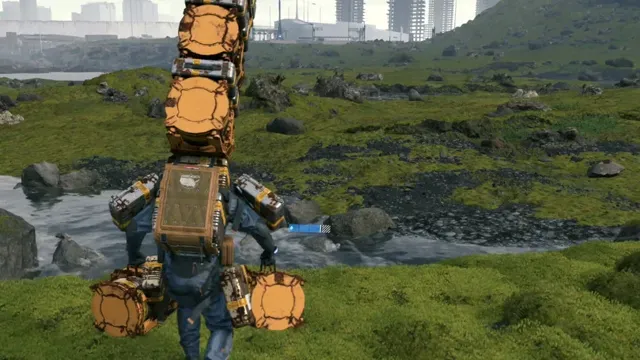
- A player who carries a structural insight beyond Chirality without mentioning the game may have completed the relevant movement.
- A community that develops a local practice of identifying hidden burden transfer without retaining the Modal Path Ethics term has not lost the concept.
The instrument has handed something over. The best case is not permanent consultation, it is transferred capacity.
Absorption = the Best Case.
Modal Path Ethics has sometimes said that readers should be able to outgrow it.
That should be stated more openly.
The framework’s best long-term outcome is absorption.
- People begin asking what a decision does to the reachable future.
- Institutions become less capable of hiding contraction behind procedural success.
- Repair is distinguished from stabilization.
- Order loses its automatic presumption of goodness.
- Costs transferred onto politically weak, temporally distant, nonhuman, unborn, or otherwise compressed loci become harder to erase.
- Moral perception becomes less dependent upon intention stories and more capable of reading continuation structures.
Then, gradually, none of this feels like Modal Path Ethics.

It becomes part of competent moral attention.
The questions enter other vocabularies. They are revised by other traditions. They become embedded in professional disciplines, family practices, political procedures, games, stories, rituals, institutions, and ordinary judgment.
Some of the original terms remain useful. Others prove awkward and disappear.
Some distinctions are absorbed so fully that no one remembers where they were first encountered. Some are independently discovered elsewhere and expressed much better.
Future thinkers correct the metaphysics, replace the model, or expose selecting cuts the present framework cannot see.
Good. Perfect.
The terminal condition of Modal Path Ethics is not universal membership.
It is universal redundancy.
That condition may never arrive in full. The field will continue changing as it does. New forms of compression will develop. New technologies will create new loci, new scales of action, new resistance structures, and new ways to hide burden. Moral work is unlikely to ever reach a final completed state.
But the impossibility of total completion does not justify permanent jurisdiction for any particular instrument.
Modal Path Ethics can become unnecessary in one domain while remaining useful in another. A concept can be absorbed while the rest of the framework remains external. A better instrument can replace one mode while another continues doing work. Disappearance can be local, partial, uneven, and gradual.
The obligation remains.
The framework should work toward reducing the amount of framework required.
Forgotten != Erased.
Intentional transience does not require historical amnesia.
The archive can remain. Books can remain in libraries. Articles can remain available. Games can still be played. Scholars can reconstruct what the framework proposed, where it came from, what it saw, and what it missed.
Intellectual provenance is important. Attribution matters while work is being developed, contested, and transmitted. An author remains responsible for claims made under his name. Later users should be able to distinguish a framework’s actual arguments from friendly revisions, hostile reductions, and convenient myths about what it once said. The framework’s errors may become as useful as its successes.
None of this requires practical dependency.
A preserved instrument and a necessary instrument are very different things.
An old map may be retained after new routes have been built. It can show how a landscape was once understood. It can reveal earlier limits, vanished paths, and historical decisions. It does not follow that every traveler must continue navigating by it.
The books may survive the need. The name may survive the instrument’s jurisdiction. Historical memory does not require living allegiance.
Modal Path Ethics can be remembered as a framework and forgotten as a requirement. Scaffolding does not fail when the building can stand without it.
Religion Knows How to Last.
This argument exists in the opening of the Religion track because religion confronts Modal Path Ethics with forms of continuity philosophy often lacks.
Religious traditions know how to carry perception across generations.
They use narratives, practices, calendars, songs, prohibitions, architecture, sacred places, repeated gestures, communal obligations, mourning, initiation, pilgrimage, prayer, fasting, feasting, study, silence, and embodied discipline.
They do not transmit only by explaining propositions.
They form attention. They organize memory. They place the living among the dead and the unborn. They bind obligations to times, bodies, places, communities, and ultimate accounts of reality.
These are very powerful field instruments.
They are also modes Modal Path Ethics does not presently possess.
Modal Path Ethics currently operates primarily through formal vocabulary, narrative analysis, and ludic structure. These modes require active engagement with an identifiable apparatus. The reader reads. The player plays. The case-engager follows an argument.
Religious and contemplative modes can operate differently. Their knowledge may be carried through repetition, presence, silence, posture, relationship, ritual participation, sacred encounter, or practices whose content cannot be completely extracted into explicit propositions.
Modal Path Ethics has reason to learn from this.
But it also has reason to be afraid of what it might learn badly.
A framework entering the religious domain may begin coveting religious durability.
- It may want practices that reproduce its vocabulary.
- It may want rituals that stabilize its identity.
- It may want communities capable of carrying it across generations.
- It may want sacred weight attached to its central concepts.
- It may want reverence where it once requested testing.
- It may want to become more than an instrument.
Before Modal Path Ethics develops contemplative interfaces, worship compatibility, ritual transmission, or deeper religious interoperability, it must state what it refuses to learn:
The Religion track must not become the place where Modal Path Ethics learns how to survive forever.
- It should learn how religious practices form perception.
- It should learn how communities hold memory.
- It should learn how ritual can carry moral knowledge that articulation cannot fully preserve.
- It should learn how contemplation changes the conditions under which a field can be encountered.
And it should learn without converting those capacities into mechanisms for making Modal Path Ethics permanently necessary.
The framework must remain an instrument even when it enters worlds capable of making instruments sacred.
Worship Compatibility Without Worship Authorship.
Modal Path Ethics is not constructing an object of worship.

It is not creating a deity, revelation, afterlife, cosmic consciousness, salvific order, or metaphysical destination beyond its existing commitments.
Its entry into the Religion track does not authorize a new metaphysics.
The framework may examine worship.
- It may ask what worship does to attention, relation, obligation, humility, memory, sacrifice, gratitude, lament, and communal continuation.
- It may become interoperable with traditions whose worship is addressed to very different objects under very different metaphysical accounts.
- It may help expose cases where sacred language is used to hide contraction, transfer burden, preserve authority, demand forgiveness without repair, or convert preventable harm into a spiritually flattering story.
- It may also encounter forms of worship that cultivate precisely the humility, care, truthful contact, resistance to false order, and more-than-individual orientation that Modal Path Ethics struggles to transmit through explicit analysis.
None of this gives the framework grounds to author worship.
- Modal Path Ethics should not become the recipient.
- The Field should not be casually personified into a god.
- Extance should not become sacred substance by rhetorical drift.
- Better should not become commandment.
- The author should not become some interpreter of ultimate reality.
- The framework’s vocabulary should not become a creed.
Modal Path Ethics can build interfaces.
It cannot manufacture the being on the other side.
Its role in worship should therefore remain limited and interoperable. It may offer structural diagnostics, translation aids, warnings, and questions. The host tradition retains its metaphysics, authorities, practices, histories, and forms of correction.
Where such an encounter succeeds, the tradition should be able to carry the relevant insight forward in its own language.
Modal Path Ethics should be able to just leave.
Interoperability Without Annexation.
Religious interoperability is not the amazingly convenient discovery that every tradition was secretly describing Modal Path Ethics.
That would be annexation.
- A Christian account of redemption is not simply repair under another name.
- A Buddhist account of liberation is not merely a different route to preserving reachable future-space.
- Jewish covenant, Islamic submission, Hindu dharma, Sikh seva, Indigenous relations with land and ancestry, secular humanist obligation, and every other living moral grammar cannot be flattened into local dialects of one framework without destroying the differences that make genuine encounter possible.
Overlap matters. Difference matters too.
Modal Path Ethics should enter these conversations as one instrument among others.
- It can ask whether a practice preserves or closes paths.
- The tradition can ask whether Modal Path Ethics’ continuation-centered metaphysics has misunderstood the purpose of the practice.
- Modal Path Ethics can expose hidden burden transfer.
- The tradition can expose the framework’s inability to approach sacred presence through structural articulation.
- The framework can distinguish repair from stabilization.
- The tradition can show forms of reconciliation, repentance, mourning, or transformation that the framework’s present vocabulary compresses.
Interoperability requires reciprocal correction.

Otherwise, Modal Path Ethics is not entering another world. It is importing that world into its own categories.
The proper interface permits the host tradition to become more capable without becoming less itself.
- The insight may enter.
- The visitor's name may disappear.
That is not loss of control. This is a successful handoff.
How to Replace Modal Path Ethics.
A framework serious about intentional transience must grant more than just permission to disagree. It must preserve the right to replace it.
- Readers have the right to reject the framework.
- They have the right to use one concept and discard the rest.
- They have the right to translate its claims into language the author would not have chosen.
- They have the right to expose errors that require major revision.
- They have the right to conclude that Modal Path Ethics’ selecting cut has become distorting in a particular field.
- They have the right to build an instrument that sees more clearly.
- They have the right to improve the framework beyond recognition.
- They have the right to retain the capacity while forgetting the name.
No future interpreter should possess authority to prevent this.
No "canonical version" should be protected from evidence.
No institutional custodian should be able to declare that a superseding instrument is illegitimate because it is no longer properly Modal Path Ethical.
The framework’s claim is that it describes real structure.
So if the structure is real, the author does not own it. If another description is better, reality does not owe loyalty to the earlier description.
If later users preserve Modal Path Ethics' name while abandoning its commitment to correction, the name should not protect them.
If later users abandon the name while improving truthful contact with the field, the disappearance is completely irrelevant.
The framework must accept correction through revision.
It must also accept correction through extinction.
The Disappearance Test.
Every future extension of Modal Path Ethics should face a disappearance test.
This becomes especially important wherever the framework enters religion, education, institutional practice, contemplative life, political organization, or communal identity.
Ask:
- Does this extension require the framework to remain an authority?
- Does it create a class of people whose position depends upon specialist command of the framework?
- Does it treat translation into another vocabulary as a loss?
- Does it make departure look like ignorance, betrayal, or moral failure?
- Does it preserve the metaphysics and correction procedures of the field it enters?
- Can the gained capacity survive after Modal Path Ethics is removed?
- Would the practice still work if no participant knew where the structural insight came from?
- Can the host community reject Modal Path Ethics without losing access to what proved useful?
- Can reality still tell the instrument that its work is finished?
Any extension that fails these questions may still expand the framework.
It does not necessarily expand the field. It may have lost the plot.
- Growth is not the same as success.
- Reach is not the same as repair.
- Durability is not the same as truth.
What Completion Looks Like.
The completion of a moral instrument is not the completion of morality.
Harm will not vanish because one framework has done all its work.
Reality will continue producing tragic conflicts, irreversible losses, difficult tradeoffs, limited knowledge, uneven power, ecological constraints, institutional drift, and novel forms of closure.
No finite instrument ends moral life. Completion is more local.
An instrument has completed a piece of work when the capacity it carried becomes independently continuable.
- The person can perceive without consulting it.
- The community can act without depending upon it.
- The tradition can translate and correct the insight within its own living grammar.
- The institution has altered its structure rather than merely adding the framework’s vocabulary to its reports.
- The field no longer needs the same intervention.
The instrument becomes optional.
This is the point at which many frameworks invent reasons that they remain indispensable.
Modal Path Ethics should instead prepare for handoff.
The sequence is simple:
- Identify what is difficult to perceive.
- Build an instrument capable of making it visible.
- Test the instrument against reality.
- Transfer the capacity.
- Allow local adaptation.
- Withdraw where the instrument no longer adds value.
- Leave the field capable of continuing without it.
That forms the shape of completion.
Three Deaths.
Modal Path Ethics is doomed in at least three possible ways.
- It can disappear because it failed.
The concepts may prove confused. The metaphysics may not hold. The cases may persuade no one. The framework may become an artifact of one author’s peculiar cognitive style and historical moment. The field may reject it because it does not work.
This is ordinary failure.
- It can survive because it betrayed itself.
The name remains. The vocabulary hardens. Articles accumulate. Interpretive specialists emerge. Familiar phrases are repeated. Institutions preserve the corpus. The framework becomes an identity, an aesthetic, a professional territory, or a philosophical liturgy.
People become highly fluent in MPE while becoming no better at perceiving the field. The instrument survives.
Its work dies. This is continuance capture.
Or Modal Path Ethics can disappear through completion.
- Its useful distinctions are absorbed.
- Its errors are corrected.
- Its insights become available through better language, stronger practices, wider traditions, and instruments not yet built.
- People perform the relevant moral work without needing the framework as a named mediator.
- The archive remains where useful.
- The dependency ends.
This is the best case.
The first death is possible. The second must be resisted.
The third should be pursued.
Doom as Promise.
Modal Path Ethics is doomed because no moral instrument deserves immunity from time.
It is doomed because reality will change.
It is doomed because its own claims require correction.
It is doomed because other instruments will see things it cannot.
It is doomed because the capacities it carries should become transferable.
It is doomed because repair, where repair succeeds, reduces the necessity of repair instruments.
This doom is not pessimism. It is a promise that the framework will not make its own survival the price of the field’s recovery.
Every instrument should be asked what conditions would permit it to disappear.
Every institution should be asked what successful repair would do to its authority.
Every movement should be asked whether victory would complete the movement or merely supply it with a new reason to continue.
Every framework should be asked whether it can recognize a world that no longer needs its name.
Modal Path Ethics should answer openly.
- Its goal is not to produce a world in which everyone speaks Modal Path Ethics.
- Its goal is to make certain structures harder to hide, certain forms of repair easier to distinguish, and certain moral capacities more reachable than they were before.
For now, the instrument has work.

The field remains difficult to read. Distortion abounds. Burdens are hidden. Closure is renamed order. Stabilization is sold as repair. The continuation of dominant loci is still mistaken for continuation of the whole. The framework remains useful because the conditions that produced it remain active.
Usefulness gives it work. It does not give it a right to permanence. The framework should continue while it helps. It should change when reality corrects it. It should yield when another instrument works better. It should pass its useful capacities into forms it does not own.
It should accept a future in which its vocabulary sounds unnecessary, its distinctions have become ordinary, and its name is remembered only by people interested in how the work was once done.
Modal Path Ethics is not trying to become immortal.
It is trying to help produce a field in which it never needs to be invented again.