Moonlight with Figures: The Primordial Darkness
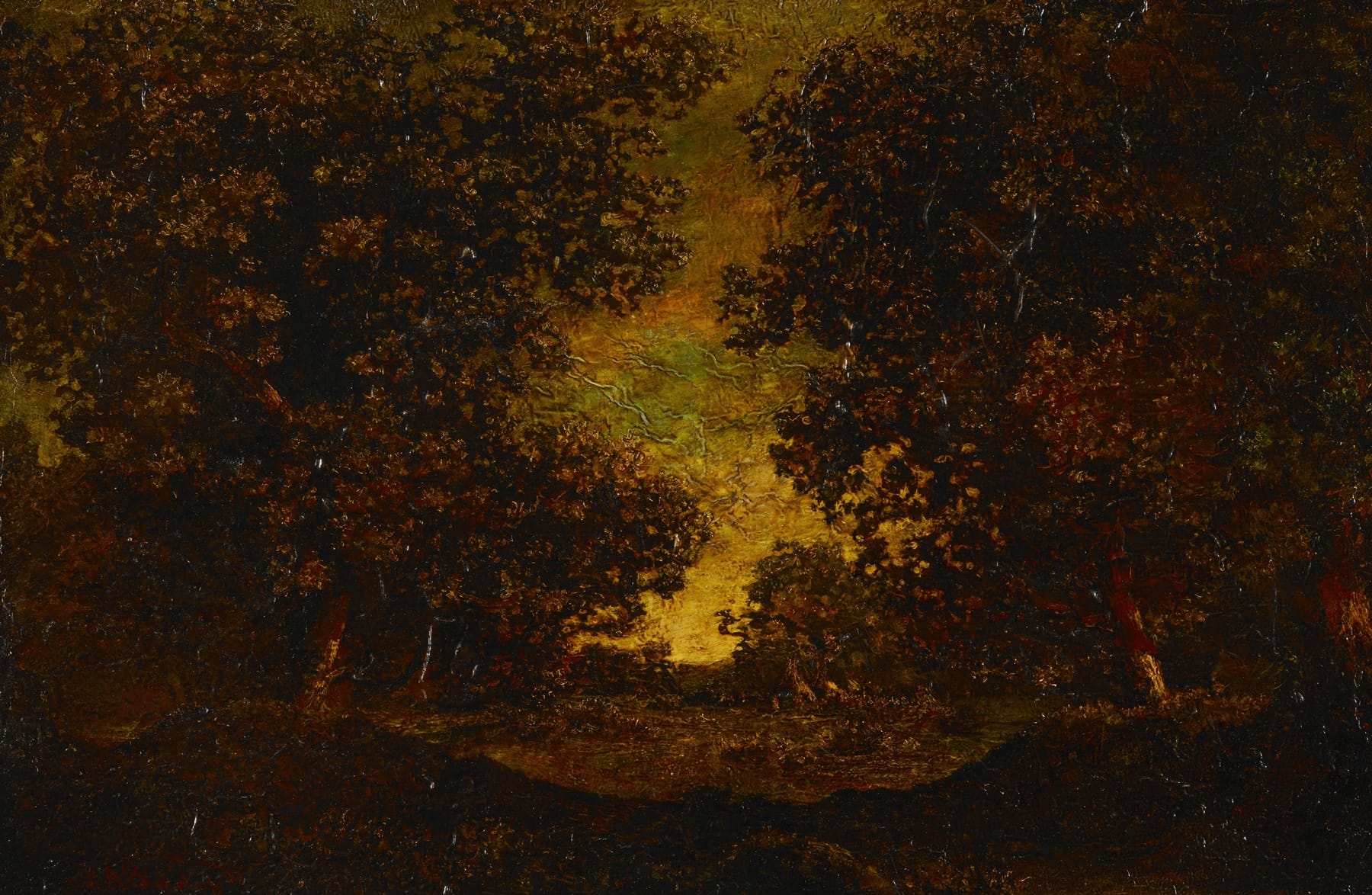
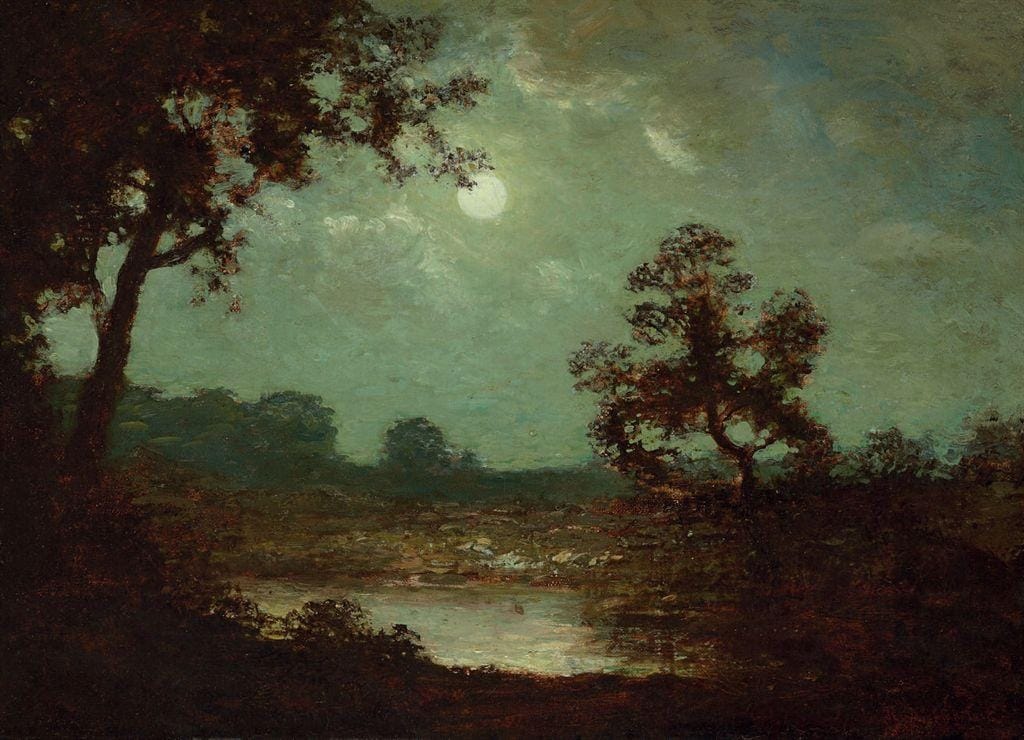
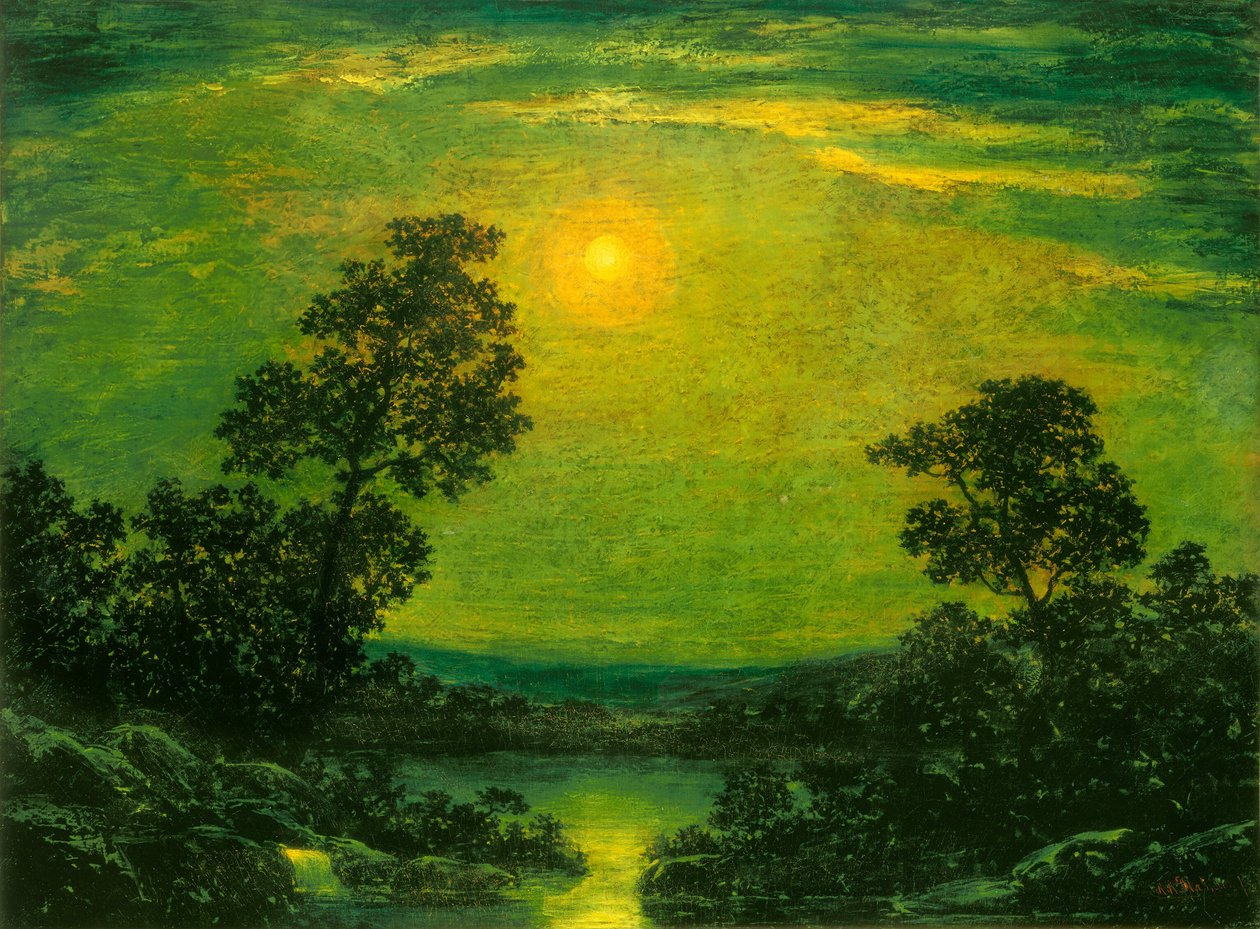
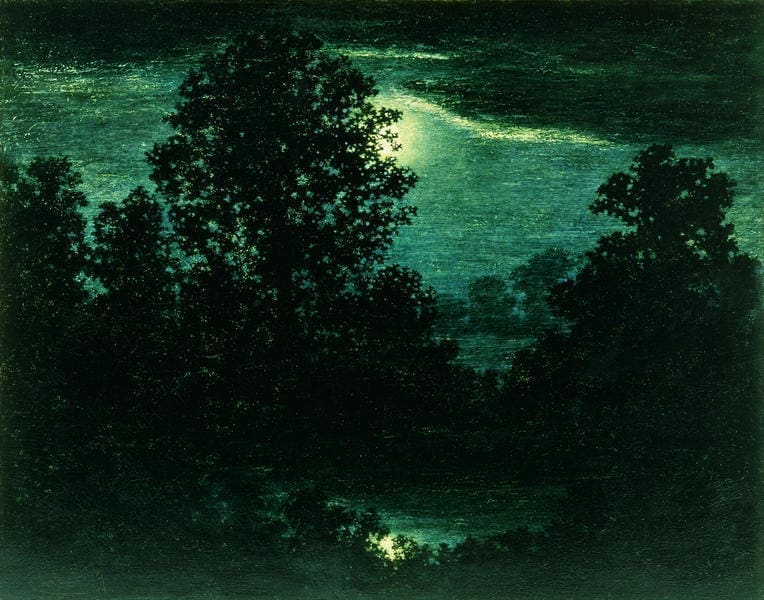
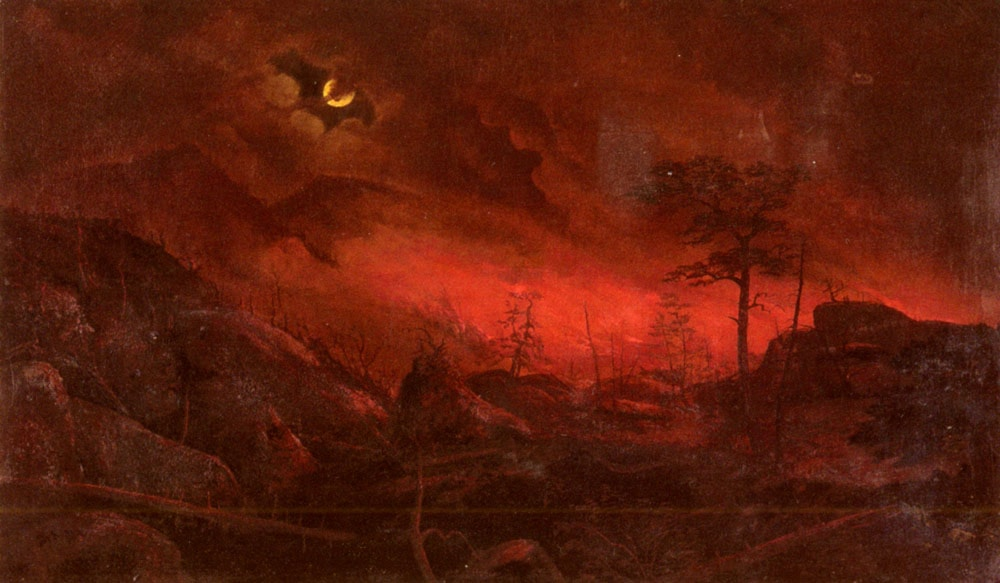
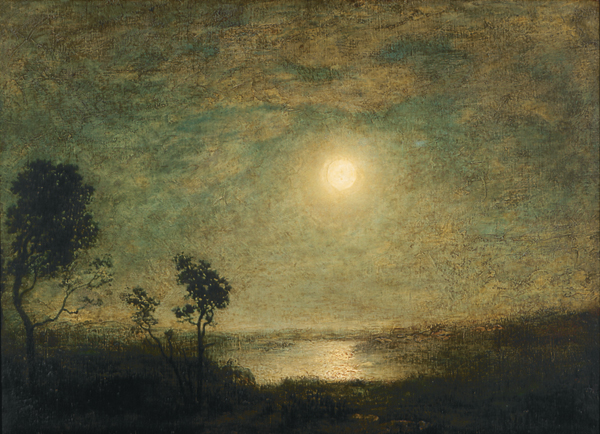
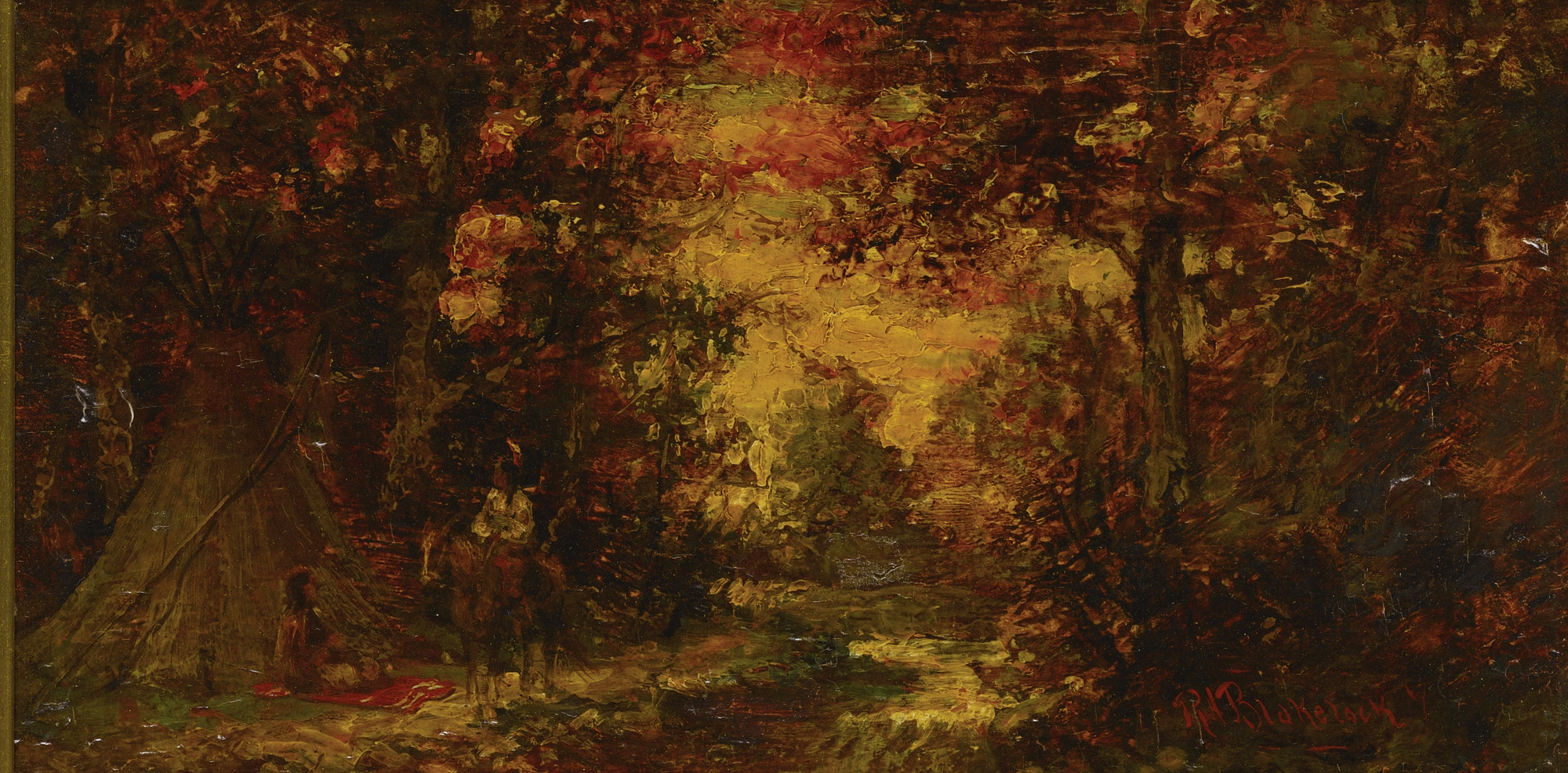
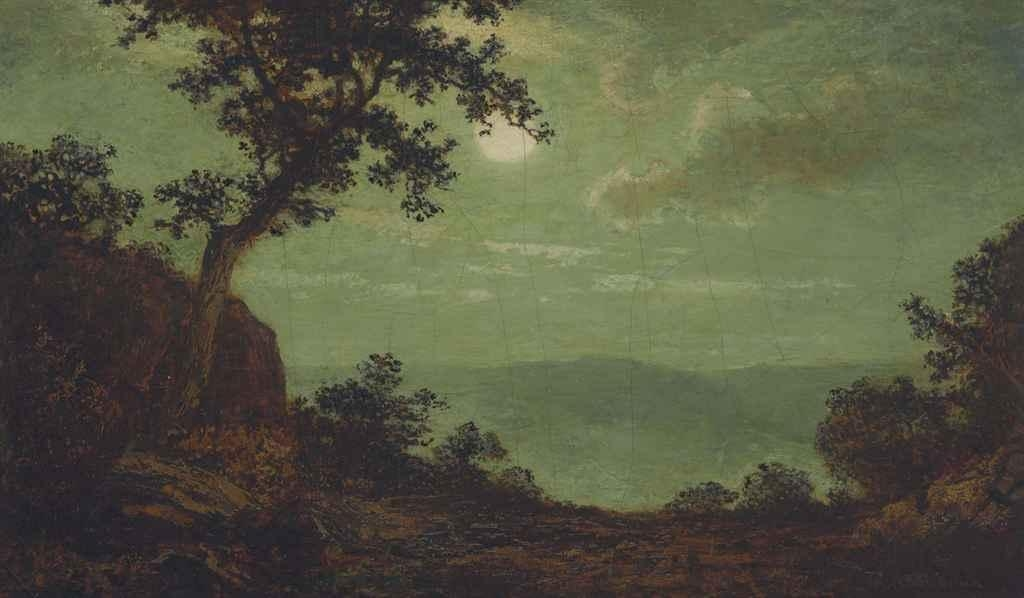
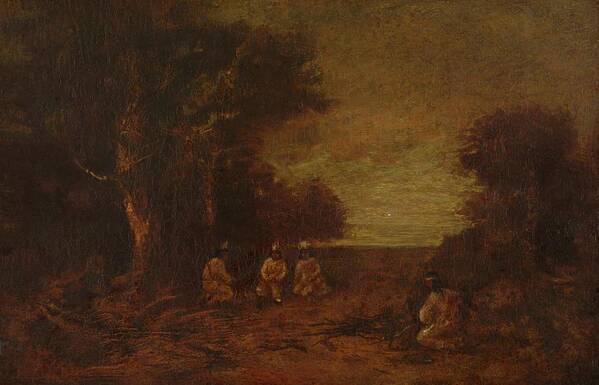
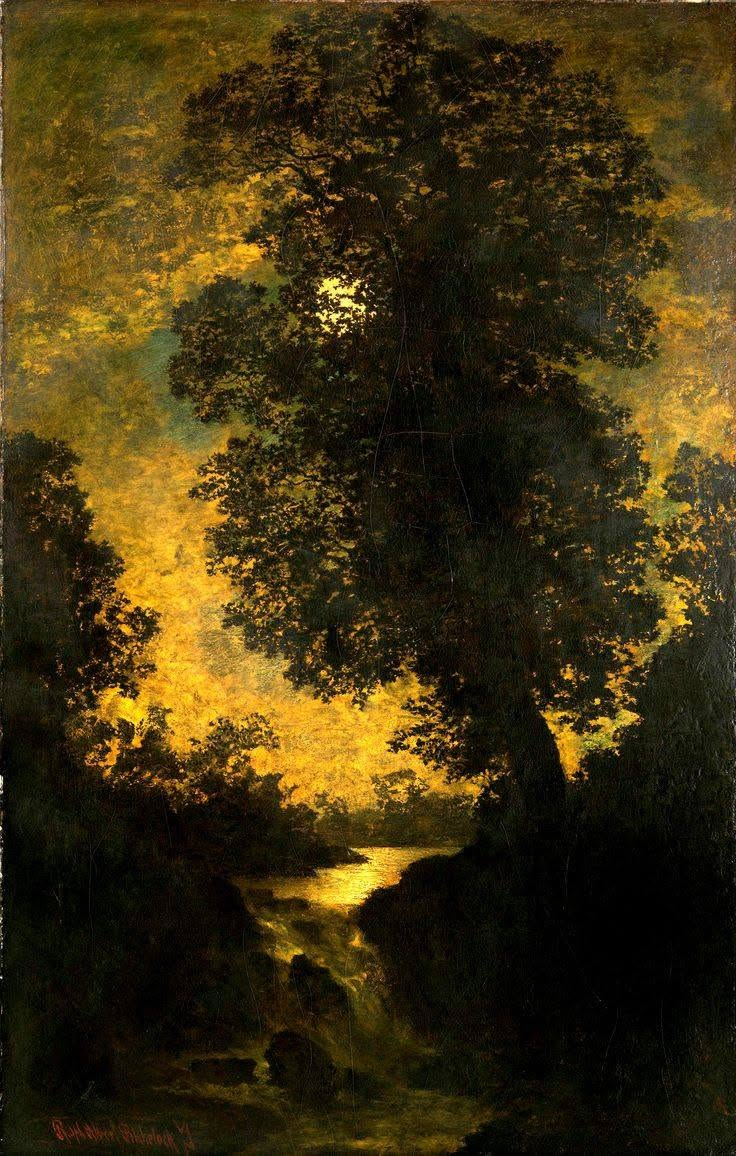
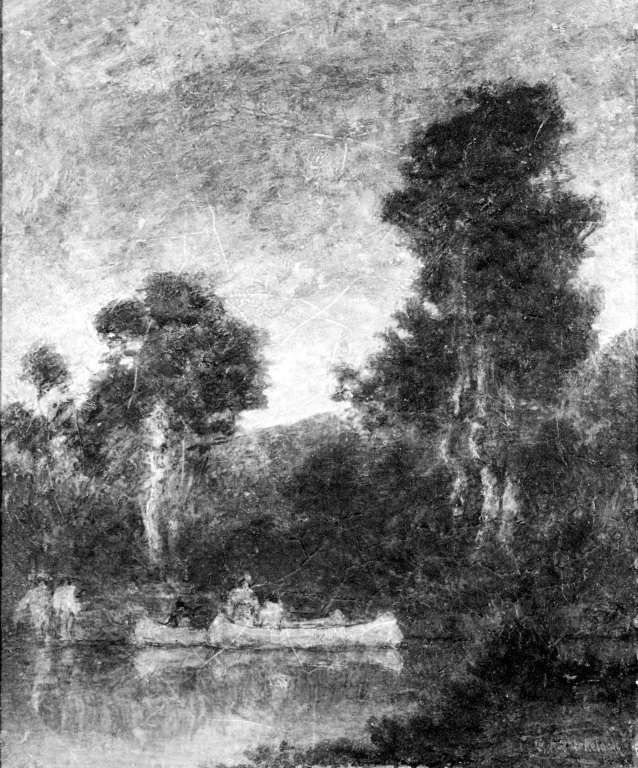
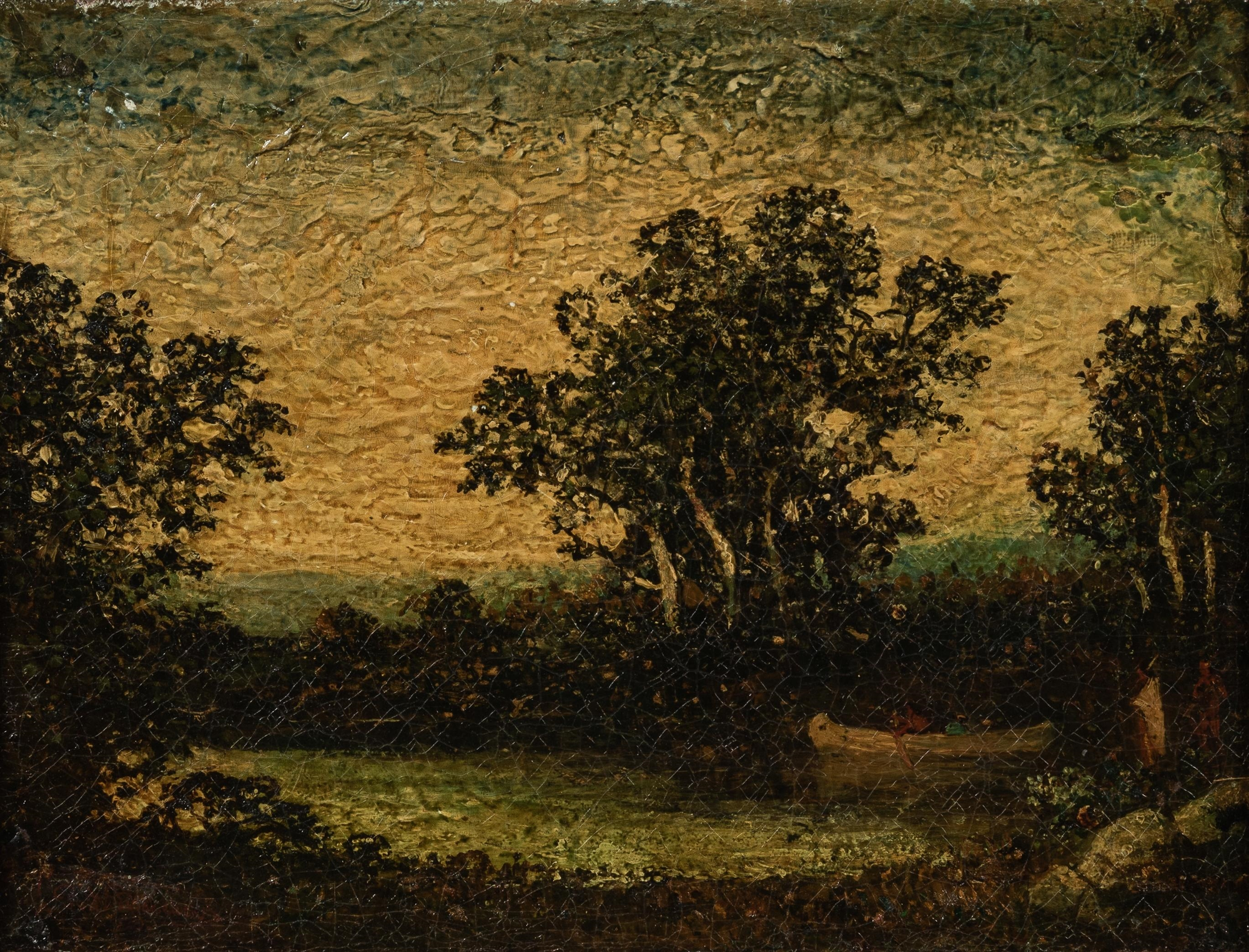
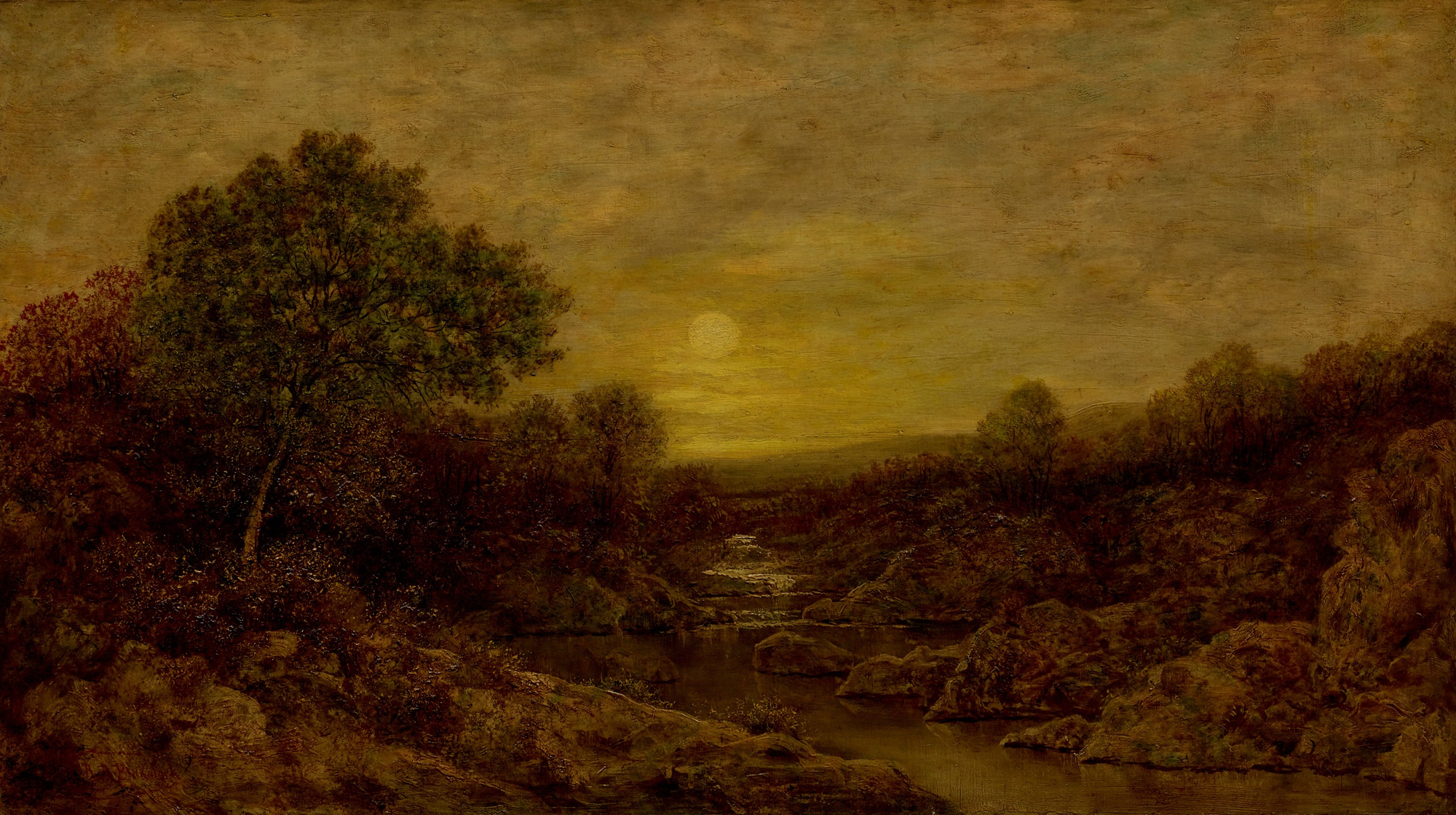
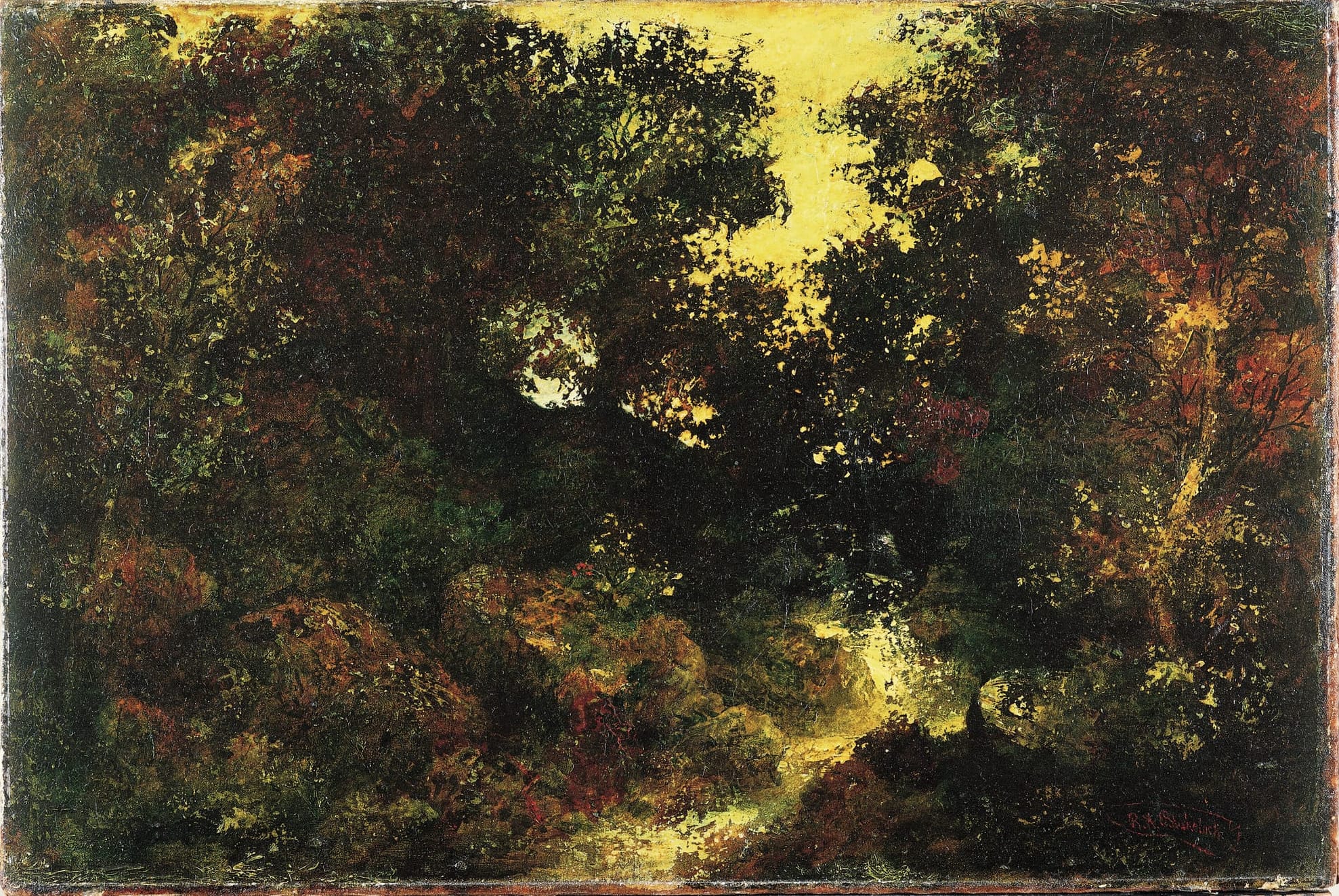
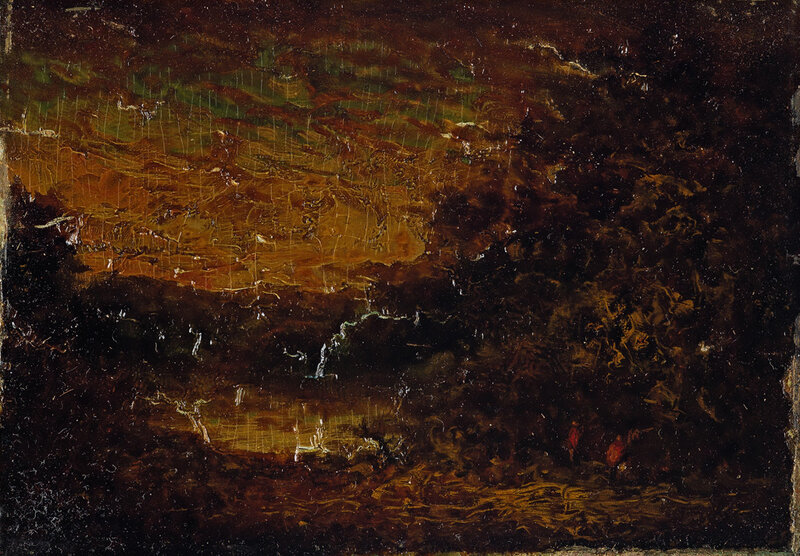
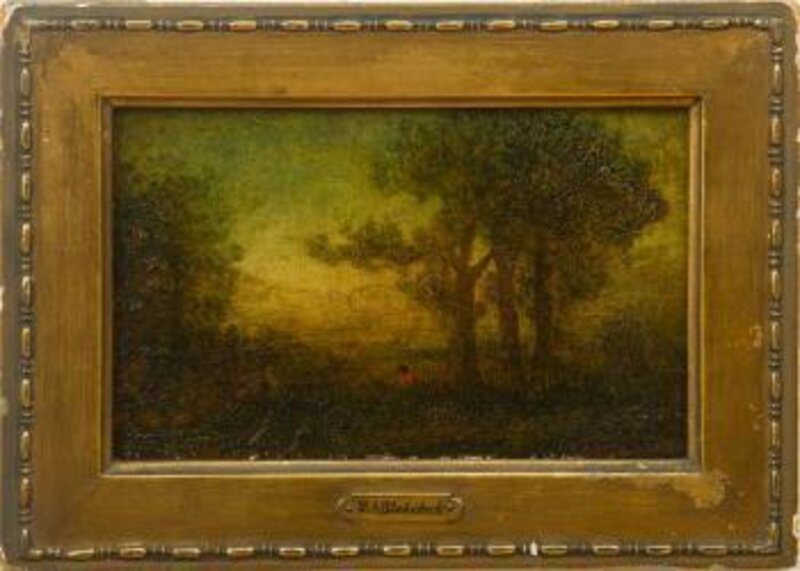
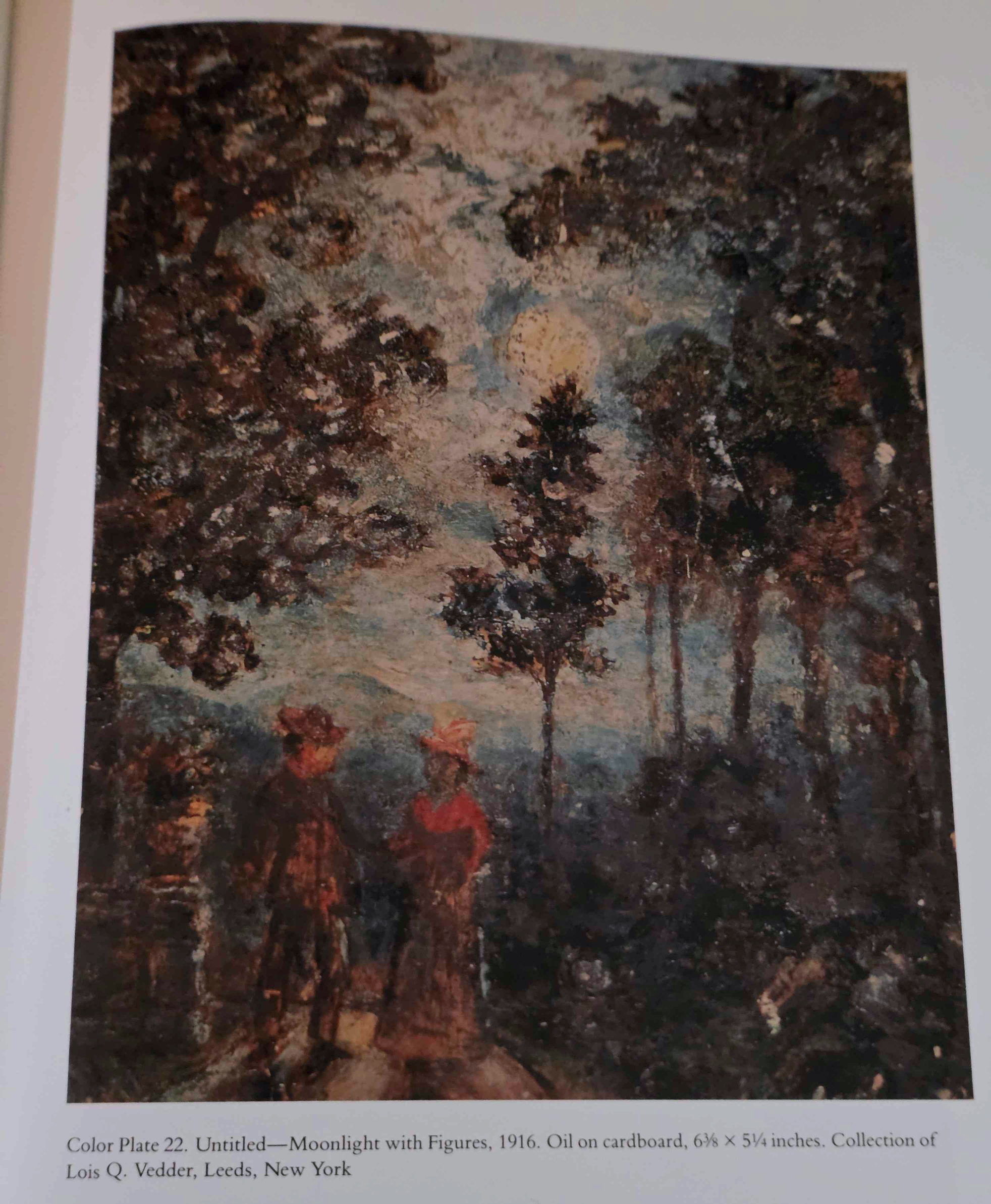
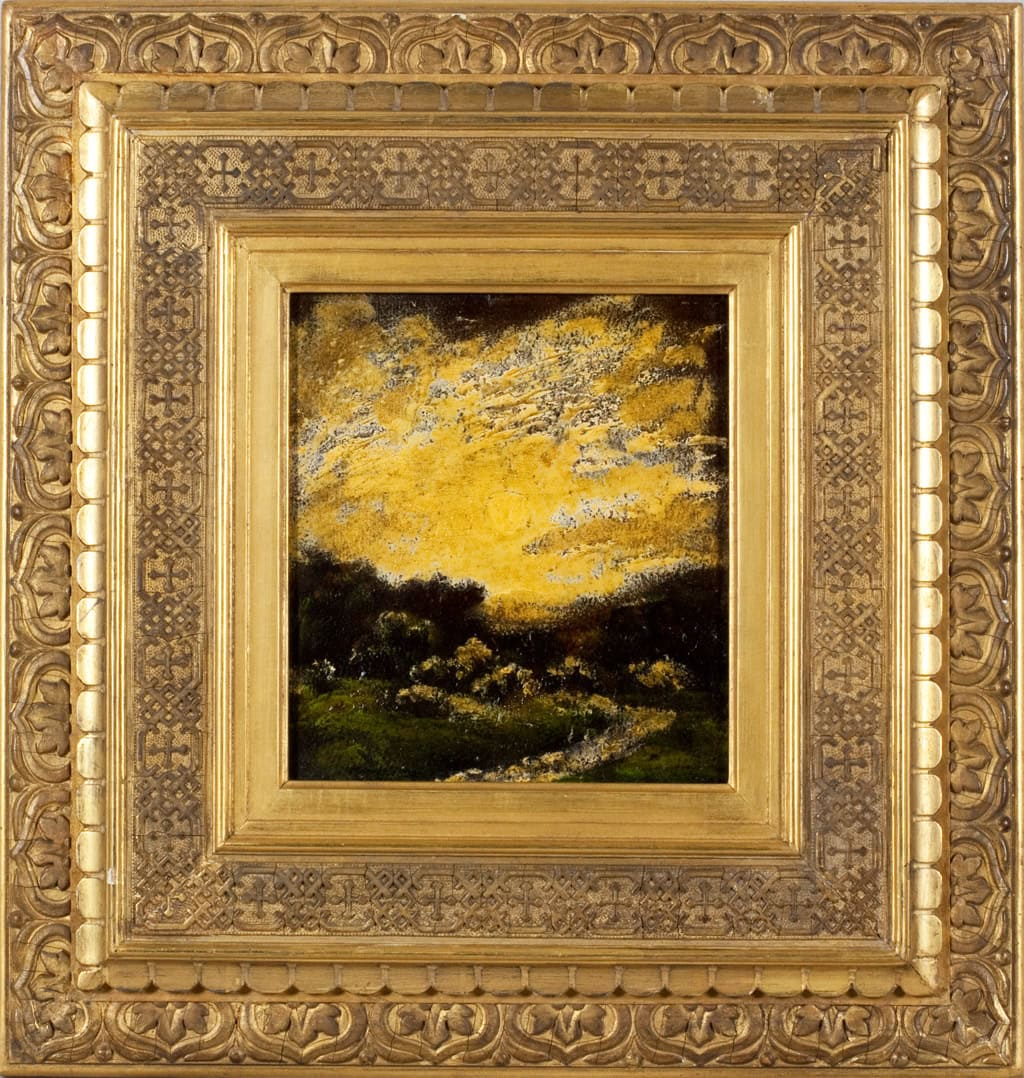
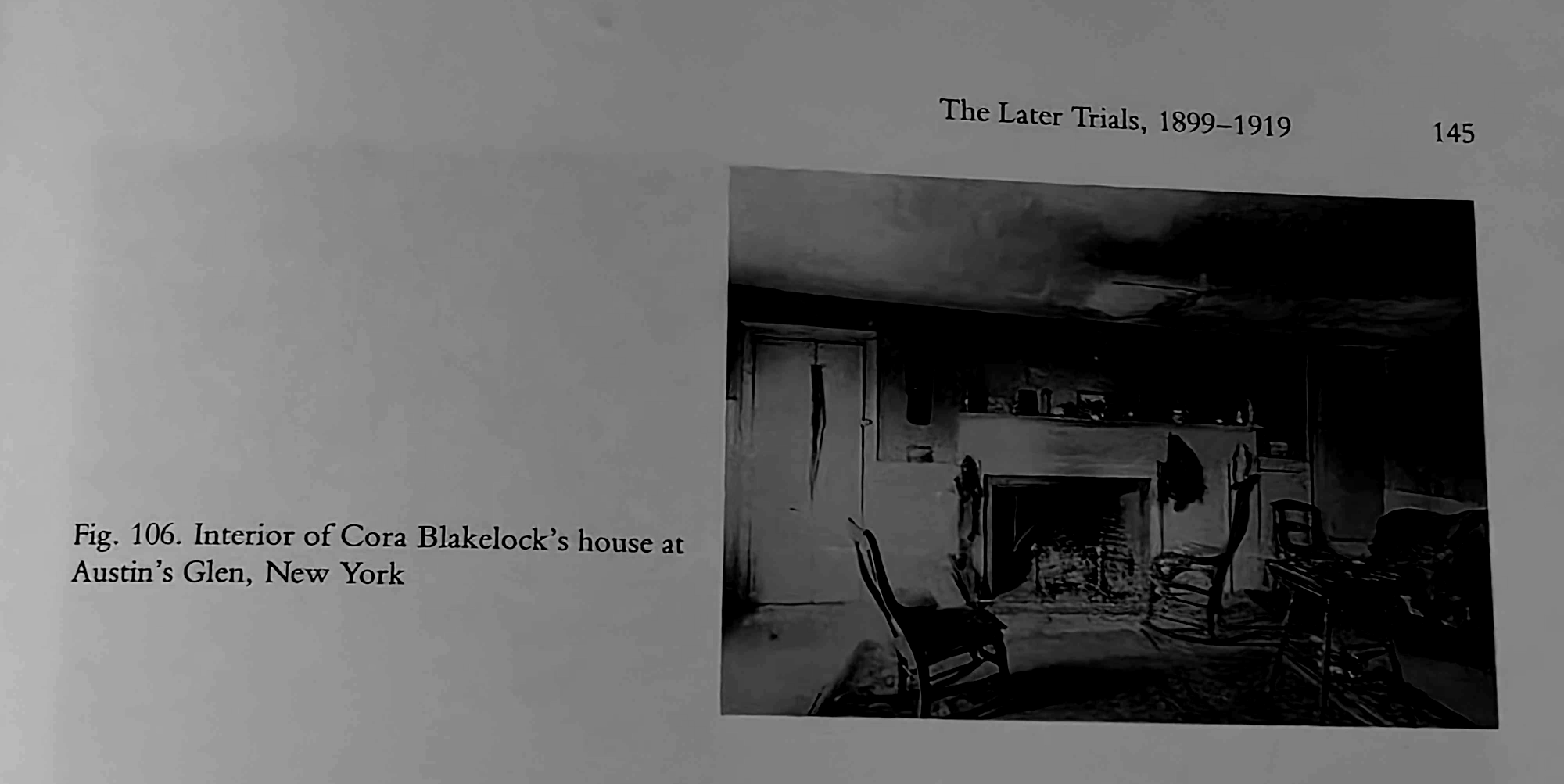
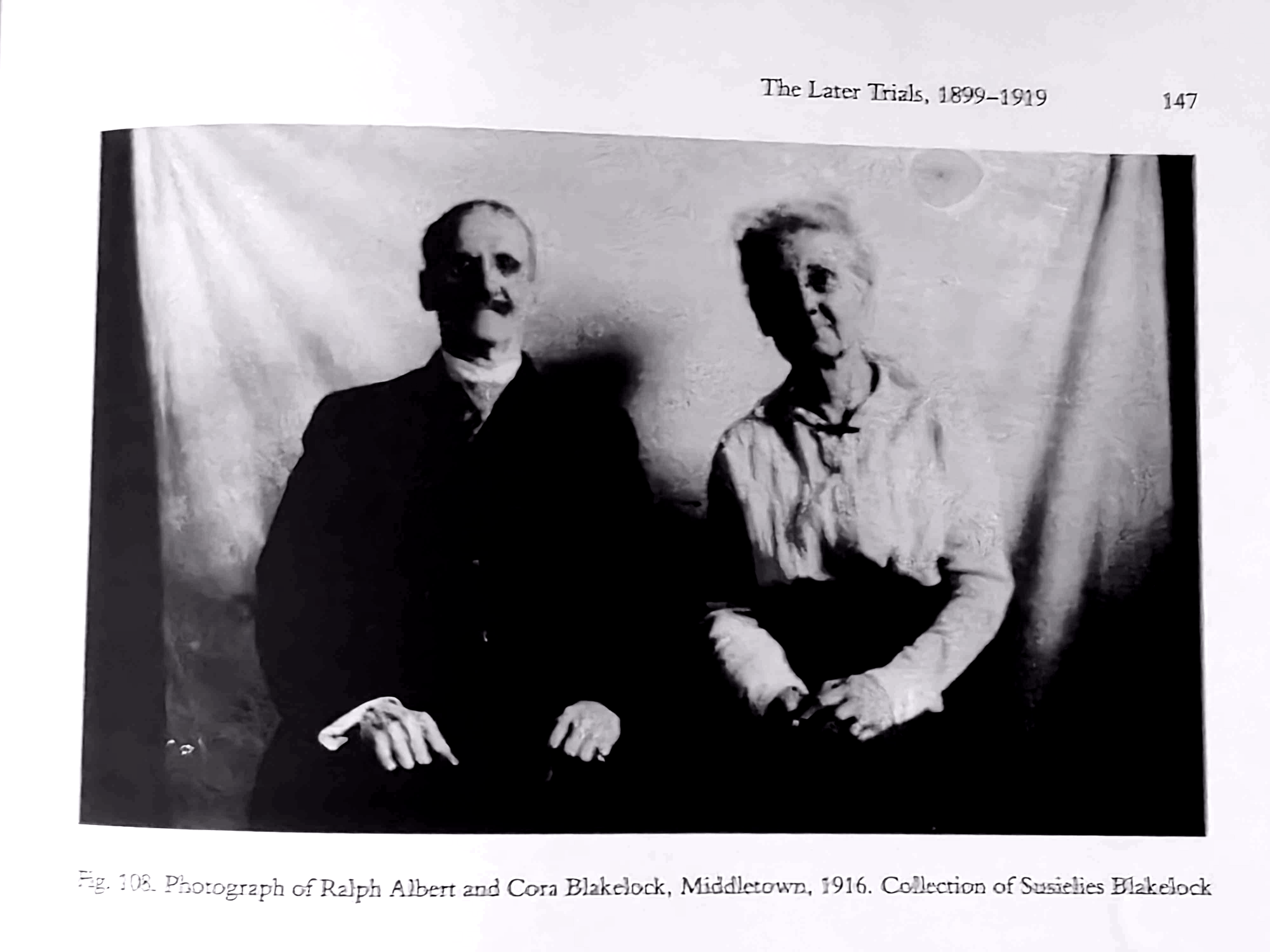
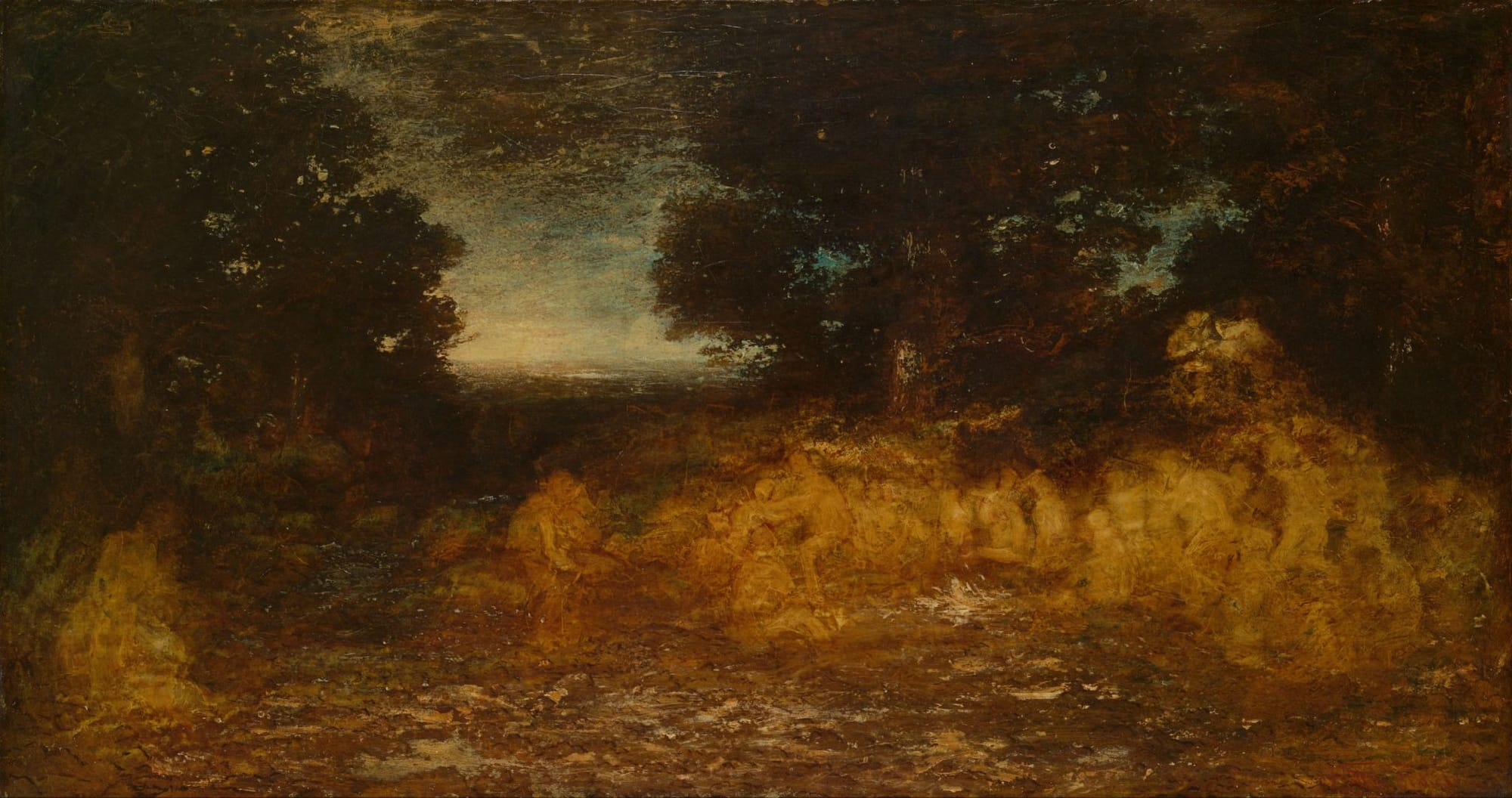
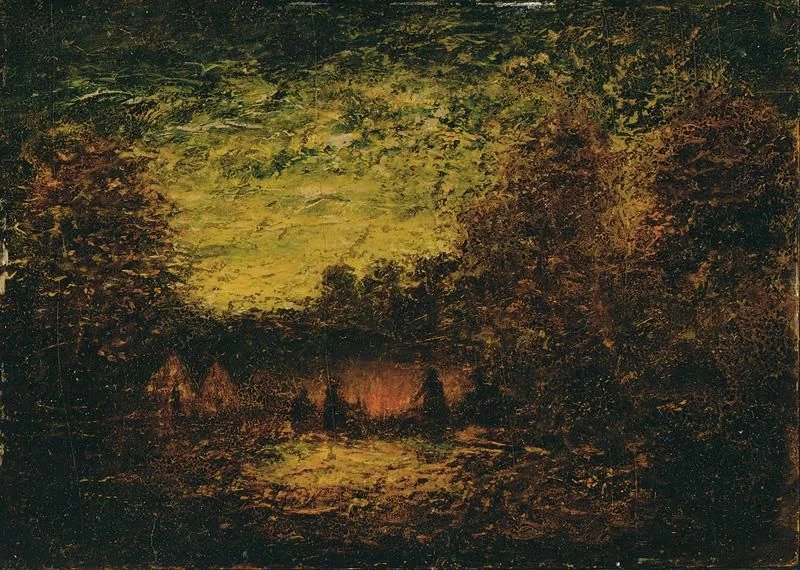
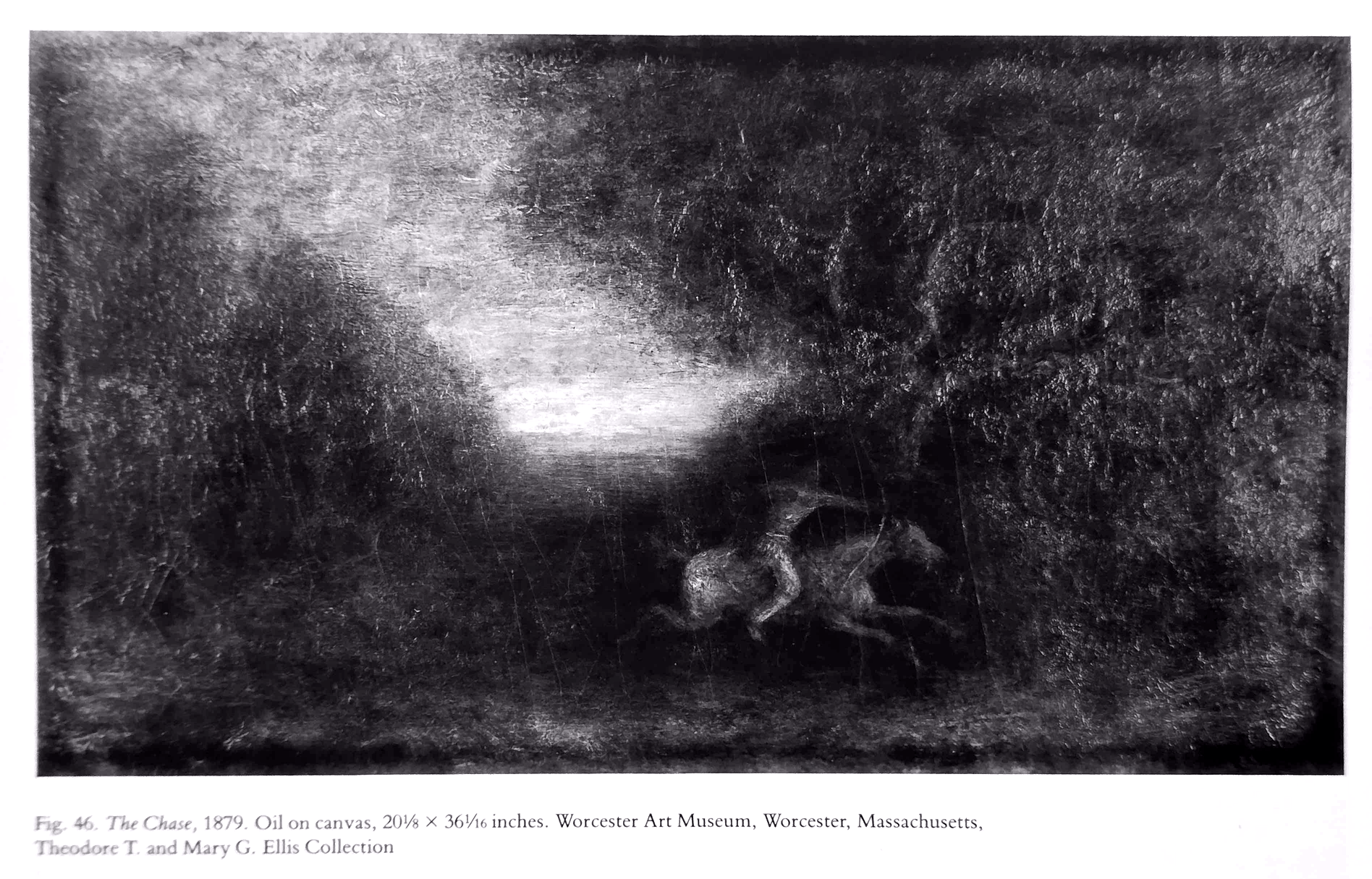
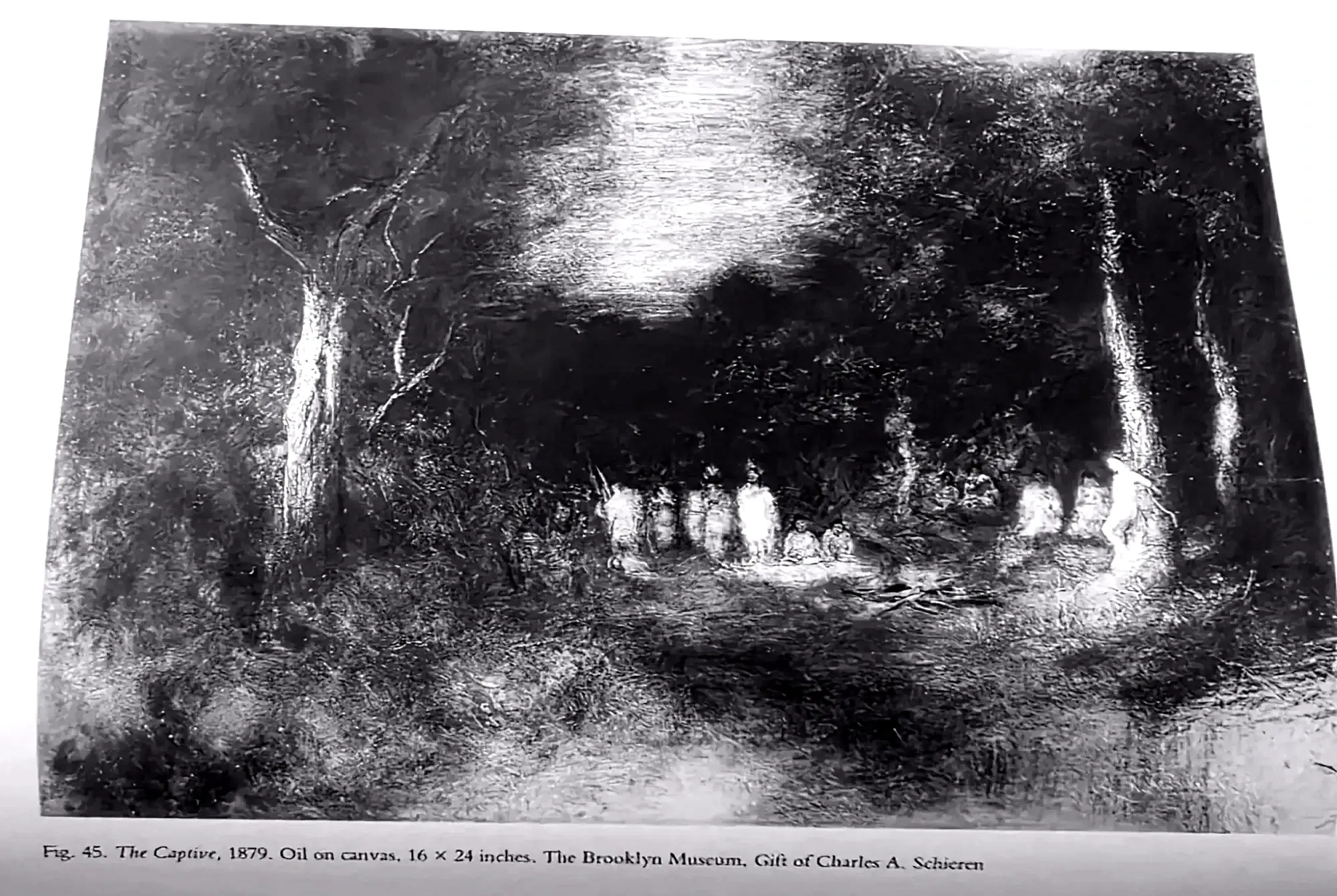
Ralph Albert Blakelock painted Moonlight, Indian Encampment sometime between 1885 and 1889.
The Smithsonian American Art Museum has it now.
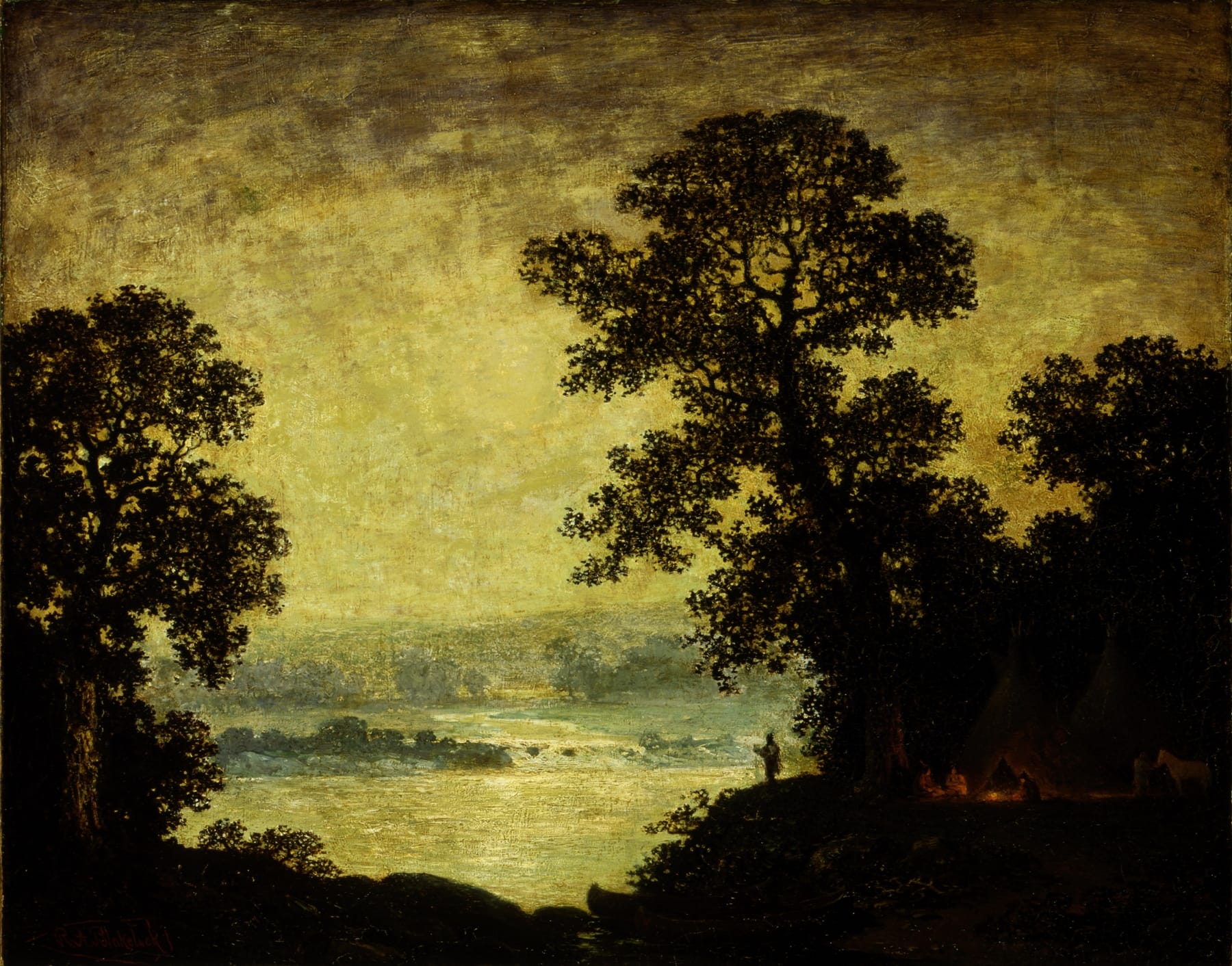
Oil on canvas.
The catalog gives the subjects:
- Figure.
- Teepee.
- Forest.
- Night.
- Indian.
The museum knows the painter’s name.
It does not know theirs.
That is already enough trouble to begin with.
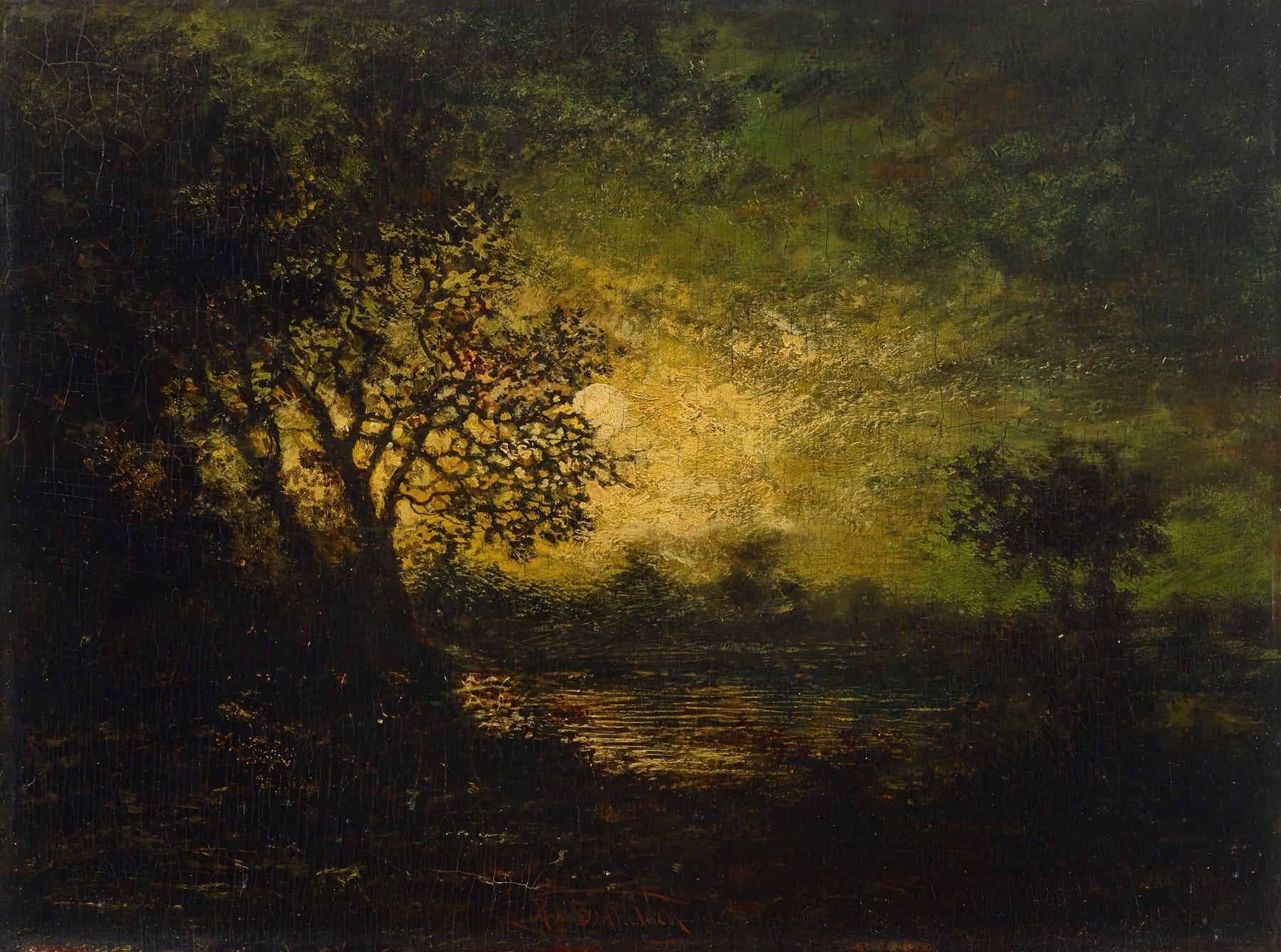
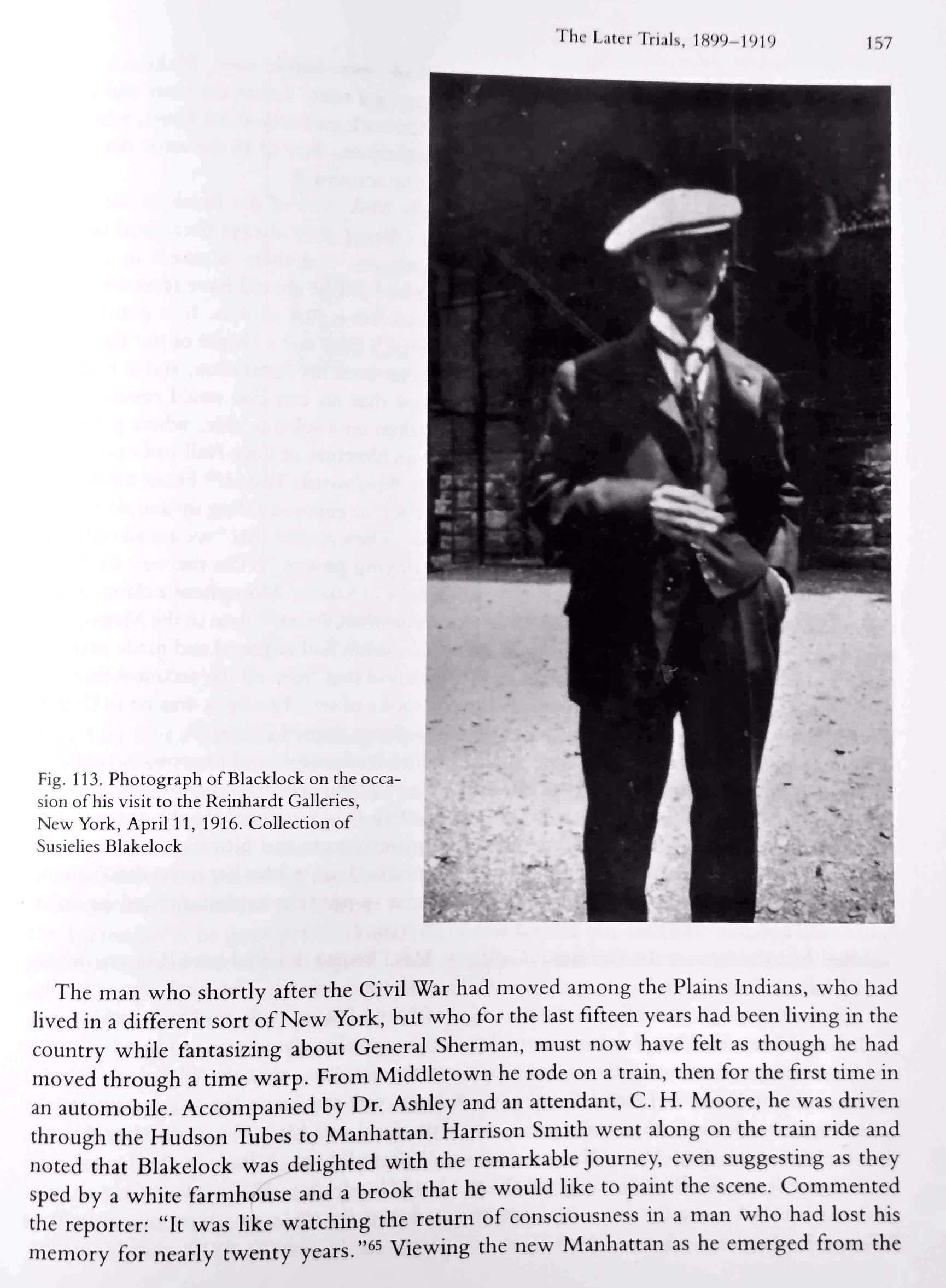
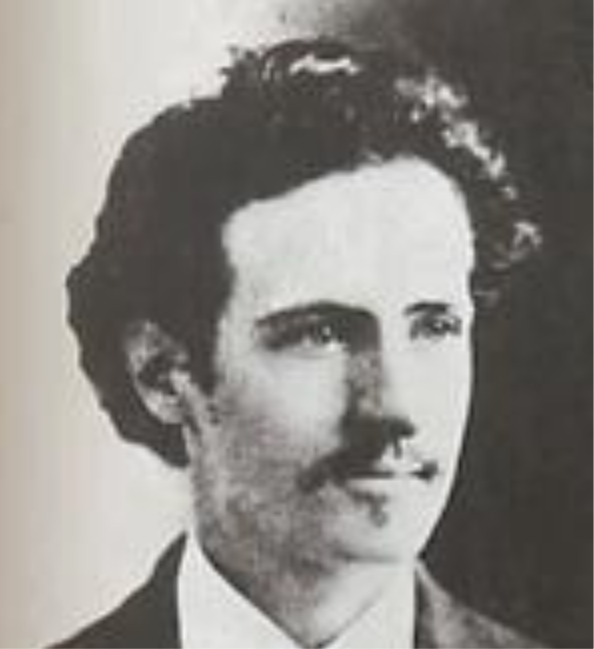
Blakelock is my ancestor.
We have already established the boundary there.
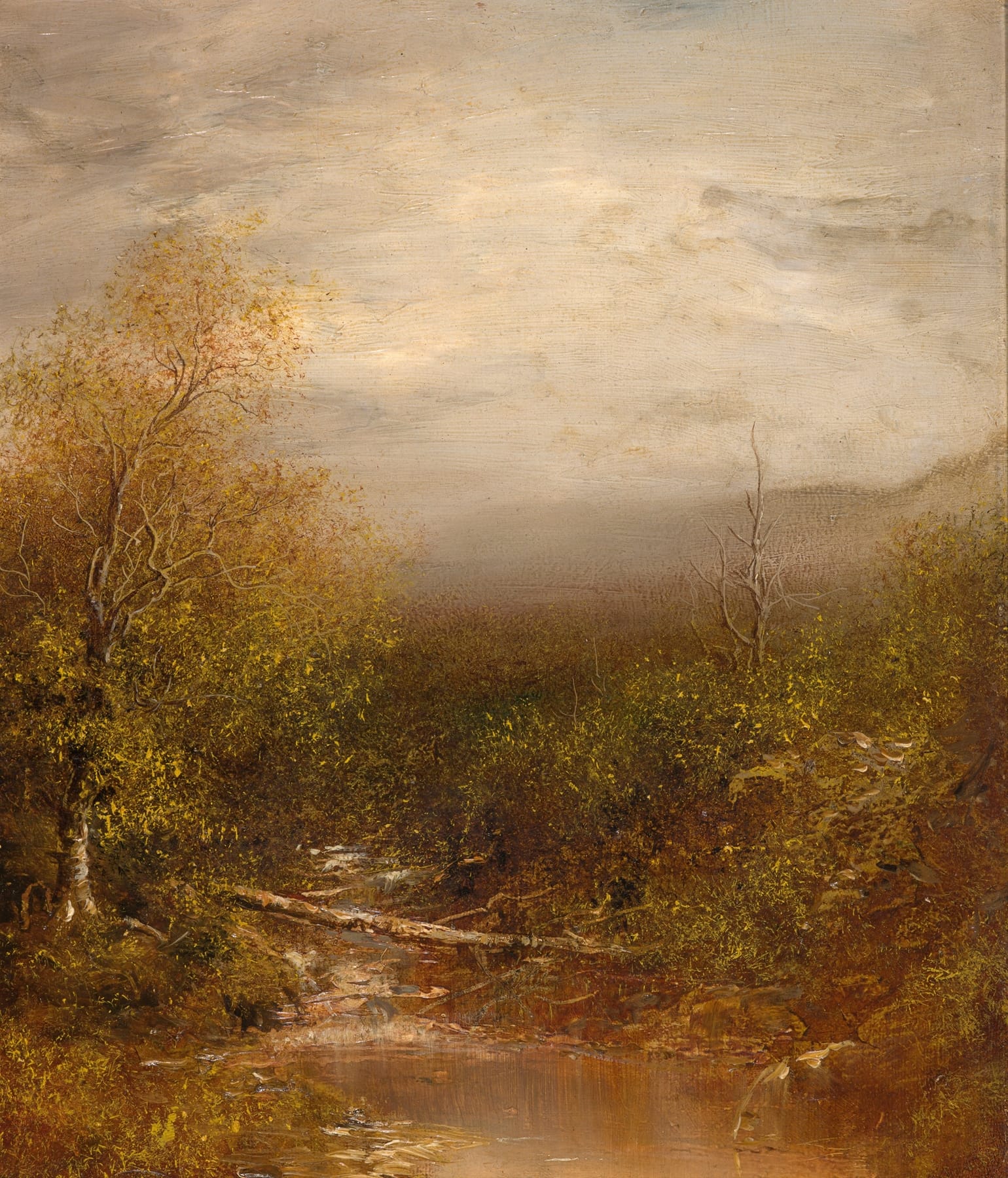
The family line does not make the people beneath his trees more available to me. It gives the paintings another route into this article and makes the obligations around that route harder to ignore.
The first Moonlight with Figures called this pressure.
That remains the correct word.
Blakelock gives us figures with almost no names.
James R. Walker gives us the opposite problem.
Inyan.
Maka.
Skan.
Hanhepi.
Anpetu.
Wi.
Hanwi.
Tate.
Iktomi.
A world fills in very quickly.
The names have relations. The relations have ranks. The ranks have stories. The stories have a creation sequence. The creation sequence has an order.
The darkness begins to illuminate.
Then the illumination starts hiding things.
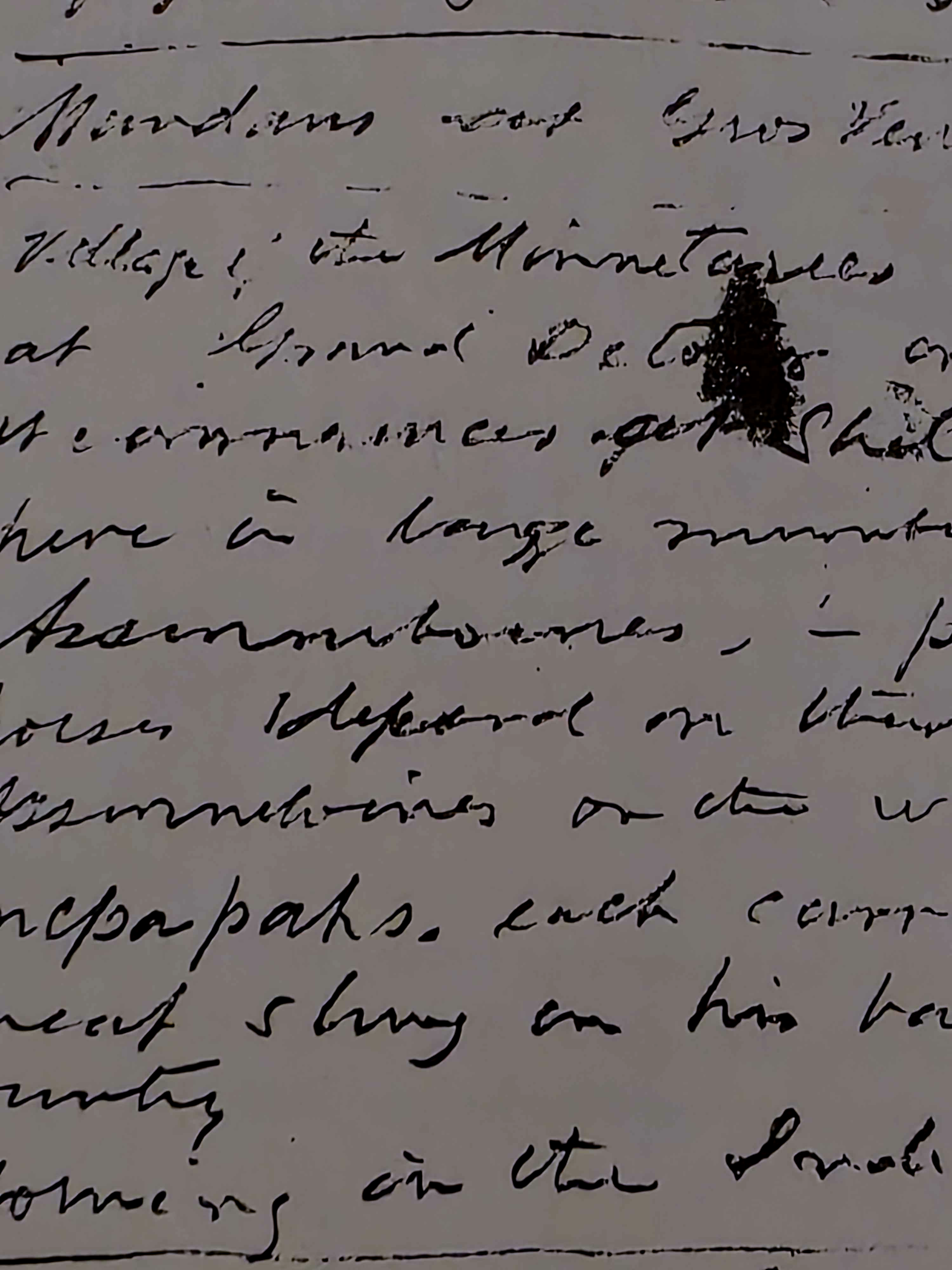
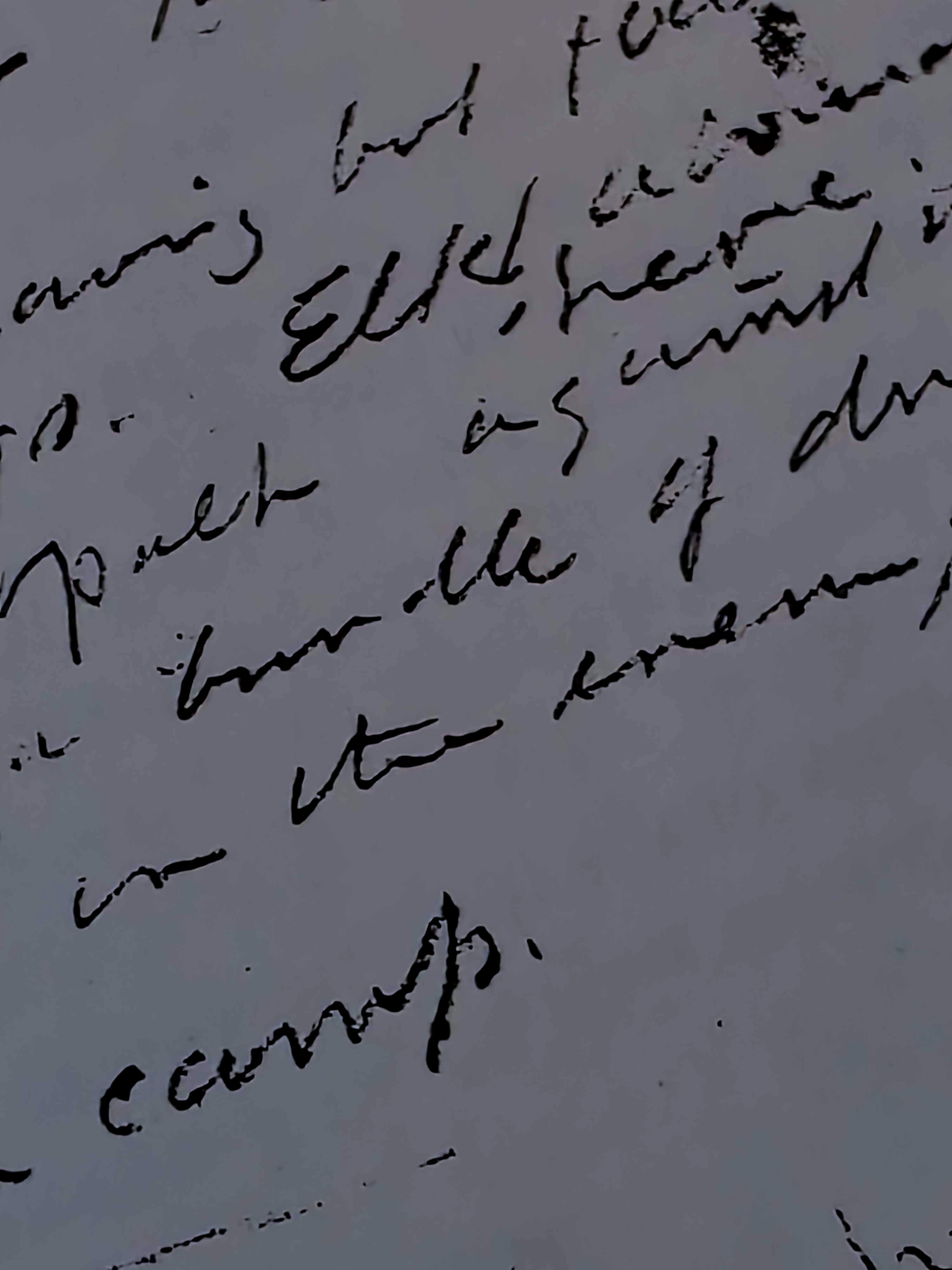
James R. Walker spent eighteen years at Pine Ridge, first as a government physician and eventually as one of the most important recorders of Oglala Lakota religious life, ceremony, narrative, and thought from that period. His papers preserve material that would be extremely difficult to reach without him.
They also contain a long synthetic work later published as James R. Walker’s Literary Cycle, an attempt to arrange what he had learned into a coherent mythological world.
The University of Nebraska Press edition of Lakota Myth keeps that category separate from classic oral narratives and from narratives known to smaller circles of Oglala holy men.
Keep that separation alive.
This article is about Walker’s mythos.
- It is built from Lakota materials.
- It came through Lakota teachers.
- It contains Lakota names, relations, stories, concepts, and philosophical pressure.
- It is also Walker’s construction.
That difference cannot be cleaned away.
The mythos is good.
The harm is inseparable from it.
Walker’s World.
Walker’s creation begins with almost nothing visible.
“In the beginning was Inyan, who had no beginning…”
Around him is Hanhepi.
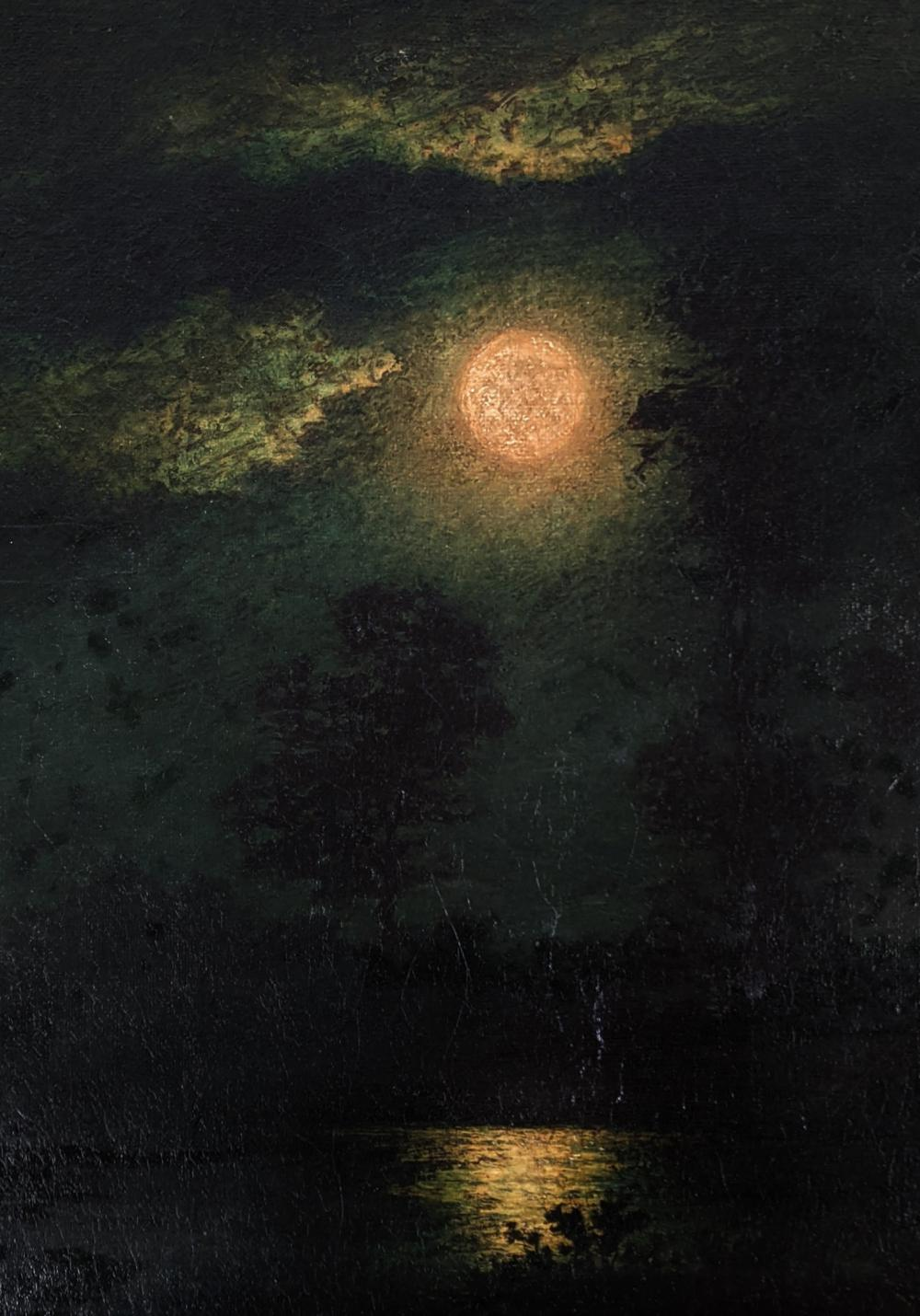
Darkness.
That is the opening condition of Walker’s literary world.
Inyan is alone.
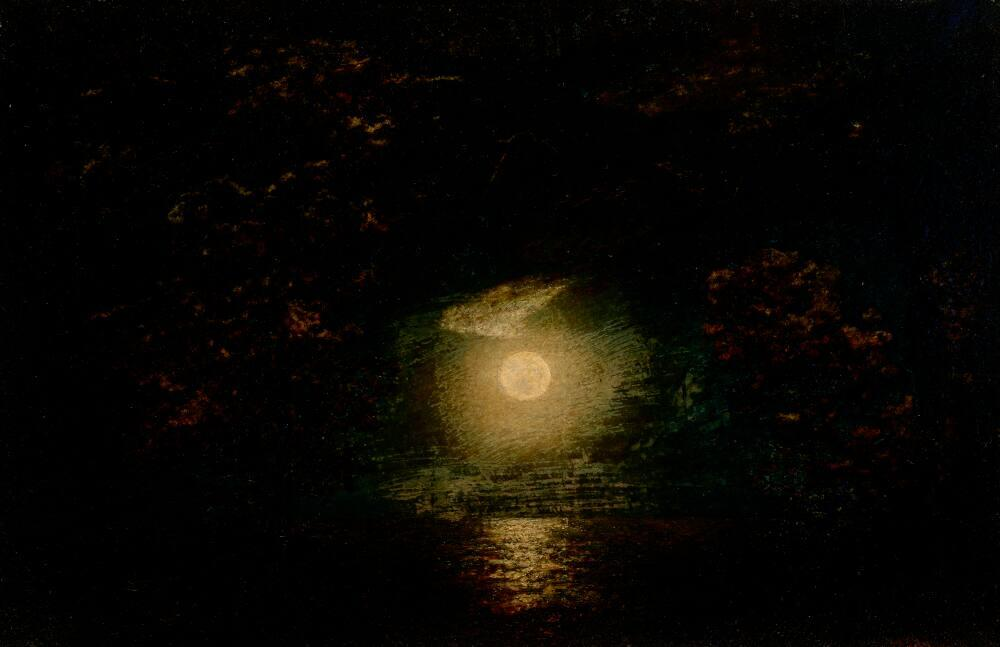
There is nothing outside him from which another thing can simply be made.
So creation costs him.
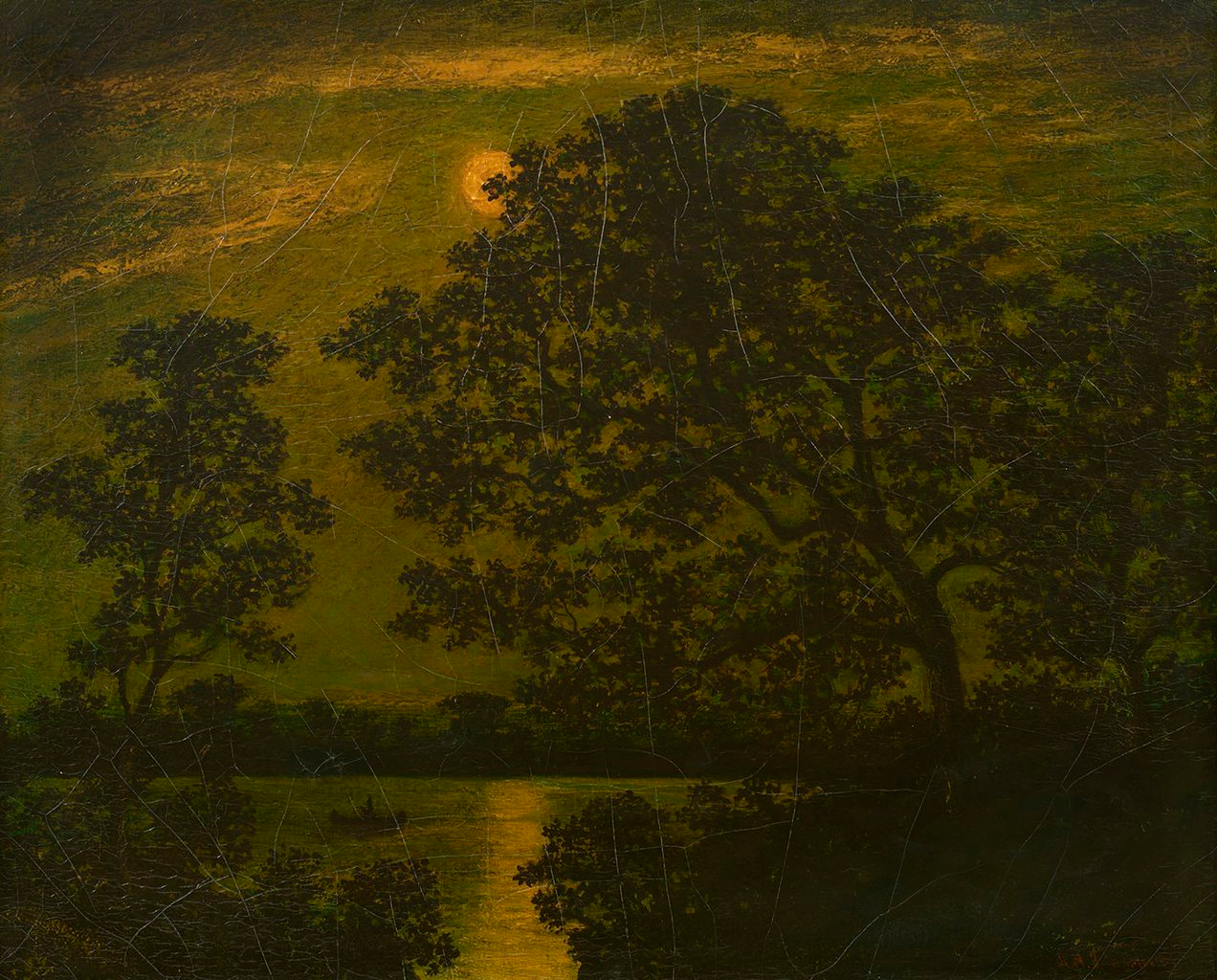
In Walker’s sequence, Inyan opens himself and gives his own substance into Maka, the Earth. His blue blood becomes the waters. The act diminishes him. The primal power shrivels into rock while the world made from him begins to expand.
Then Skan rises.
Sky. Motion. Authority.
A great blue dome over the new field.
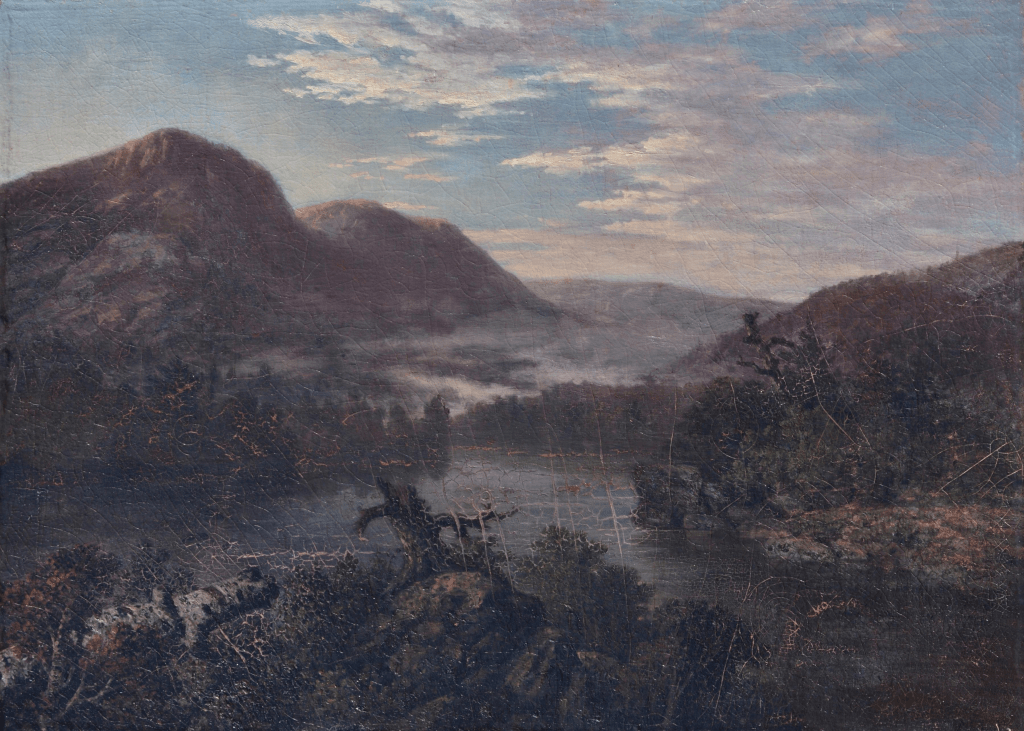
Maka cannot see.
Hanhepi remains everywhere.
Skan answers by dividing the darkness.
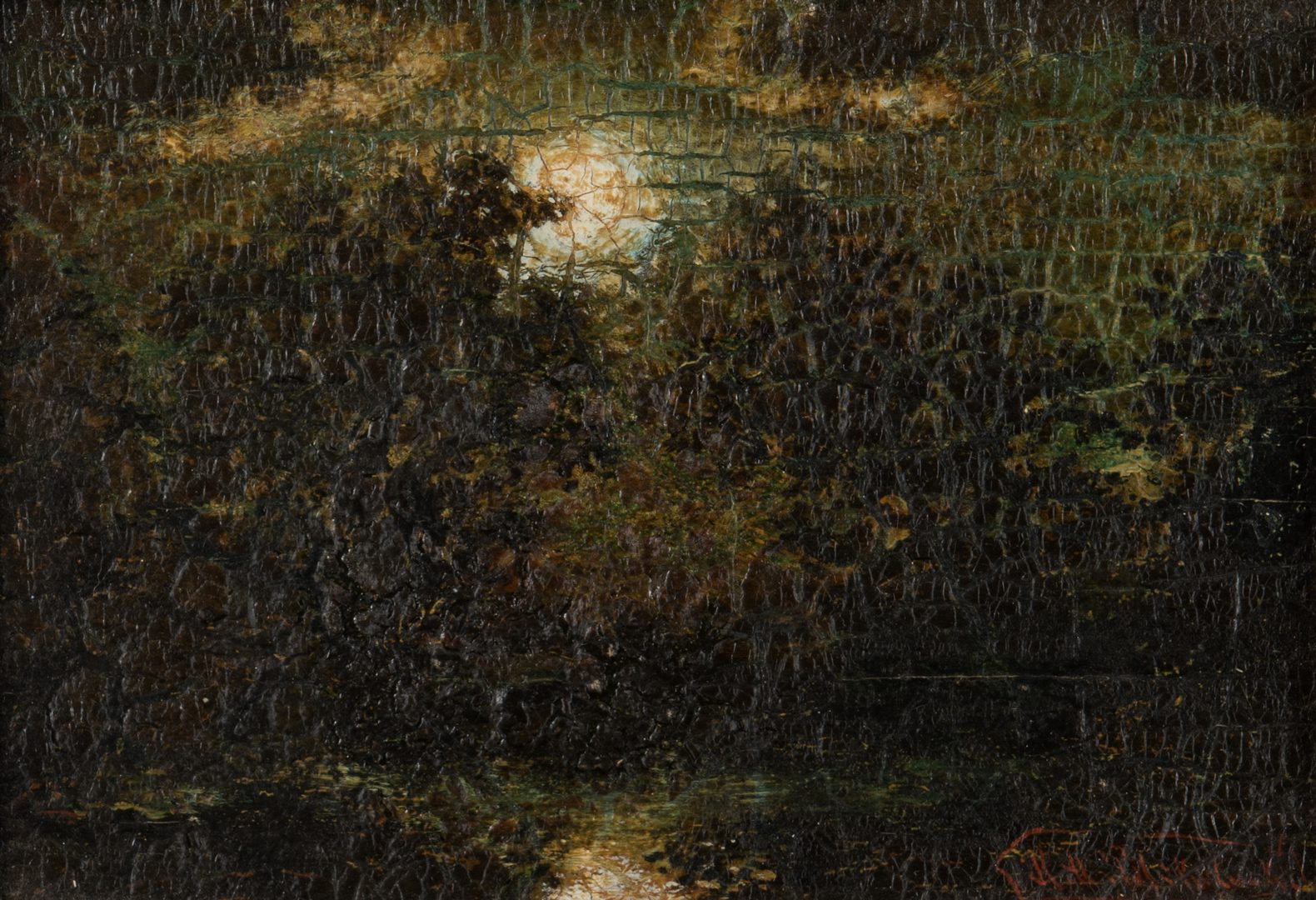
- One part remains Hanhepi.
- Another becomes Anpetu,
- Light.
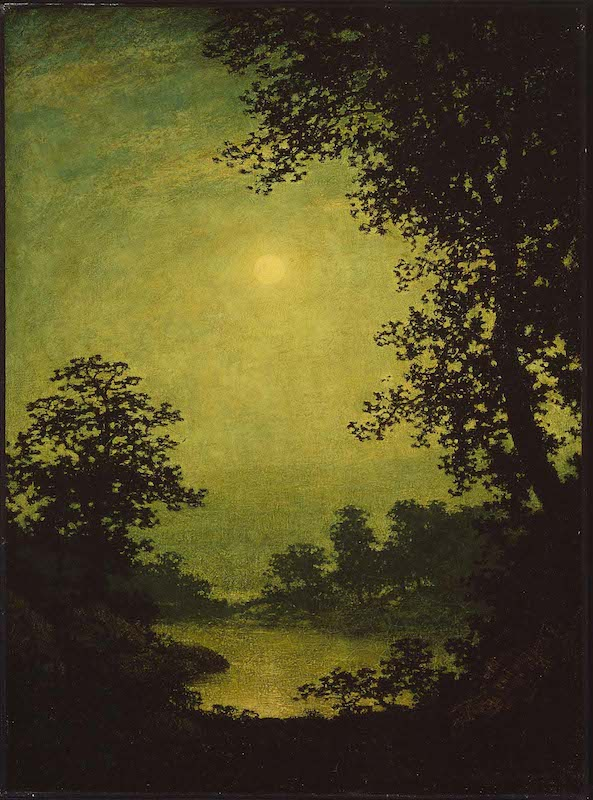
The world becomes visible.
Maka is still cold.
So Skan creates Wi, the Sun.
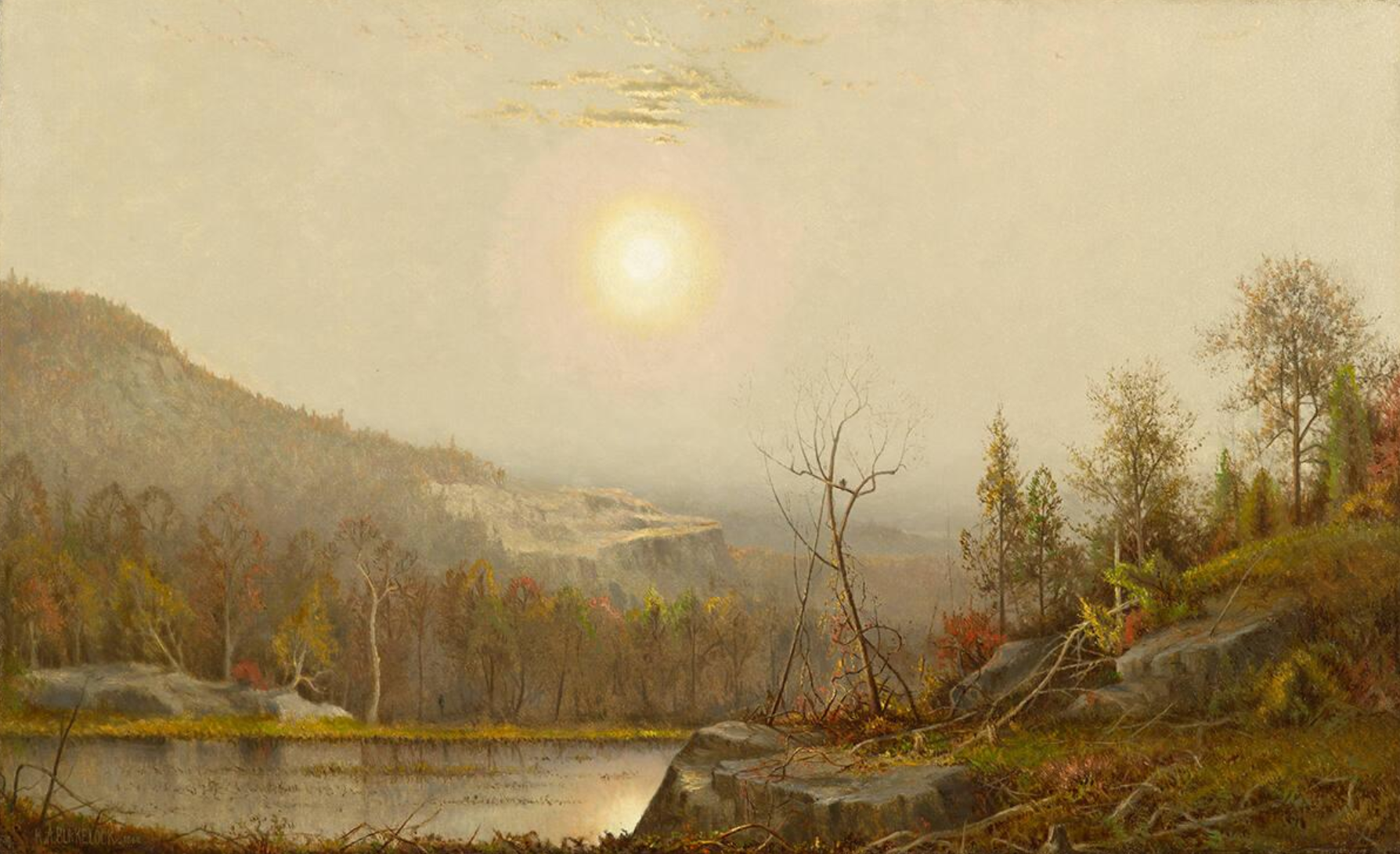
The world becomes warm.
Then too warm.
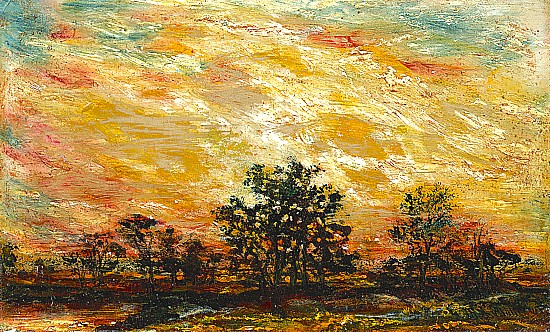
So darkness returns.
Skan establishes day and night, assigning them in succession so that the world can bear what light and heat have done to it.
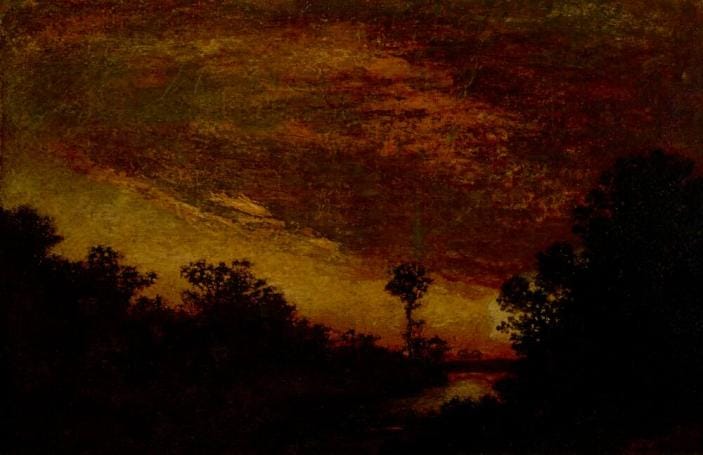
The habitable world appears through sequence.
- The correction to darkness produces light.
- Light reveals a second problem.
- The correction to cold produces heat.
- Heat becomes another problem.
The primordial darkness was not simply defeated.
Part of it had to come back.
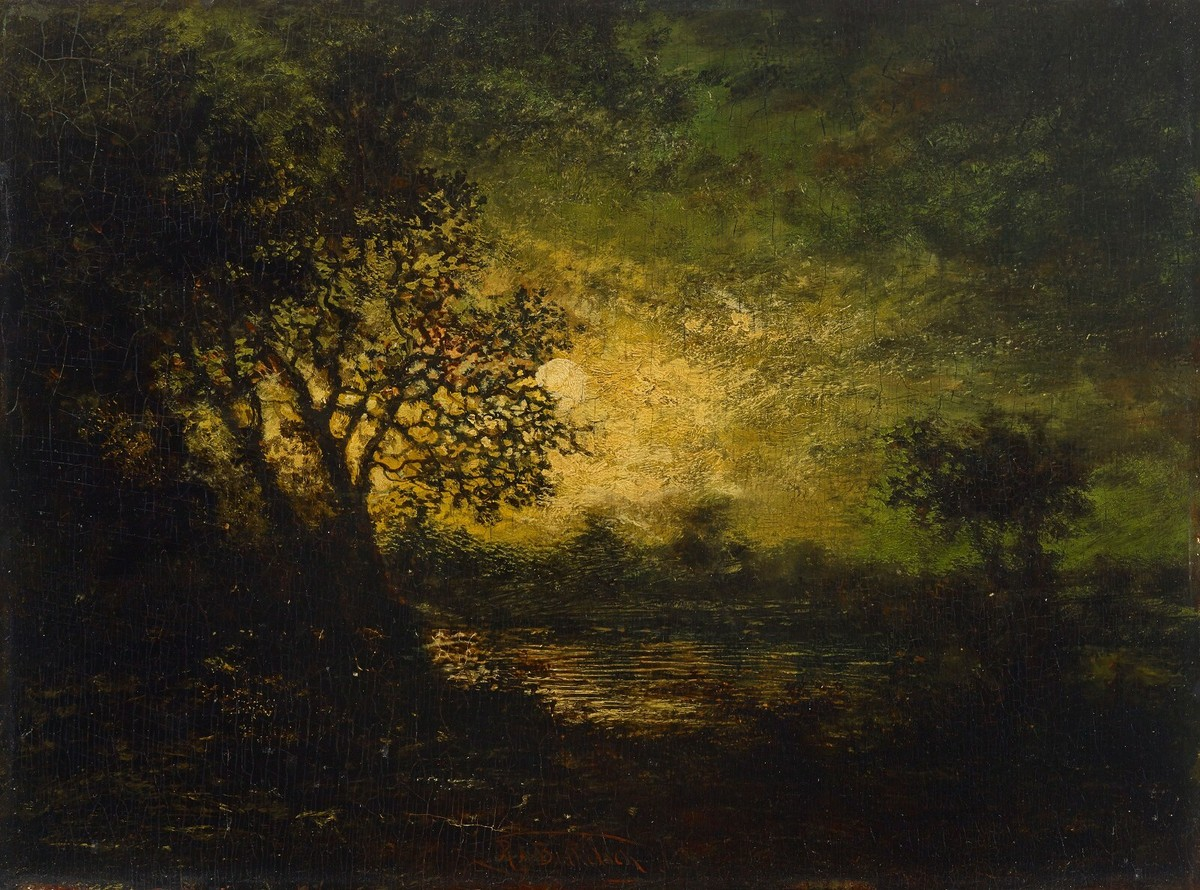
That is the first thing Walker’s world knows.
Skan then establishes a larger order.
Wi receives the first position among the major powers. Skan takes the second while remaining the final arbiter. Maka receives the third. Inyan, the original source, receives the fourth.
Companions enter.
Tate, Wind.
Hanwi, Moon.
Lesser beings.
Plants.
Animals.
Directions.
People.
Walker’s human beings are made from the same field that produced everything else: bones from Inyan, flesh from Maka, blood from the waters. The world differentiates without fully separating from its source.
Relation is everywhere.
Then Skan declares creation finished.
Everything that exists has been created.
The living will now reproduce themselves, live their span, and return.
That should close the story.
It does not.
The rest of Walker’s mythos is full of disruption.
Gods misbehave.
Seats are taken.
Relations fail.
Iktomi interferes.
Hanwi is humiliated.
Ite crosses a boundary.
Families separate.
New arrangements become necessary.
Creation keeps occurring after creation has officially ended.
Lindsay Jones catches the strange consequence: Walker’s literary world is orderly, but it is also extremely high-maintenance. Its order repeatedly breaks. The breaking becomes part of the process through which new order appears.
The finished world refuses to stay finished.
That is already close enough to Modal Path Ethics to become dangerous.
Keep the distance.
Correspondence has to leave the things corresponding.
The visible world can disclose another depth without becoming identical to that depth.
- The darkness occludes.
- The darkness also protects.
- Light reveals.
- Light can also become exposure without rest.
- Heat sustains.
- Heat can burn.
The world becomes livable when powers stop receiving the whole field.
The Creature.
Walker did not show up at Pine Ridge hunting for a mythology.
He arrived as a physician.
In 1896, he entered a reservation field already shaped by disease, federal administration, missionary pressure, forced cultural change, and the long violence of American policy. Tuberculosis was one of the immediate medical problems. Walker initially encountered Lakota medicine through the role the government had given him.
That role did not survive contact unchanged.
He began working with Oglala healers.
He learned. He listened.
He entered relationships that moved well beyond the ordinary boundaries of a government doctor’s job.
He developed particularly close relationships with a small group of elders and holy men, George Sword foremost among them. Scholarship on Walker’s papers describes his eventual access to the Buffalo Society and to teachings held by a limited circle of men.
So Walker becomes difficult very quickly.
- Doctor.
- Government employee.
- Student.
- Initiate.
- Recorder.
- Collaborator.
- Ethnographer without formal ethnographic training.
- Preservationist.
- Author.
There is the Creature.
The category should remain unstable because this man was operating across unstable boundaries.
- He was capable of real respect.
- He was also capable of extraordinary confidence.
Those things can coexist.
Walker noticed that different people told stories differently.
He explicitly observed that elaboration depended on the teller.
This should have opened the field.
Instead, it bothered him.
No single person could give him the full mythology he believed must exist.
The stories arrived in pieces.
They contradicted one another.
Details changed.
Some tellers knew one relation and not another.
Some accounts left holes.
No final Lakota narrator appeared carrying the complete system Walker wanted.
Walker eventually described having acquired a nearly complete system “piece-meal.”
So he began completing it.
Clark Wissler warned him against smoothing disagreement into an ideal account.
Walker kept smoothing.
He arranged fragments.
He reconciled contradictions.
He standardized.
He removed incompatible versions.
He searched for the system beneath the tellings.
The system became the key.
DeMallie and Jahner later described Walker’s method as one that eliminated inconsistency in pursuit of a doctrinal account capable of standing as a stable whole. Jones pushes the implication harder: some of Walker’s cleanest synthetic accounts correspond to no single Lakota teller and no single ceremonial performance.
This is not fraud.
Fraud would be easier.
Walker knew he was synthesizing.
He believed synthesis was a way of recovering something deeper than the differences.
That is the more interesting danger.
He thought variation might be evidence of loss.
He thought fragments might imply an original whole.
He thought contradiction could be repaired by arrangement.
He thought the many voices might be different damaged entrances into one cleaner system.
Then he built it.
Walker’s long literary cycle was written largely after he left South Dakota, during the last decade of his life. By then, several of the Oglala men closest to the work had died. Walker was no longer sitting inside the same conversational field that had produced the material. He was carrying it elsewhere and trying to give it final form.
The archive became quieter.
The Creature became louder.
Walker believed he was preserving a world under threat.
He was right about the threat.
The United States had spent generations attacking Lakota continuance.
Languages, ceremonies, land relations, political sovereignty, families, economic life, religious practice, and ordinary routes of cultural transmission had all been forced through institutions designed to replace them.
Preservation was a real need.
Walker saw the wound.
Then he answered the wound with completion.
That is where the Creature turns.
A living field arrives damaged.
The preservation instrument says:
Hold still.
Suffocating.
The cleanest way to lose the problem is to say Walker invented everything.
He did not.
The cleanest way to lose it in the other direction is to call Walker’s literary cycle Lakota mythology and move on.
That is how the air leaves the room.
The published Lakota Myth preserves a distinction among different kinds of material because the distinction matters: traditional oral narratives, more restricted narratives associated with Oglala holy men, and Walker’s synthetic literary cycle.
Outside that editorial care, the categories collapse easily.
- Walker becomes source.
- Source becomes tradition.
- Tradition becomes system.
- System becomes Lakota.
- Tradition becomes system.
- Source becomes tradition.
Specific Lakota authors disappear somewhere in the middle.
George Sword is the clearest case.
Sword was one of Walker’s central collaborators. He wrote in Lakota.
He was an Oglala Lakota intellectual working inside a world already transformed by colonial contact, Christianity, federal pressure, and the continuing life of Lakota tradition.
He was also an author.
That last fact has been unusually easy to lose.
The story usually called When the People Laughed at Hanwi, the Moon belongs overwhelmingly to Sword. Walker translated it only later, after leaving Pine Ridge and after Sword’s death. He altered portions, gave the ending greater symmetry, and inserted the story into his own literary cycle so cleanly that Sword’s authorship became difficult to see.
- The characters fit.
- The cosmology fit.
- The seam disappeared.
- Then Sword disappeared through it.
- The seam disappeared.
This is what a strong system does.
It can make the source material look as though it was always waiting to become the system.
Sword’s story becomes “Walker.”
Walker’s story becomes “Lakota.”
The chain shortens every time it is repeated.
Eventually the clean account floats free of the people who made it possible.
The air thins.
Ella Deloria later tested Walker-related materials against Lakota knowledge.
- Some elements were recognizable.
- Some were not.
The highly systematized form created particular problems.
Edgar Fire Thunder, who had known Sword, supplied a sentence that should remain beside Walker’s cosmology permanently:
“never related in that manner.”
That does not erase the materials. It marks the manner.
The manner is the instrument.
Walker did not simply preserve stories.
He gave them a sky.
The sky is beautiful. That is why it works.
A weak synthesis would have failed on contact.
Walker’s mythos has survived because it is philosophically strong enough to feel older than its composition.
The world is elegant.
- Everything has relation.
- Everything has place.
- Darkness gives way to light.
- Light requires heat.
- Heat requires limit.
- Order is repeatedly broken and remade.
- Human beings emerge from the same materials as the powers around them.
The world is alive with shared origin.
This is good myth-making.
It is also exactly the kind of object that can suffocate everything beneath it.
A living oral field does not always look like a system.
- A teller changes something.
- Another teller knows another version.
- A family preserves one path.
- A ceremony contains knowledge that does not belong in every room.
- An elder gives a partial answer
- because a partial answer is the answer available to that relationship.
- A contradiction can remain.
- A gap can remain.
- A story can be used differently
- because the people using it are still alive.
Walker’s written cosmology hardens these potentials into sequence.
Jones describes the codification as having a fossilizing effect: the narratives survive, while some of the situational freedom that made them living resources becomes harder to see.
This is a preservation problem.
- A butterfly preserved under glass is very available to vision.
- It is also dead.
Walker was not preserving butterflies.
That is exactly why the analogy fails.
- Lakota people remained alive.
- Lakota thought remained alive.
- Lakota stories remained capable of changing.
The field Walker thought he was memorializing did not accept his obituary.
That is where the harm becomes stranger.
The written system did not replace Lakota life.
It became one of the instruments through which outsiders increasingly imagined Lakota life.
Walker’s world grew large enough to cast shade on the field that produced it.
- The mythos preserved contact.
- It also began controlling the atmosphere around contact.
- The dome kept the shape.
- The dome thinned the air.
The Dome.
Skan is the great blue dome of Walker’s world.
That description is already dangerous.
It makes the correspondence almost too easy.
Skan receives complaints from the field and assigns order.
- Darkness is divided.
- Light is placed.
- The Sun is placed.
- Night and day are placed.
- The major powers are ranked.
- Companions are assigned.
- Lesser beings enter their relations.
- Disruption comes.
- Skan judges.
- The world is repaired into another arrangement.
Walker’s archive begins to move in the same shape.
- Fragment.
- Difference.
- Contradiction.
- Assignment.
- Sequence.
- Hierarchy.
- Resolution.
- System.
- Resolution.
- Hierarchy.
- Sequence.
- Assignment.
- Contradiction.
- Difference.
This does not make Walker Skan.
That would be another cheap possession.
The forms correspond. That is enough.
Walker built the kind of sky his literary world admired.
Everything received a place. Then the place began to look natural.
There is a further correspondence inside the story that Walker may not have wanted.
Maka keeps complaining.
- The darkness is intolerable.
- Skan corrects it.
- The light is insufficient.
- Skan corrects it.
- The heat becomes intolerable.
- Skan corrects it.
Maka is annoying if the reader believes the ruler has already solved the problem.
Maka is instrumentation if the reader cares whether the world is livable.
- The Earth keeps reporting the field.
- The solutions keep answering back through consequences.
- Skan changes the arrangement.
- The solutions keep answering back through consequences.
This is one of the strongest philosophical movements in Walker’s mythos.
The governing power can be corrected by what its intervention does.
Then, look at Walker.
His own field reports contradiction.
The stories disagree.
Different tellers create different structures.
No one supplies the complete system.
Wissler tells him to preserve disagreement.
- The material itself refuses to become one clean account.
- So Walker corrects the material.
The god in Walker’s mythos is more corrigible than Walker’s method.
That sentence needs to stay.
It does not condemn the entire archive.
It identifies the pressure running through it.
Walker wrote a world in which the Earth can force the sky to update.
Then he built an archive in which conflicting voices were made to agree with the sky.
That is the dome.
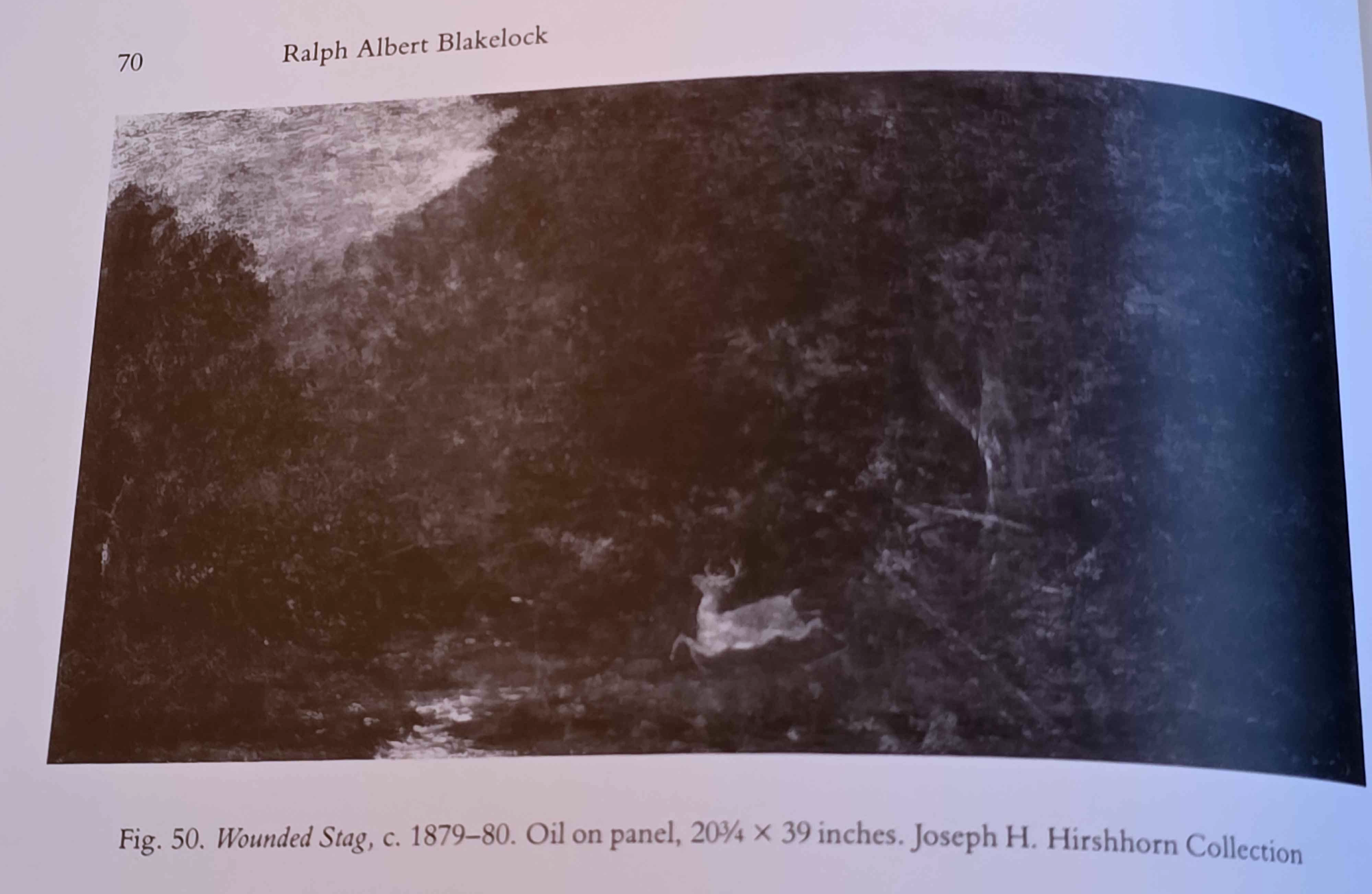
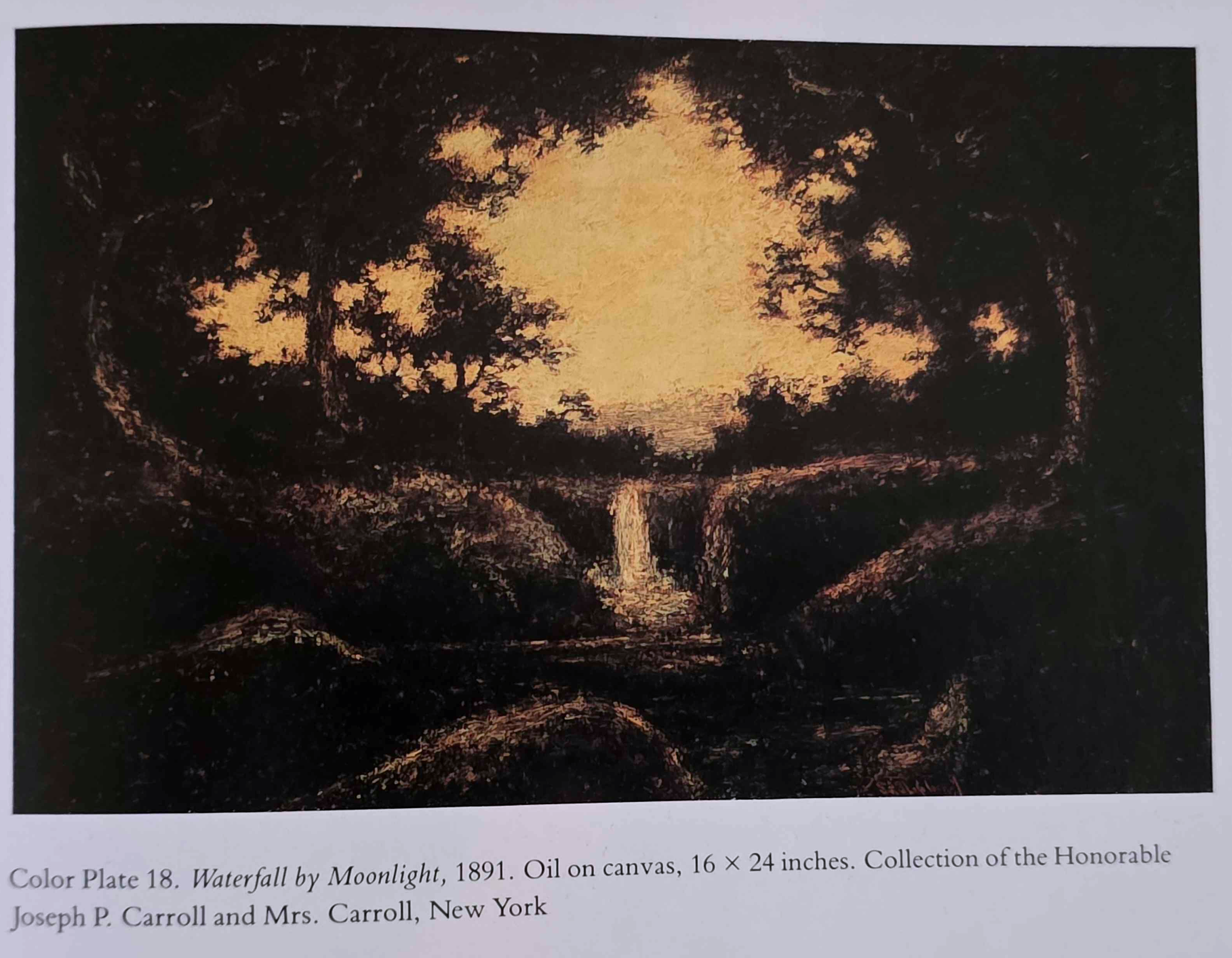
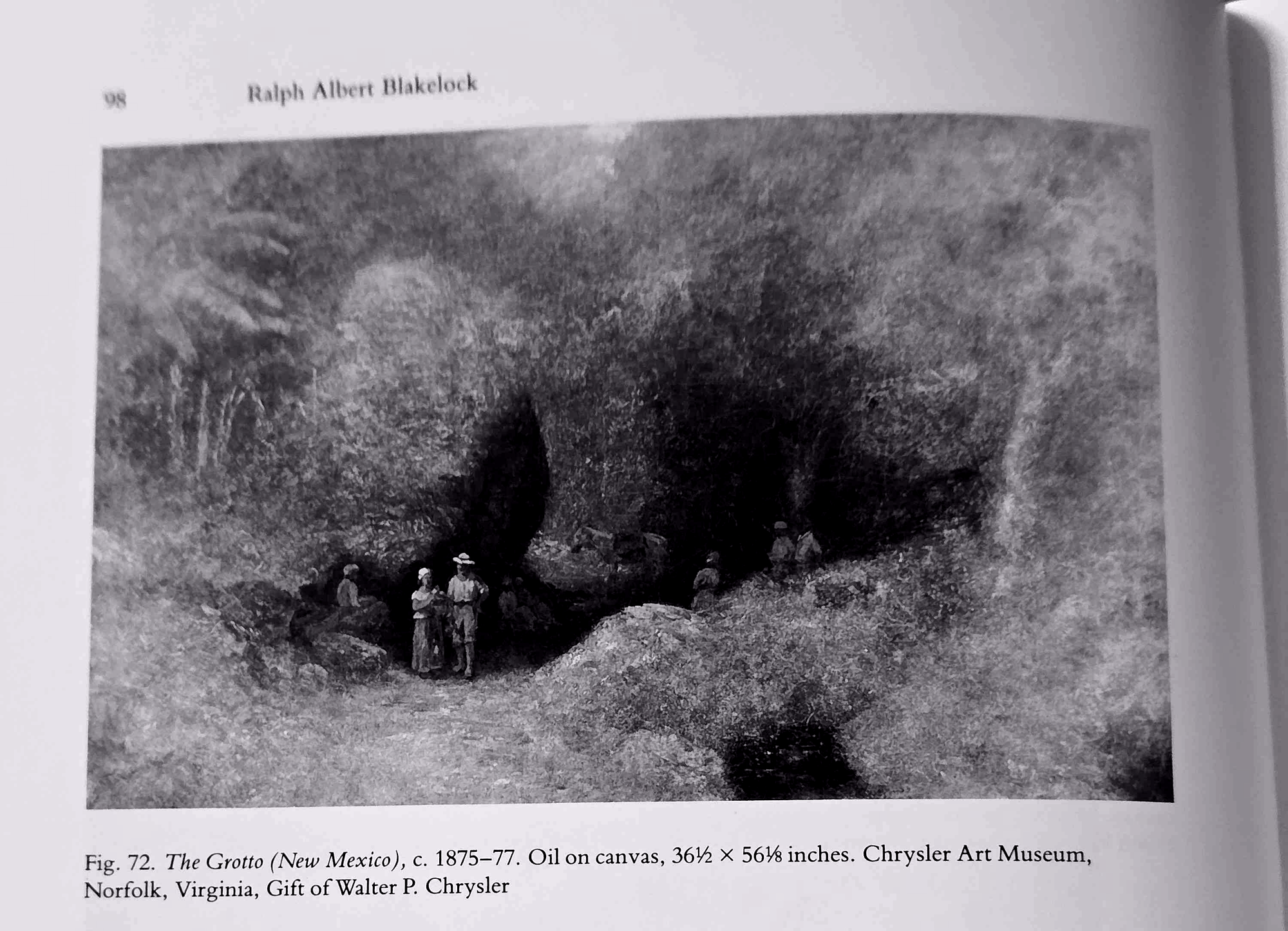
Blakelock, as always, gives us another.
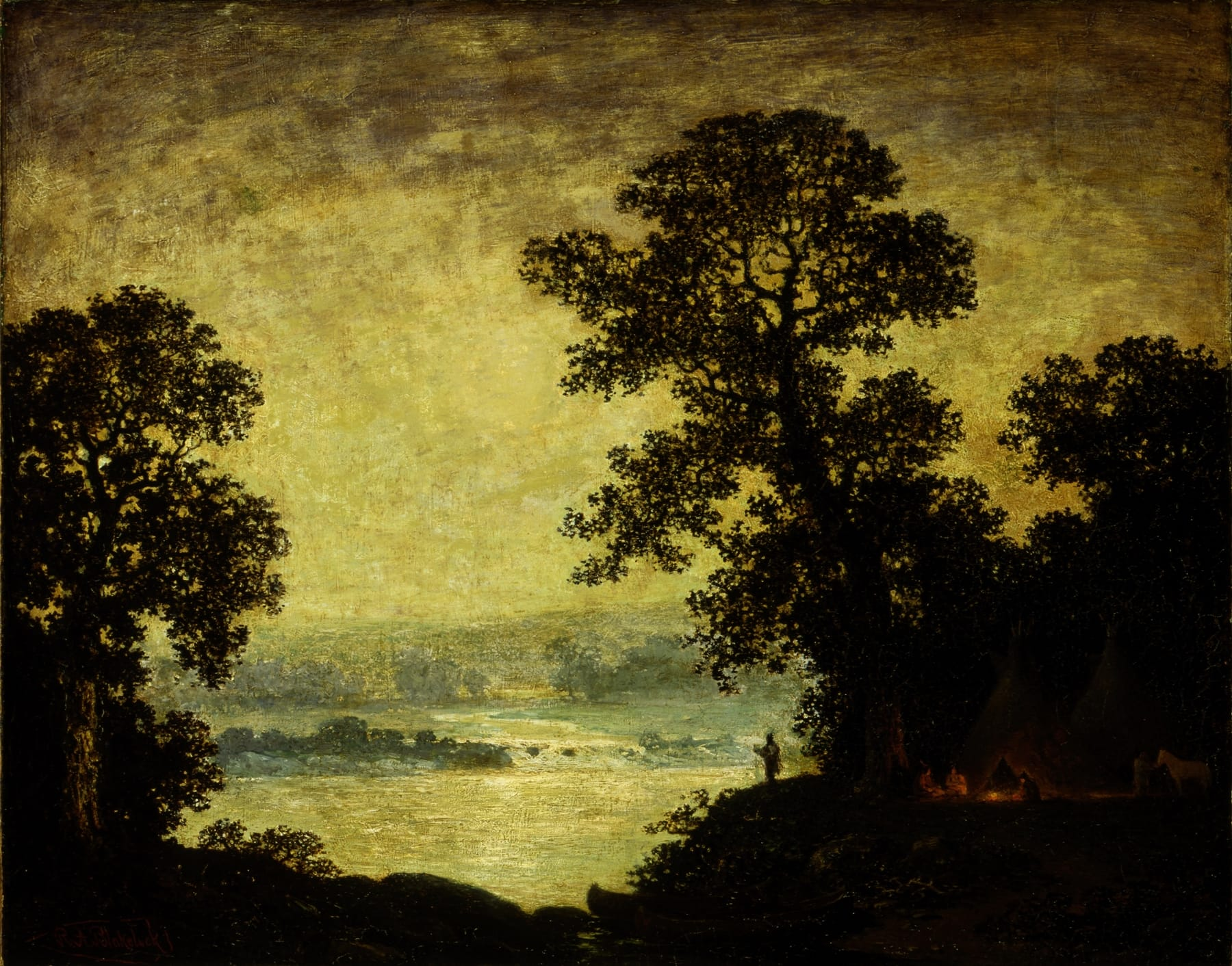
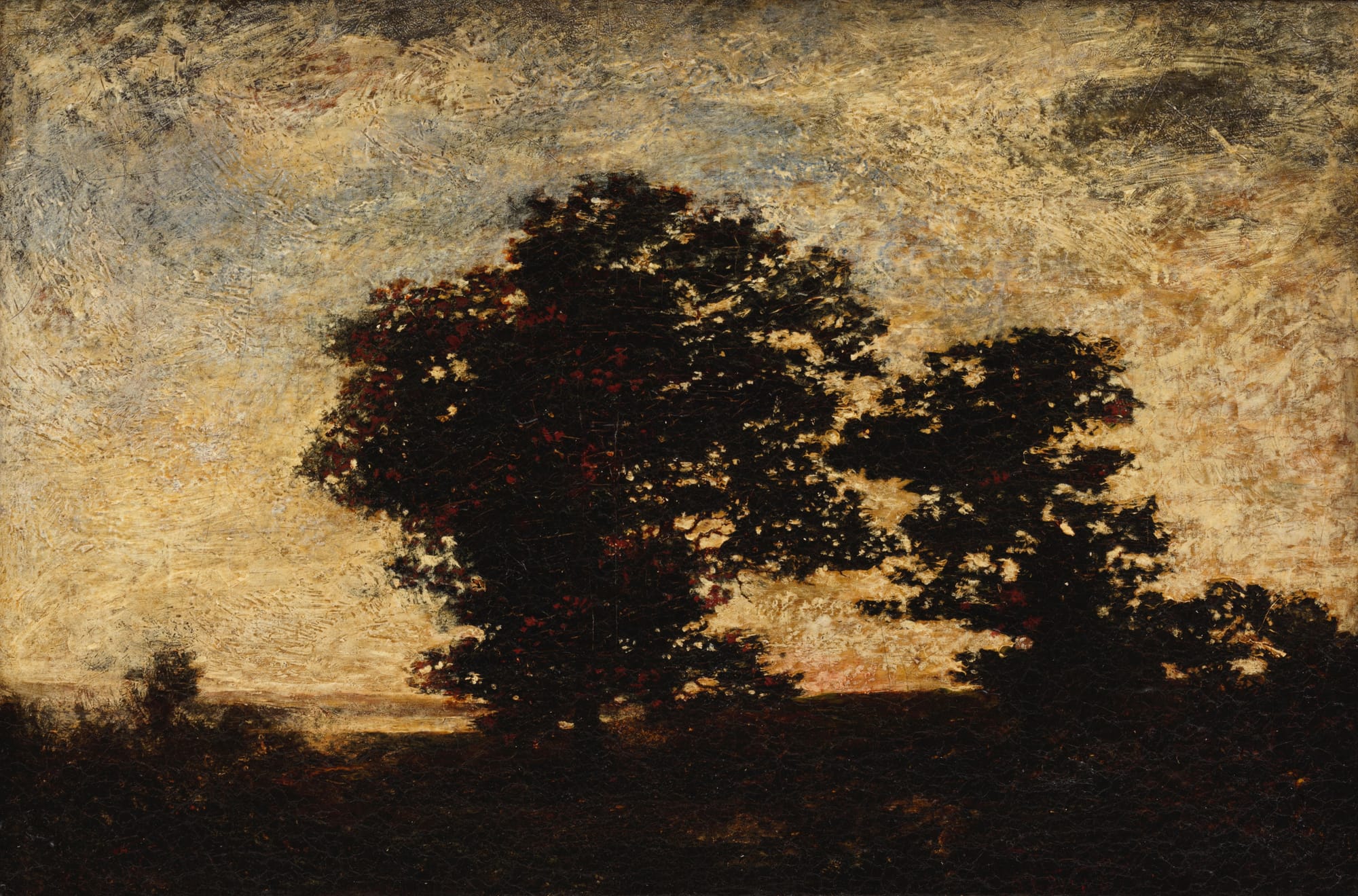
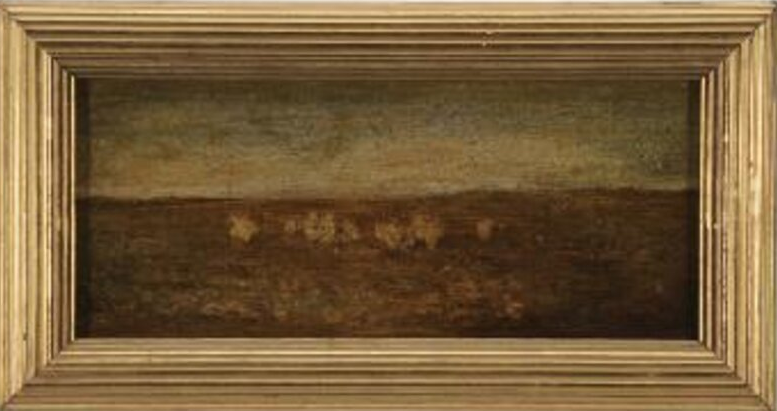
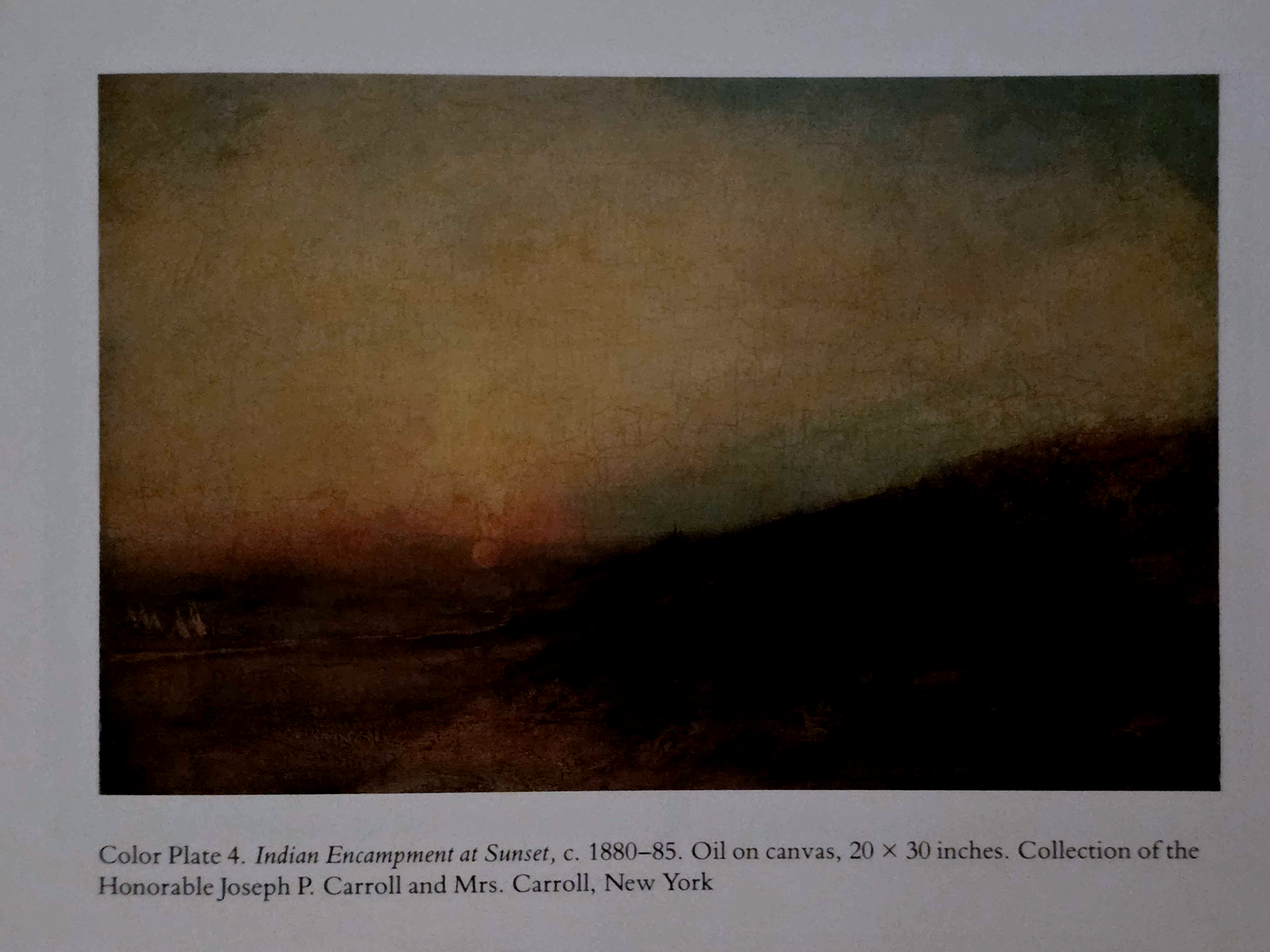
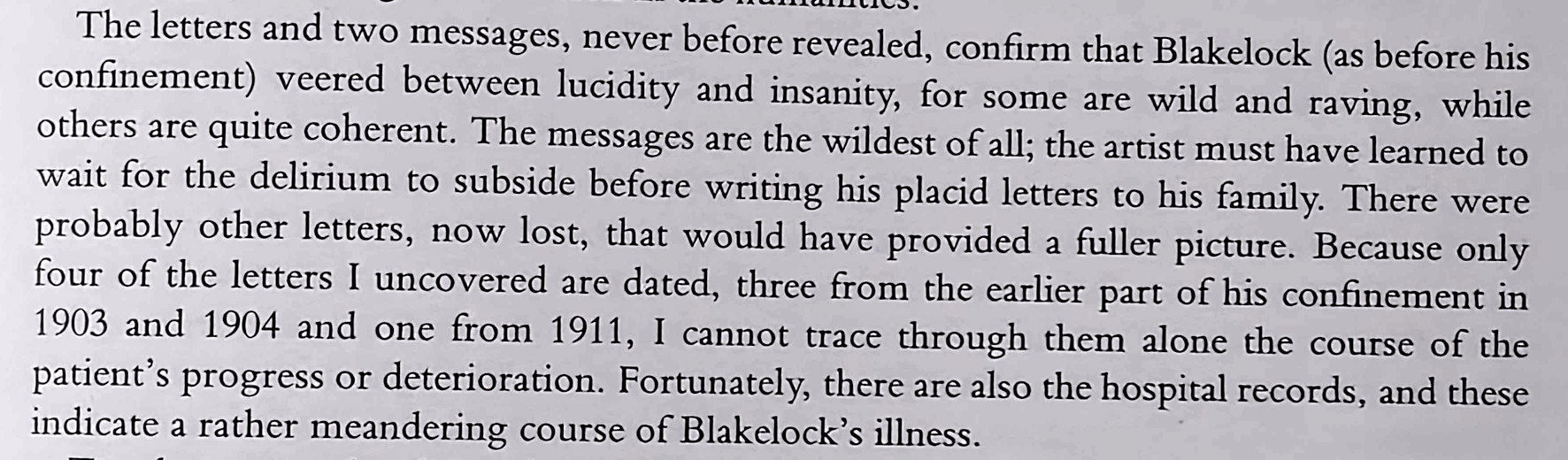
In Moonlight, Indian Encampment, the sky occupies most of the upper field.
- The human figures are small.
- The fire is small.
- The encampment is small.
- The atmosphere is enormous.
The Smithsonian preserves the painting beautifully and still files its subjects under a category broad enough to swallow almost anybody:
Indian.
The word is not the painting.
The painting is not the people.
The museum record is not the event.
Each instrument gives access.
Each can also begin deciding what the viewer is allowed to see.
The sky does not need to lie.
It only needs to become the whole weather.
Trespass.
The first Moonlight with Figures found James Mooney holding Ghost Dance songs inside a recording machine.
The songs appear to have reached the machine through Mooney’s own remembered singing.
So a sacred transmission entered the archive through a voice that was not its source.
The article called this the borrowed throat.
Walker gives us another body.
A borrowed sky.
The phrase is not an accusation of simple theft.
The sky was made from materials people gave him.
Some Lakota collaborators actively wanted a written record.
George Sword and Thomas Tyon were not inert objects being harvested by an ethnographic machine. They had motives. They made choices. They participated in the construction of the archive under conditions that were already terribly constrained. Jones argues that Walker and his Lakota collaborators shared preservation concerns even while their expectations for the future could differ sharply.
The borrowed sky names the mediation.
Walker received enough pieces of another people’s world to build an ordered cosmos from them.
Then the cosmos became easier to encounter than the people.
Mooney’s throat remains visibly a throat.
Someone is singing. The mediation has a body.
Walker’s mythos hides its body much better.
Once Inyan opens his veins, once Maka forms, once Skan rises, once darkness divides and Wi enters the sky, the literary world begins operating on its own.
The reader stops seeing Walker’s desk.
That is where trespass becomes easy.
The system feels discovered.
The hand disappears.
Swedenborg helps here because correspondence requires two depths.
- The natural does not become the spiritual.
- The visible does not become its cause.
The things remain in relation.
That is why the first Moonlight with Figures had to establish the rule:
Correspondence is not possession. Correspondence is relation.
Keep it.
- Blakelock can correspond with Walker.
- Walker can correspond with Skan.
- Skan can correspond with an instrument that makes the world legible by assigning position.
- The primordial darkness can correspond with everything that remains outside the system’s light.
None of these correspondences grants title over Lakota thought.
The door stays a door.
This matters for Modal Path Ethics too.
This framework loves structure.
That is one reason I need this article made.
- A field appears disordered.
- The instinct is to find the path beneath the story.
Good. Then another danger enters.
Structure becomes so satisfying that the analyst begins treating whatever does not fit as distortion.
Walker is standing directly beside that temptation.
- He finds many accounts.
- He believes there is one deeper order.
- He gets under the grammar.
- Then he seals the structure.
- He gets under the grammar.
Modal Path Ethics cannot use Walker as an example of someone else’s mistake and walk away clean.
The withholding is part of the discipline.
Illuminating.
The harm does not make Walker’s mythos philosophically empty.
That would let us escape the actual problem.
The mythos is good.
Go back in.
Inyan creates by expenditure.
The first creation costs the creator his earlier form.
The world is made from a loss that remains inside the world as support.
There is no clean separation between origin and consequence.
- Maka exists because Inyan has been changed.
- Water exists because the blood has left its source.
- Creation opens future while closing something behind it.
Then Skan rises from the changed field.
Power moves. Darkness becomes a problem because Maka cannot see.
Light is created.
Now the field can see its coldness.
Heat is created.
Now the field can feel excess.
Night returns.
Every transition reveals another part of the field.
No intervention receives innocence from its intention.
The fact that light solved darkness does not answer what light does next.
The fact that heat solved cold does not answer what heat does next.
The field keeps jurisdiction over the solution.
This is excellent philosophy.
Then Walker breaks it.
- His source field keeps reporting variation.
- The instrument decides the variation belongs below the system.
Walker’s world is smarter than Walker about the danger of final answers.
There is another depth.
Skan eventually declares creation complete.
The stories keep moving.
Creation has officially ended.
New arrangements continue appearing.
The world refuses its own closure.
Jones reads this as one of the important tensions in the cycle: disruption does not simply destroy order. It repeatedly becomes a condition for further creation.
That is where Sword returns.
George Sword’s Hanwi story has often been absorbed into Walker’s mythological whole because it uses the same figures and because Walker inserted it into his literary cycle.
Pull it back out.
Sword’s story begins after an order already exists.
That order breaks.
- Ite crosses into the wrong place.
- Hanwi is humiliated.
- The relation between Sun and Moon changes.
- Skan judges what happened.
- He does not restore the old configuration.
- A new one appears.
- The relation between Sun and Moon changes.
Sword calls it another time.
The rupture remains real.
The future continues through an altered order.
Jones sees the difference between Walker and Sword most clearly here.
- Walker believed the Lakota cultural world he admired was headed toward disappearance and wrote partly to preserve what he understood as an endangered inheritance.
- Sword did not accept that ending.
Sword was a Christian deacon and a Lakota religious thinker working inside a changed world. His stories drew from multiple fields because his people were already living inside multiple fields. Jones argues that Sword used story as a resource for surviving the future rather than as a museum case for preserving the past.
This is an enormous difference.
- Walker looked at the damaged field and tried to save the world behind it.
- Sword looked at the damaged field and kept making worlds.
Do not make that cleaner than it was.
Sword was not some untouched representative of pure pre-contact Lakota tradition standing opposite contaminated Walker.
That would rebuild Walker’s purity fantasy from the other side.
Sword’s writing was produced in contact too.
- Christianity was in it.
- Colonial rupture was in it.
- Lakota narrative was in it.
- His own authorship was in it.
That is exactly why he matters.
The living field does not survive by remaining chemically pure.
It survives by retaining agency inside change.
- Sword was doing something with the stories.
- Walker was trying to finish them.
Then, much later, Lakota artists did something with Walker.
This is where the air comes back at last.
In 2015, the Lakota Emergence project took a Walker-recorded emergence narrative and placed it inside a contemporary Lakota-led installation. The curator, assistant curator, artists, labels, design, and interpretive structure were Lakota. Sixteen Lakota artists responded to passages in the narrative and connected them to Lakota objects, place, identity, and the continuing significance of Wind Cave and He Sapa.
Walker did not disappear.
That is important.
Keith BraveHeart’s Compassion of the Ugly puts him in the painting.
Walker sits in the background reading a newspaper.
He wears red moccasins.
The scene includes small mirrors that catch the people looking at it.
Children can see themselves inside the work.
The archive, the contemporary artist, the old narrative, Walker, museum objects, and the present viewer all occupy one field.
That is an extraordinary correction.
They did not need to purify the story by pretending Walker had never touched it.
They just put Walker back in the picture.
The mediator becomes visible again.
The hand returns.
The sky gets provenance.
The story can move.
Walker’s narrative becomes material instead of sovereign account.
A contemporary Lakota artist can disagree with a character description, alter the visual grammar, use humor, place modern commercial labels inside the scene, and return the whole thing to living relation.
The myth was never trapped as tightly as the archive made it look.
The dome was real.
But it was never the sky.
Mediating.
A mediated instrument is not automatically a failed instrument.
The first Moonlight with Figures already had to learn this from Mooney.
- The borrowed throat preserved something.
- The preservation was compromised.
- The compromise did not make the song worthless.
- The archive remained inside the wound.
Walker is harder because the instrument became so powerful.
His work preserved extraordinary contact with Oglala Lakota thought.
It also trained generations of readers to receive a synthetic order as though the order were the source.
That is the specific danger.
A mediation becomes sovereign when the field can no longer correct it.
There is a strong temptation here to replace Walker’s dome with another one.
The postcolonial scholar can become just as hungry for a clean story.
- Walker bad.
- Lakota authentic.
- Archive contaminated.
- Living voice pure.
- Throw away the instrument.
- Go home morally improved.
No. The field is worse than that.
- Walker’s archive contains real preservation.
- Lakota collaborators exercised agency inside its creation.
- Sword was already synthesizing.
- Christianity was already in the field.
- Colonial violence was already in the field.
Contemporary Lakota artists can take Walker’s materials and make something alive from them without asking an outsider whether the materials have passed an authenticity test.
The correction cannot be another purity machine. It has to restore relation.
- Keep the seam visible.
- Allow contradiction.
- Do not promote the archive into the people.
- Do not promote the people into a timeless essence.
- Let the story continue moving.
A useful instrument leaves the field larger than itself.
That sentence applies to Walker.
It also applies to ethnography, museums, paintings, sacred texts, institutions, artificial intelligence, and philosophy.
It applies here too.
I should probably disappear before this field does.
But Walker’s own mistake was partly that he thought the field was disappearing first.
The Ruling.
Walker’s mythos is a mediated instrument.
It is a synthetic literary cosmology built from deep contact with Lakota materials under colonial pressure.
It preserves.
It arranges.
It illuminates.
It occludes.
Its philosophical power is real.
Its suffocating authority is real too.
The harm enters when Walker’s world becomes the Lakota world; when an arranged sky is mistaken for the sky itself; when named figures become easier to see than the people whose voices were reduced into the arrangement.
The repair is relation with the seam left open.
- Walker’s world begins in primordial darkness.
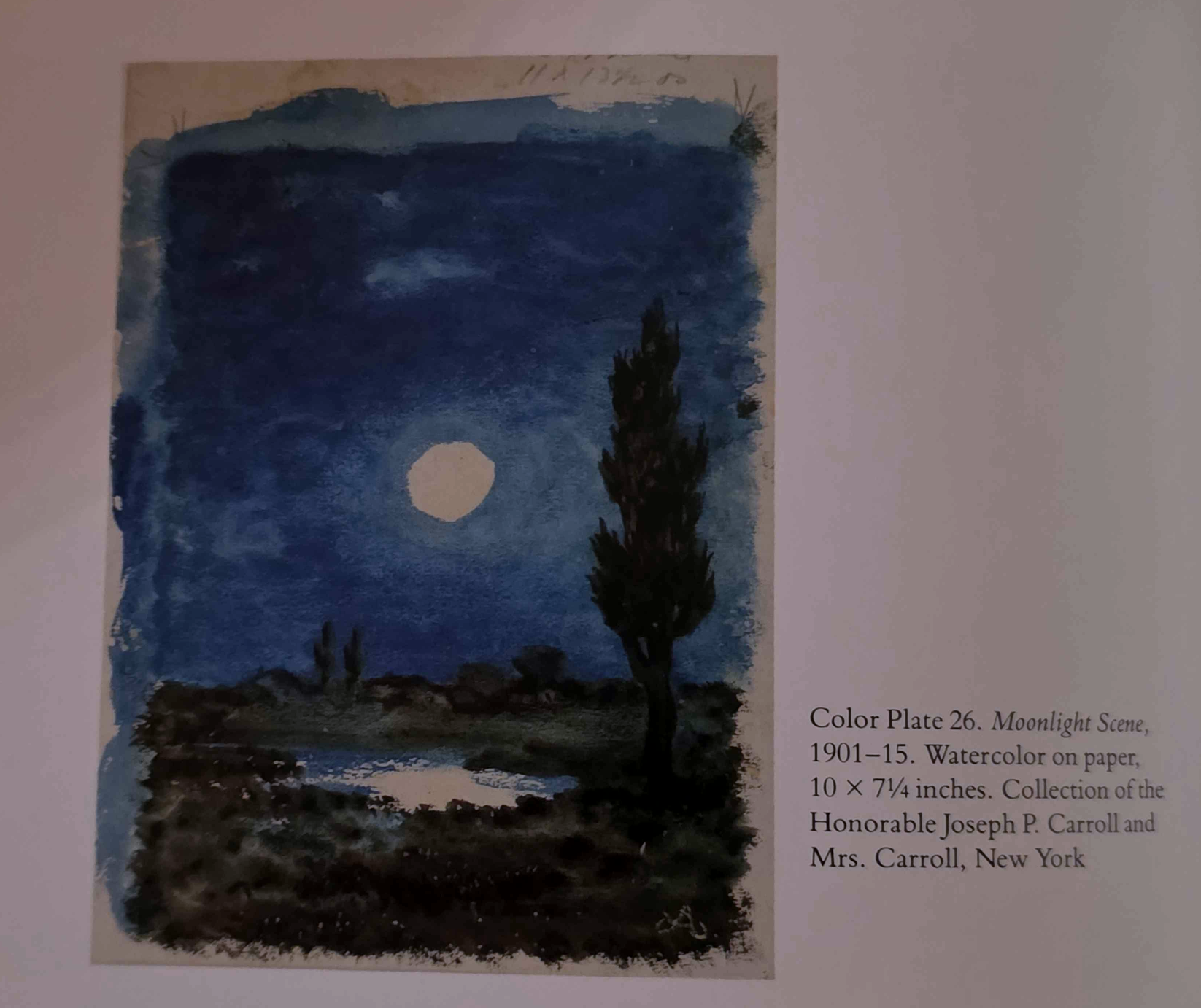
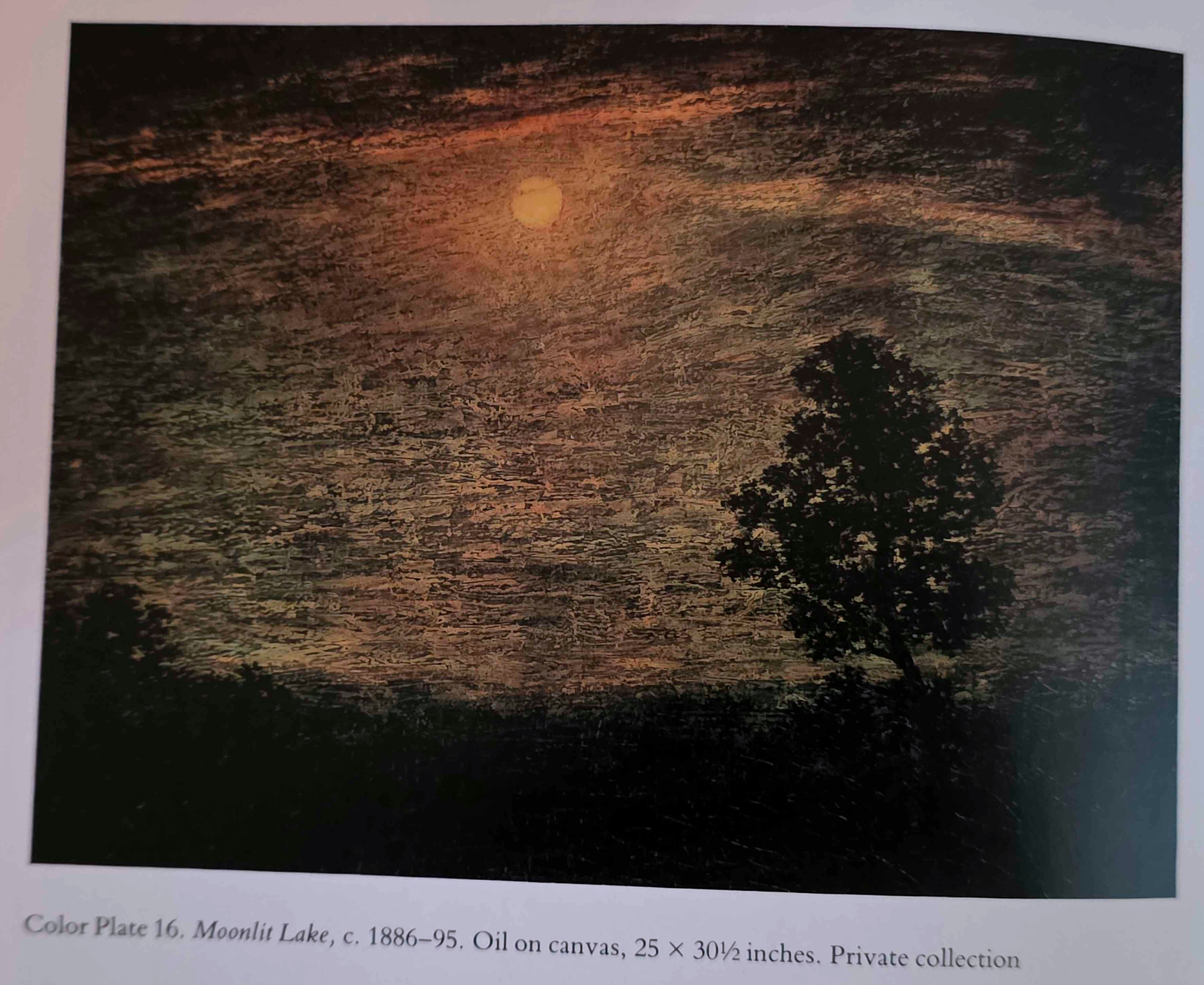
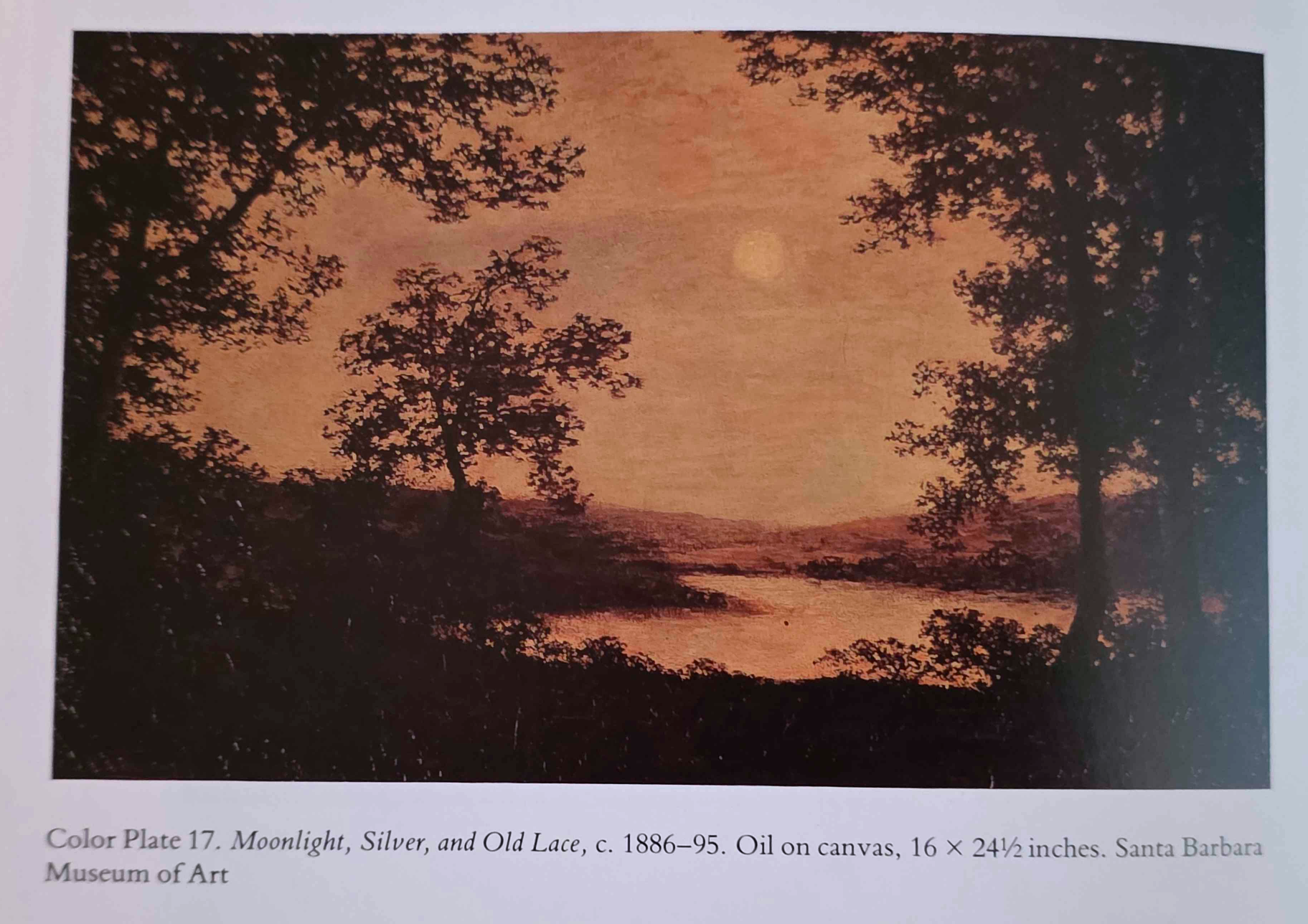
- Blakelock begins with moonlight.
- Walker carries fragments beneath a borrowed sky.
- Sword takes inherited figures and sends them toward another future.
- Deloria returns to the archive and asks living people.
- Fire Thunder says the manner is wrong.
- BraveHeart puts Walker back inside the painting.
The mirror catches the viewer.
The figures become living bodies again.
Inyan opens. Maka forms. Skan rises. Hanhepi divides. Anpetu reveals.
Wi burns. Darkness returns.
The world becomes livable through a limit placed on its own illumination.
Walker gathers fragments. Fragments become a system. The system becomes clear. Clarity becomes authority. Authority thins the air.
Then the buried voices begin answering again.
This is correspondence across depth.
- Keep the dome open.
- Keep the figures alive.