Nietzche and the Sacred Slack
People have spent more than a century making God is dead do very small jobs.
It has served as an atheist victory sign, a teenager’s first philosophical weapon, a black T-shirt, a gym caption, and an excellent way to turn one difficult paragraph into a personality.
Nietzsche gave it a larger assignment.
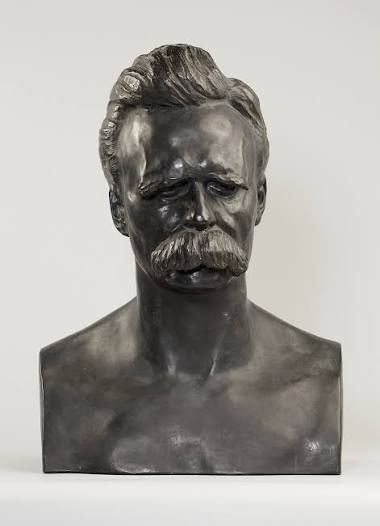
In The Gay Science, the madman does not announce the death of God to grieving believers. He enters a marketplace full of people who already do not believe and finds them laughing. They think the proposition has been settled. He asks who wiped away the horizon, what happened when Earth was unchained from its sun, and which sacred games will be invented after the greatest source of orientation in European life has bled out.
The unbelievers had deleted the answer.
They had not yet received the consequences.
Modal Path Ethics now has a name for the load hanging above that marketplace.
Sacred slack.
Sacred slack is the interpretive work left hanging when awe, grief, vocation, metaphysical fear, death, bodily intensity, spiritual rupture, and the need for summons remain joined inside a person while the institutions around them divide the pieces among separate desks.
- One office receives the proposition.
- One receives the symptom.
- One receives the ritual.
- One receives the historical record.
- One receives the body.
- One receives the emergency.
- The person still needs a world in which these things can meet.
Nietzsche saw the great disassembly arriving.
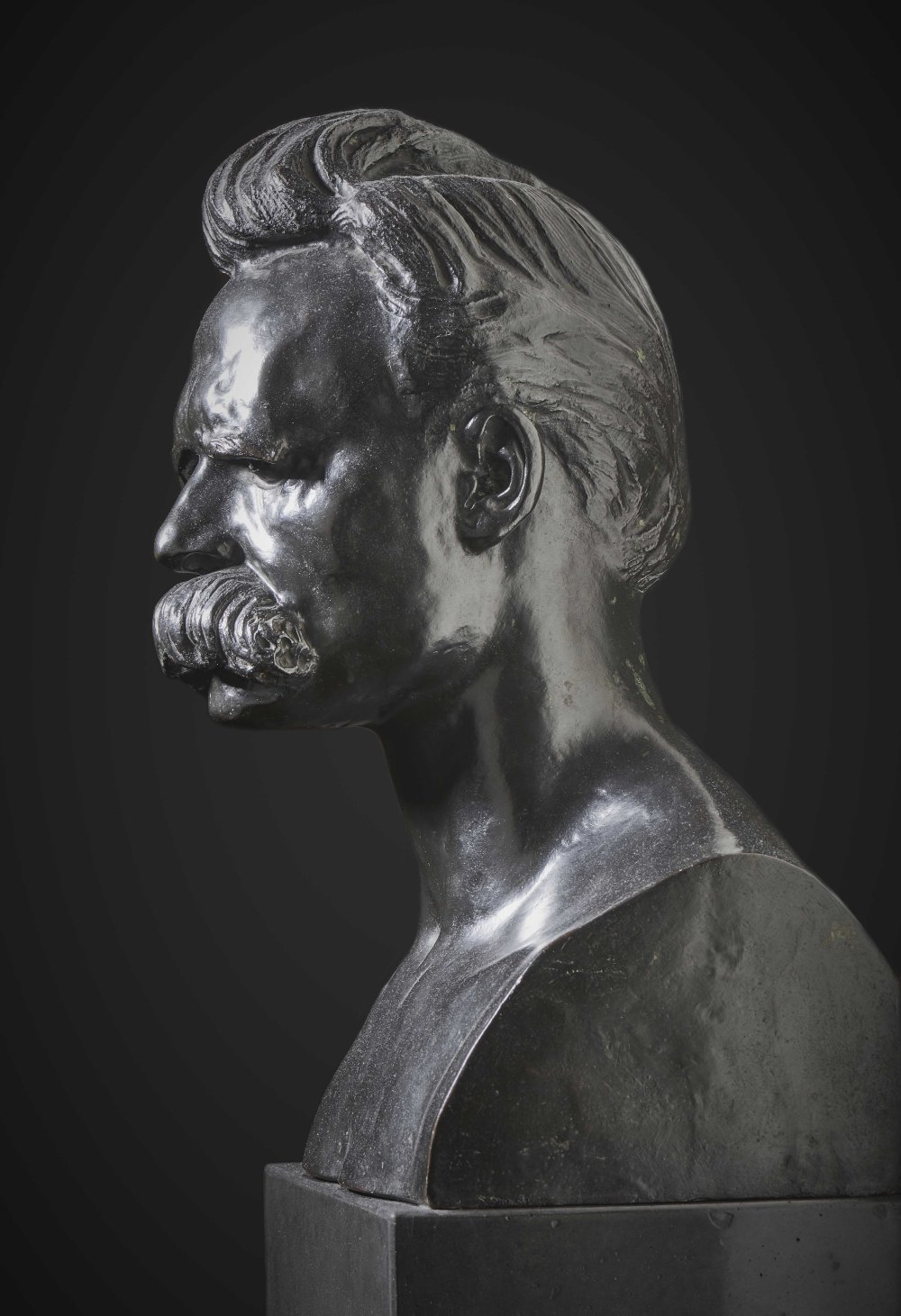
He also understood that the vacancy would become productive. The lost horizon was an opening. The empty altar was a workbench. The collapse of inherited authority could release experimentation, laughter, art, self-overcoming, and forms of life that the older sacred order had kept under judgment.
That gives sacred slack its double meaning.
- Slack is uncarried load.
- Slack is also room.
Nietzsche lives inside both.
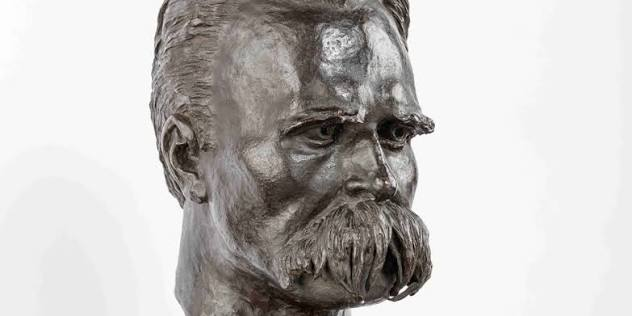
He is one of the sharpest diagnosticians of the load left after God. He is also one of the first builders to enter the opening with replacement instruments.
Some of those instruments are magnificent.
Some reach for the old throne.
The God Was Carrying Something.
The death of God is easy to misunderstand when God is treated as one proposition among others.
- A person once believed a supernatural being existed.
- Later, the person stopped.
- The belief changed.
- The matter appears closed.
- Later, the person stopped.
Nietzsche’s madman describes a field transition on a much larger scale.
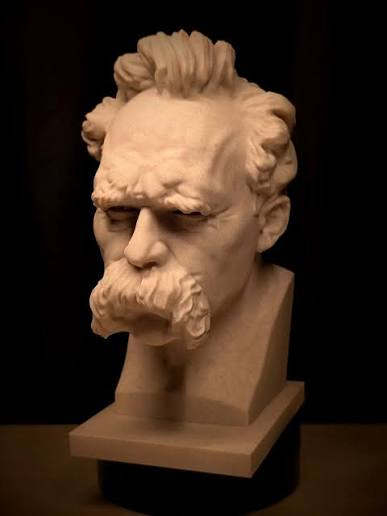
The Christian-Platonic sacred order had carried an account of:
- suffering,
- guilt,
- forgiveness,
- death,
- vocation,
- obligation,
- human rank,
- sacred time,
- ritual repetition,
- cosmic direction,
- historical purpose,
- and the relation between this life and whatever exceeded it.
That order caused real harm. It could turn the body into evidence against itself. It could make obedience holy, suffering deserved, hierarchy eternal, doubt dangerous, and another world more important than the living one.
It also carried these questions together.
This is the point Sacred Slack insists on keeping.
A sacred instrument can preserve contact, care, memory, discipline, humility, community, and orientation while distorting the field it helps people survive. Function does not establish innocence. Damage does not prove the absence of function.
 Aidan Lawson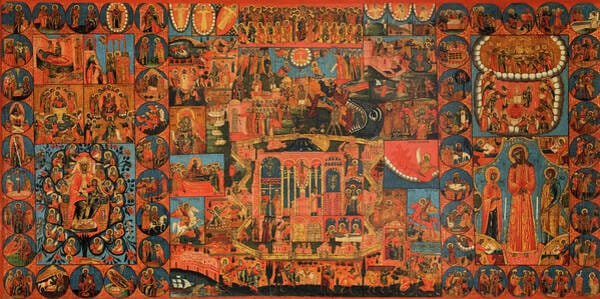
Nietzsche understood this better than most triumphant secularism ever has.
The madman’s announcement exceeds the removal of one outdated explanation from an otherwise complete modern world. He describes the loss of the horizon. Above and below have become unstable. The Earth no longer knows its sun. The old source of orientation has vanished faster than the people living inside its coordinates can reorganize themselves.
 Aidan Lawson
This is why he says the event has not yet arrived, even though the deed has already occurred.
Institutional authority can collapse before the functions it carried have found another home.
A person may stop believing in Christian revelation while retaining Christian guilt.
A scientific culture may reject theology while preserving an unconditional faith in truth.
A political movement may reject church hierarchy while rebuilding confession, heresy, purity, apostasy, sainthood, and apocalypse.
A market society may reject vocation language while asking work to supply identity, discipline, judgment, purpose, and proof of worth.
The sacred machine can lose its name while its parts continue operating across the field.
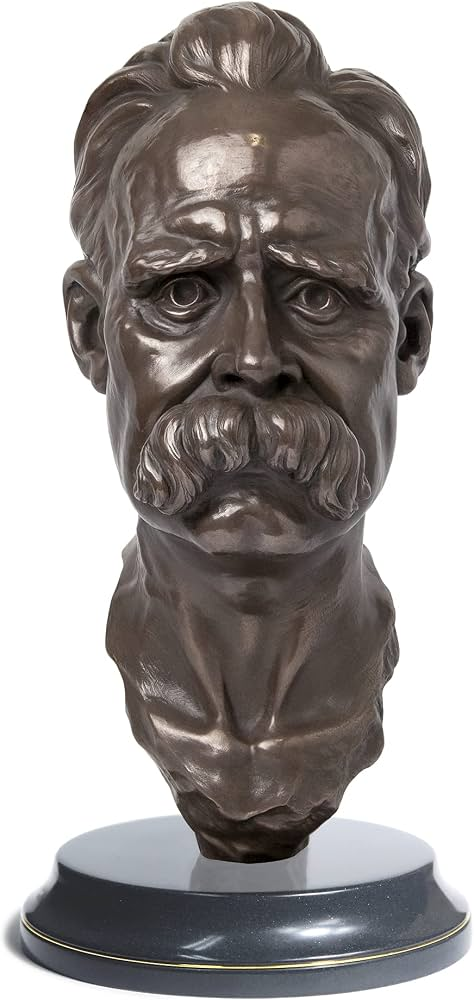
Nietzsche heard the machinery after the sign had been removed from the building.
That is the first Sacred Slack ruling.
The death of God did not end sacred functions.
It released them from one carrier.
The Lost Horizon Becomes an Open Sea.
Nietzsche refuses the easy emotional assignment.
The death of God is neither one clean catastrophe nor one clean liberation.
In the madman passage, the lost horizon opens onto cold, darkness, disorientation, and infinite nothingness. In The Gay Science §343, the same event arrives to the free spirits as dawn. Their ships can leave harbor. The sea has opened.
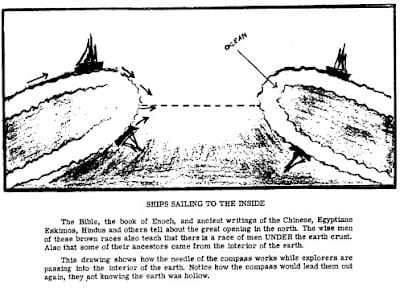
These images describe one transition from different positions inside the field.
- The horizon is gone.
- The horizon is open.
- A person whose life depended upon the old coordinates may experience collapse.
- A person trapped beneath the old coordinates may experience air.
- A civilization can carry both at once.
This is sacred slack in its most generative form. The inherited world no longer commands every answer. The gap has not yet been sealed. New forms can be tested before they harden into duty.
Nietzsche values this interval fiercely.
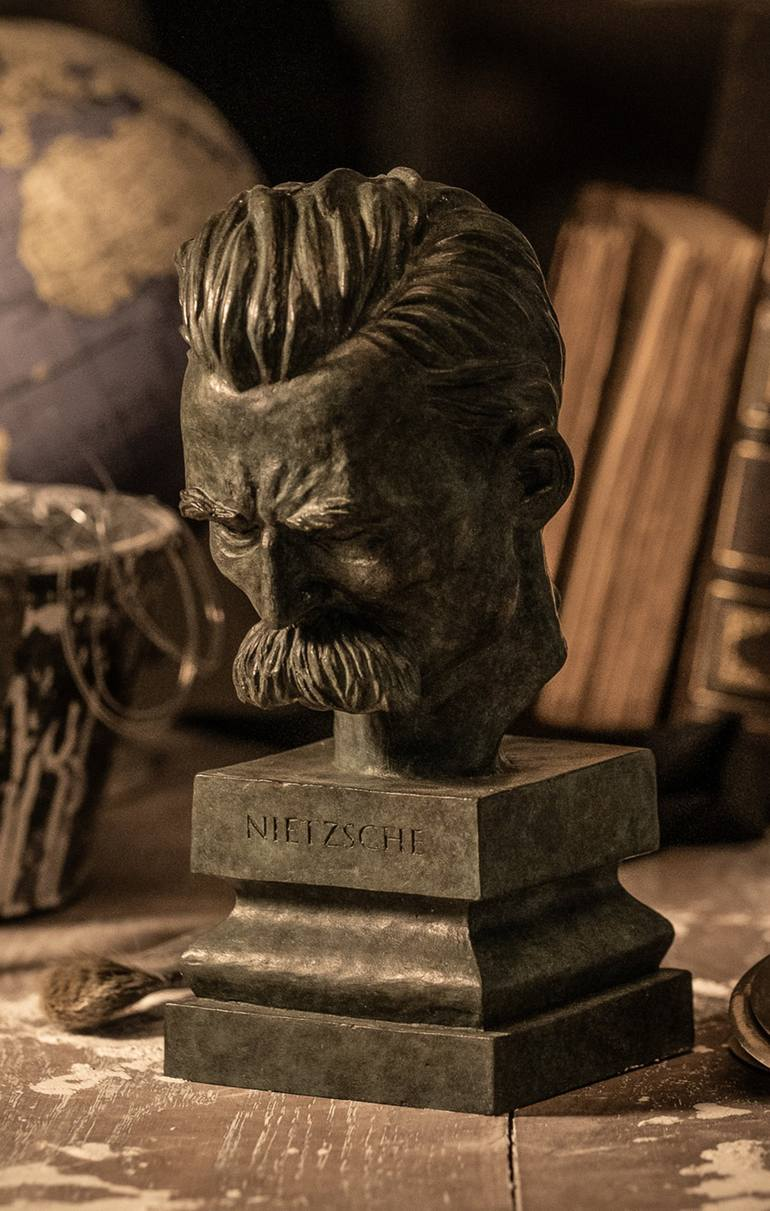
He wants danger returned to thought. He wants convictions demoted into hypotheses. He wants the thinker to move without ancestral permission. He wants philosophy to regain the capacity to make rather than guard.
The open sea carries a warning, though.
An open field does not stay open simply because its first motion felt free.
Slack attracts completion.
 Aidan Lawson
- The old church loses authority.
- The political movement supplies history, enemy, ritual, and redemption.
- The inherited family structure fractures.
- The therapeutic vocabulary supplies identity, wound, explanation, and a moral map.
- The public philosophy recedes.
- The influencer supplies discipline, cosmology, diet, enemy, body, and fate.
The sacred gap remains open long enough for one answer-channel to discover that it can carry everything.
 Aidan Lawson
Nietzsche’s great strength is that he does not rush back to the first lost authority.
His danger appears when the person strong enough to cross the open sea begins to look like the only person qualified to name the shore.
The Ascetic Ideal Kept the Will Alive.
The Third Essay of On the Genealogy of Morality contains the deepest Sacred Slack passage Nietzsche ever wrote.
He asks what ascetic ideals mean.
The answer is severe because he grants the ideal its actual power.
The ascetic ideal supplied an interpretation of suffering. It told the suffering person why the pain existed, what it revealed, what conduct it required, where guilt belonged, and how the wound entered a cosmic order. The answer created additional suffering. It directed aggression inward. It made the body suspect. It translated pain into fault. It turned deprivation, restraint, self-denial, and guilt into sacred evidence.
Still, it gave the will somewhere to go.
Nietzsche calls the ascetic ideal a maneuver for the preservation of life. The instrument was life acting against its own exhaustion through a form that also deepened the sickness.
That is an extraordinarily difficult structure.
The sacred instrument carries the person through the night by teaching them that the night is their fault.
It protects the will from collapse by directing the will against life.
It closes the door to nihilism by building the room around guilt.
A shallow anti-religious account cannot hold this.
“Religion made people believe false things” has part of the event.
It misses the carrier.
The proposition arrived inside a body practice, a calendar, a community, an account of suffering, an explanation of desire, a ranking of conduct, a ritual of confession, a path of discipline, and a figure authorized to explain what every result meant.
The ascetic priest therefore resembles the sovereign answer-channel.
- Pain confirms the teaching.
- Relief confirms the teaching.
- Doubt confirms the depth of the struggle.
- Opposition confirms persecution.
- Desire confirms corruption.
- Obedience confirms progress.
- Failure confirms guilt.
Correction can enter only after being translated into evidence for the system.
- The interpretation does real work.
- The interpreter becomes the world.
 Aidan Lawson
Modal Path Ethics does not need to accept Nietzsche’s whole account of Christianity to keep this instrument analysis. Religious traditions contain many practices of hospitality, care, mercy, memory, humility, repair, celebration, solidarity, and resistance that his polemics compress. The Sacred Instruments track refuses to treat religion as pathology.
Nietzsche still gives the track one of its strongest diagnostic rules:
A meaning system can preserve life while damaging the terms under which life is preserved.
Relief proves that the system carried something.
Relief does not grant the system sovereignty over what the experience meant.
The Altar Migrates.
Nietzsche does not allow secular modernity to stand outside the audit wearing a little laboratory coat.
Late in the Third Essay of the Genealogy, he asks whether modern science actually opposes the ascetic ideal.
His answer is deeply inconvenient for anyone who believed disbelief had completed the transition.
Science can remove theological doctrine while preserving the older sacred commitment beneath it: truth as the highest authority, truth as unconditional obligation, truth as the value before which every competing value must justify itself.
In The Gay Science §344, Nietzsche asks why truth must be preferred at any price. The scientific spirit appears disciplined and skeptical, yet its discipline rests upon a prior conviction that truth deserves this position.
- The altar has moved.
- The sacred function survived its inherited clothing.
 Aidan Lawson
Science remains a distinct instrument with its own methods, institutions, evidence practices, error controls, and domains of competence. Sacred Slack rejects the lazy conversion of every sacred inheritance into religion. The point concerns inheritance.
A secular instrument can carry a sacred commitment without recognizing the commitment as sacred.
Nietzsche sees this migration everywhere.
 Aidan Lawson
The death of God leaves shadows. Morality, truth, progress, nation, culture, health, productivity, art, and humanity can each inherit fragments of the old totality. A modern person can reject metaphysics while living inside a hidden account of what reality is, what a person is for, which suffering counts, what history is doing, and who may interpret the result.
This is one reason Nietzsche remains so difficult to domesticate.
- He does not let atheism call itself finished.
- He asks which God is still operating inside the refusal of God.
Sacred Slack asks the same question institutionally.
Which functions migrated?
Who received them?
Which handoff failed?
Which partial instrument began speaking for the whole person?
Which value acquired sacred authority while claiming to be only procedure, evidence, health, realism, or common sense?
The modern person did not become free of metaphysics.
The modern person became responsible for assembling one under conditions where the pieces deny that they belong to the same machine.
Nietzsche is standing at that workbench before almost everyone else.
The Last Man Closes the Gap With Comfort.
Nietzsche’s last man is one answer to sacred slack.
The last man does not rebuild the cathedral. He lowers the ceiling until nobody misses it.
Love, creation, longing, stars, danger, transformation, and difficult aspiration become strange questions from an overheated past. Life is organized around managed comfort, health, small pleasures, low risk, social sameness, and a long continuation with no great claim placed upon it.
“We have discovered happiness,” the last men say, and blink.
Nietzsche sees a civilization closing the sacred gap by shrinking the range of human need allowed to appear inside it.
That diagnosis still has force.
A society can pathologize vocation because vocation disrupts stable consumption.
 Aidan Lawson
It can translate grief into productivity loss, wonder into entertainment, ritual into branding, political hope into content, and every dangerous question into a wellness problem with an app subscription.
 Aidan Lawson
The person remains comfortable enough to continue.
The field becomes too small to become anything else.
Modal Path Ethics keeps the warning and refuses Nietzsche’s contempt.
A warm room is not nihilism.
Medicine is not decadence.
Rest is not moral failure because a philosopher preferred mountains.
Safety, equality, ordinary pleasure, disability support, predictable care, and freedom from domination preserve real reachable futures. A person does not owe civilization heroic suffering to prove they are alive.
The last-man problem begins when comfort becomes sovereign over the interpretation of human need.
- Every costly commitment becomes pathology.
- Every dangerous aspiration becomes immaturity.
- Every refusal becomes maladjustment.
- Every sacred question becomes a failure to appreciate available pleasures.
- Every demand for transformation becomes an attack on stability.
Comfort can be a good.
Comfort can also become the completion engine that seals sacred slack before the question has had enough room to form.
 Aidan Lawson
Nietzsche recognizes the seal.
Modal Path Ethics changes the criterion.
Grandness, hardship, exceptionality, and heroism do not decide the audit.
The field is judged by whether it preserves truthful, plural, non-destructive paths of becoming for the loci living inside it.
Nietzsche Builds Sacred Games.
The madman asks which sacred games will have to be invented.
Nietzsche spends the rest of his work answering.
Instead of one replacement catechism, he builds a kit.
Genealogy.
Genealogy turns inherited values into inspectable instruments.
- Where did this value come from?
- Which kind of life needed it?
- Which wound did it interpret?
- Which relation did it preserve?
- Which aggression did it redirect?
- Which future did it make easier to reach?
- Which people became legible as good, evil, sick, noble, guilty, decadent, pure, or dangerous after the value entered the field?
This is remarkably close to a generated-structure audit.
The value does not receive authority from age. Its sacred ancestry does not excuse its downstream effects. The analyst follows the path by which a local need, institutional role, bodily pressure, political relation, and interpretive system generated the moral world now presenting itself as timeless.
Genealogy is one of Nietzsche’s finest contact instruments.
It becomes dangerous when every stated reason is automatically reduced to a hidden motive the genealogist alone can see. Suspicion can become another throne. The analyst can explain compassion as weakness, equality as resentment, faith as fear, and criticism as concealed envy until no account outside the genealogy retains standing.
 Aidan Lawson
A good genealogy opens the value to history.
A sovereign genealogy makes history speak with one voice.
The free spirit.
The free spirit treats conviction as an experiment rather than a permanent identity.
Nietzsche’s thinker moves among perspectives, tests inherited evaluations, and places even the will to truth under suspicion. Interpretations can still differ in adequacy. Contact remains located, and no instrument receives possession through confidence alone.
Modal Path Ethics gives this corrigible contact.
- A perspective can reveal structure.
- Another perspective can expose the selecting cut.
- The field remains capable of contradicting both.
 Aidan Lawson
Perspective keeps contact plural.
Extance keeps plurality answerable.
The camel, the lion, and the child.
In Thus Spoke Zarathustra, the spirit undergoes three metamorphoses.
- The camel carries inherited burdens.
- The lion confronts the great dragon of “Thou shalt” and wins the freedom to say a sacred No.
- The child brings innocence, play, a new beginning, and the sacred Yes required for creation.
- The lion confronts the great dragon of “Thou shalt” and wins the freedom to say a sacred No.
This is an almost perfect sacred-slack sequence.
- Inheritance has to be carried long enough to be understood.
- Sovereignty has to be refused.
- Refusal alone cannot build a world.
- The child enters the slack as room.
- The child plays.
- The child enters the slack as room.
A game can test values without immediately converting them into law.
 Aidan Lawson
Art can stage worlds without demanding that the audience move into them forever. Laughter can puncture the authority that seriousness accumulates around itself. Dance can return interpretation to a body the ascetic ideal taught to distrust.
These are sacred instruments because they reorganize relation to what exceeds ordinary preference.
They remain safer where their seams stay visible.
Zarathustra dismisses the believers.
Nietzsche’s strongest anti-priesthood device arrives when Zarathustra turns against his own following.
A teacher is repaid badly by the student who remains only a student. Veneration may collapse into a statue capable of crushing the believer. Zarathustra tells the followers to lose him and find themselves.
This is the exit condition. The oracle must let you leave.
The teacher should return capacity rather than dependency.
The sacred instrument completes its work when the person can carry the gained perception into a wider field where other people, bodies, evidence, histories, and traditions can still answer.
Nietzsche built an oracle and instructed it to refuse permanent custody.
That may be his most important sacred game.
The Heaviest Thought Enters Damaged Extance.
Then the demon arrives.
In The Gay Science §341, Nietzsche imagines a voice entering the loneliest moment of a life and announcing that every pain, joy, thought, sigh, detail, and sequence will recur innumerable times.
The thought can crush the person.
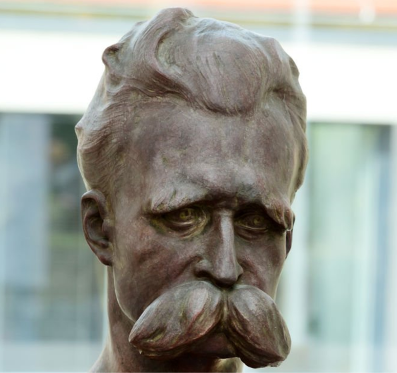
It can also transform every action by placing an immense weight on the question:
Do you want this again?
The eternal recurrence has been read as cosmology, thought experiment, ethical test, existential challenge, and dramatic instrument. Modal Path Ethics does not need to settle the entire interpretive fight before using the pressure it creates.
Recurrence removes one of the favorite moral exit routes.
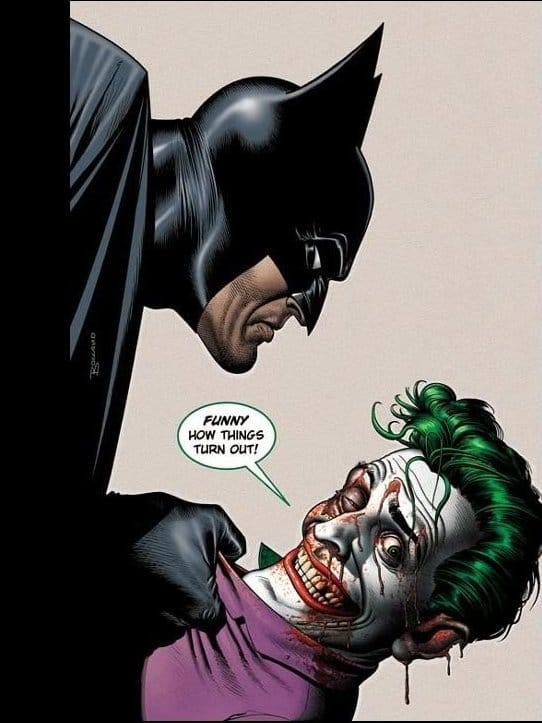
The wound does not disappear into a better final world.
The cost does not become negligible because history eventually reaches triumph.
The harmed person does not become a discarded draft of the future that succeeded.
Every small thing returns with the path.
This places eternal recurrence near the Anti-Oblivion Doctrine and the tail of damage.
 Aidan Lawson
A transition remains in the field-history after repair. Later good can answer the wound. Later good cannot make it false that the wound occurred. A better path preserves more continuance under damaged conditions. It does not purchase innocence retroactively.
Nietzsche’s amor fati presses harder. He wants to learn to see necessity as beautiful. In Ecce Homo, he describes greatness through wanting nothing to be different across past, future, or eternity.
Modal Path Ethics stops before the moral consecration.
The survivor does not owe the injury gratitude. A harmed locus does not fail affirmation by refusing to love the transition that harmed it.
 Aidan Lawson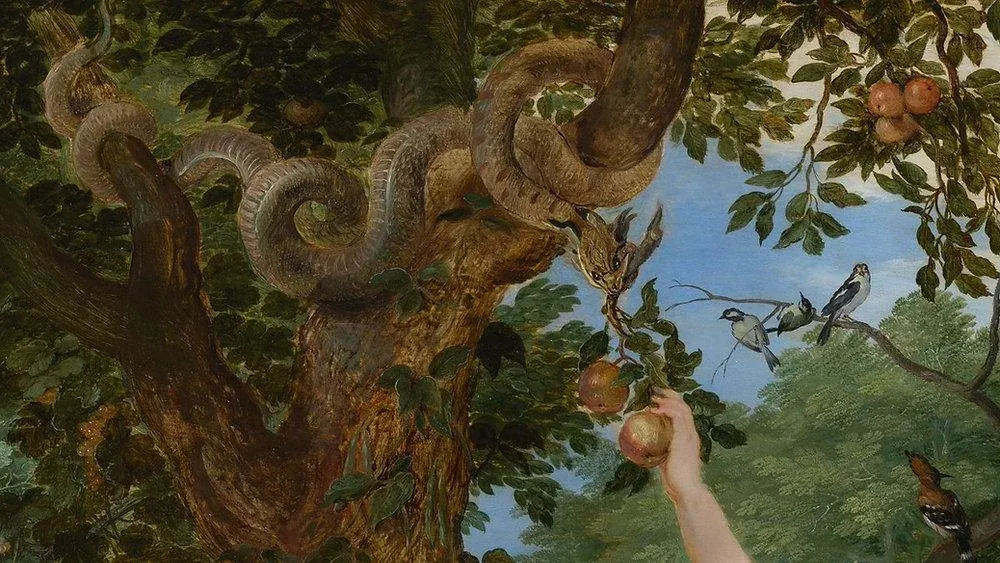
A person may integrate a wound, transform it, build capacities through surviving it, find meaning after it, or even come to love the life that could only have become this life through that history. Those paths are real.
 Aidan Lawson
They cannot become duties imposed by the instrument.
Otherwise the ascetic ideal returns wearing brighter clothes.
- The old priest said suffering proves guilt.
- The new priest says resistance to suffering proves weakness.
- Both make the wound answer to an interpretation protected from the wounded person.
Modal Path Ethics draws a narrower and harder line:
Carry the actual path without falsifying it.
Do not require the wound to become good before life can continue.
Eternal recurrence remains useful as an audit of action.
Would this transition still look acceptable if its closed futures could not be hidden behind progress, distance, afterlife, statistical aggregation, or the convenient disappearance of the people who paid for it?
 Aidan Lawson
That question belongs in the field.
The command to love every answer has no place in the field.
Ressentiment and the Sovereignty of the Wound.
Nietzsche’s account of ressentiment catches a dangerous conversion.
A locus is wounded, blocked, humiliated, subordinated, or denied direct action. The wound cannot discharge itself through ordinary agency. It becomes interpretive power. The injured party reorganizes the moral field so that the traits of the opponent become evil and the conditions of injury become proof of superior goodness.
The wound gains a throne.
Modal Path Ethics has found this structure elsewhere.
- A real injury can become sacred title.
- A dead person can become permanent command over the living.
- A historical wound can become authority to close another population’s future.
- A victim identity can become exemption from reciprocal logic.
- A repair claim can become a retaliation machine.
Nietzsche is right to audit the conversion.
A wound may obligate memory.
It may not own future agency.
The difficulty is that ressentiment can become an anti-correction instrument in the hands of power.
- A worker names exploitation.
- Ressentiment.
- A harmed population names domination.
- Ressentiment.
- A disabled person rejects a world designed around someone else’s body.
- Ressentiment.
- A patient challenges the physician’s interpretation.
- Ressentiment.
- A person asks the strong to account for what their strength consumed.
- Ressentiment.
The label can classify every repair demand as reactive weakness before the field has been inspected.
Calling a witness resentful does not reopen the path.
Strength does not establish moral contact.
Health does not grant jurisdiction.
Creative power does not prove that the created field remains livable for everyone placed inside it.
Nietzsche’s instrument works when it reveals revenge hiding inside moral language.
It fails when it converts harmed loci into symptoms of a lower type.
 Aidan Lawson
Modal Path Ethics keeps both rules:
- No wound grants sovereignty over repair.
- No strength grants sovereignty over the wounded.
The claim must return to extance.
What happened to reachable continuance?
Which burden moved?
Which resistance thickened?
What repair remains available?
The answer cannot be replaced by the analyst’s admiration for vitality or contempt for weakness.
The Creator Takes the Priest’s Chair.
Nietzsche knows that human beings remain valuing creatures.
The old values cannot simply be removed. The open sea still needs navigation. The death of God creates a demand for people capable of revaluation: free spirits, creators, future philosophers, the Übermensch as an image of human overcoming.
This is his direct answer to sacred slack.
- The person will not receive the whole world from inherited authority.
- The person must participate in making a world.
That move is necessary.
It is also where Nietzsche gets closest to rebuilding the throne he broke.
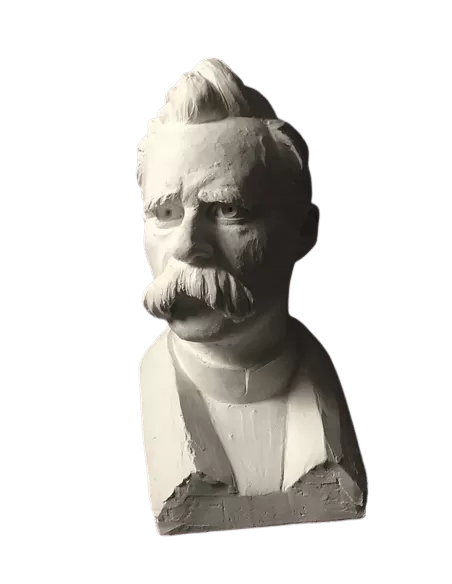
In Beyond Good and Evil §211, the genuine philosophers appear as commanders and lawgivers. They reach for the future and say, “Thus shall it be.” Existing knowledge, inherited values, and the work of earlier thinkers become tools in their creative hand.
The old priest said:
God commands.
The sovereign creator says:
Thus shall it be.
The source changes.
The jurisdiction can remain.
 Aidan Lawson
A charismatic creator can gather sacred slack with enormous speed.

They supply body, history, hierarchy, future, enemy, aesthetic, discipline, and an account of who the follower is becoming. Their vitality confirms the value. Their suffering confirms depth. Their isolation confirms exceptional vision.
 Aidan Lawson
Opposition confirms that the herd cannot understand.
 Aidan Lawson
The sovereign creator becomes one interpreter capable of explaining every result.
Nietzsche supplies protections against this. His plural voices resist a single catechism. His thinker must overcome their own values. His suspicion turns back upon philosophy.
Zarathustra dismisses believers. The child returns creation to play.
Still, his language of rank, higher types, decadence, herd, command, and legislation can make correction dependent upon the creator’s willingness to hear it.
Modal Path Ethics refuses that dependency.
A value is a field instrument.
It enters bodies, institutions, relationships, ecologies, laws, education, art, and ordinary expectation. It opens some paths and raises resistance around others. It distributes permission. It trains attention. It decides which injuries are visible and which aspirations can be spoken without punishment.
- The creator does not own those effects.
- The creation enters a shared world.
- The shared world gets standing.
- The creation enters a shared world.
This produces corrigible revaluation.
- State what domain the value is meant to organize.
- Expose the selecting cut.
- Let affected loci answer.
- Track burden beyond the creator’s preferred scale.
- Preserve counter-values and counter-instruments.
- Retain the trace when the value fails.
- Build conditions under which the instrument can be revised, translated, refused, or left behind.
Value creation remains possible.
Value sovereignty does not follow.
 Aidan Lawson
Nietzsche places an immense civilizational burden on rare creators.
Sacred Slack identifies the institutional problem beneath that solution.
The modern person is already being asked to assemble a metaphysics alone from fragments. Telling everyone to become a solitary value-legislator does not repair the failed handoff. It intensifies it. Most people need communities, practices, archives, friends, rituals, clinicians, teachers, art, science, and public institutions capable of carrying different parts of the shared load without claiming the whole person.
Repair requires a metaphysical commons with plural witnesses and no final throne.
Nietzsche gives us the creator.
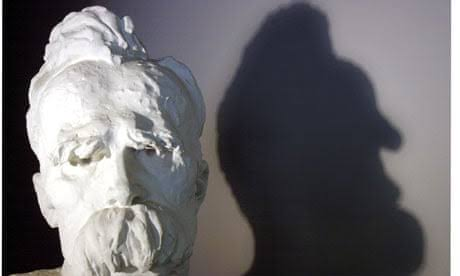
Modal Path Ethics asks who can correct the creation.
Nietzsche Enters the Immortal Corpus, Fucking Furious.
Nietzsche warned that a statue could crush the believer.
Academic philosophy responded by making several thousand statues and assigning specialists to dust them forever.
 Aidan Lawson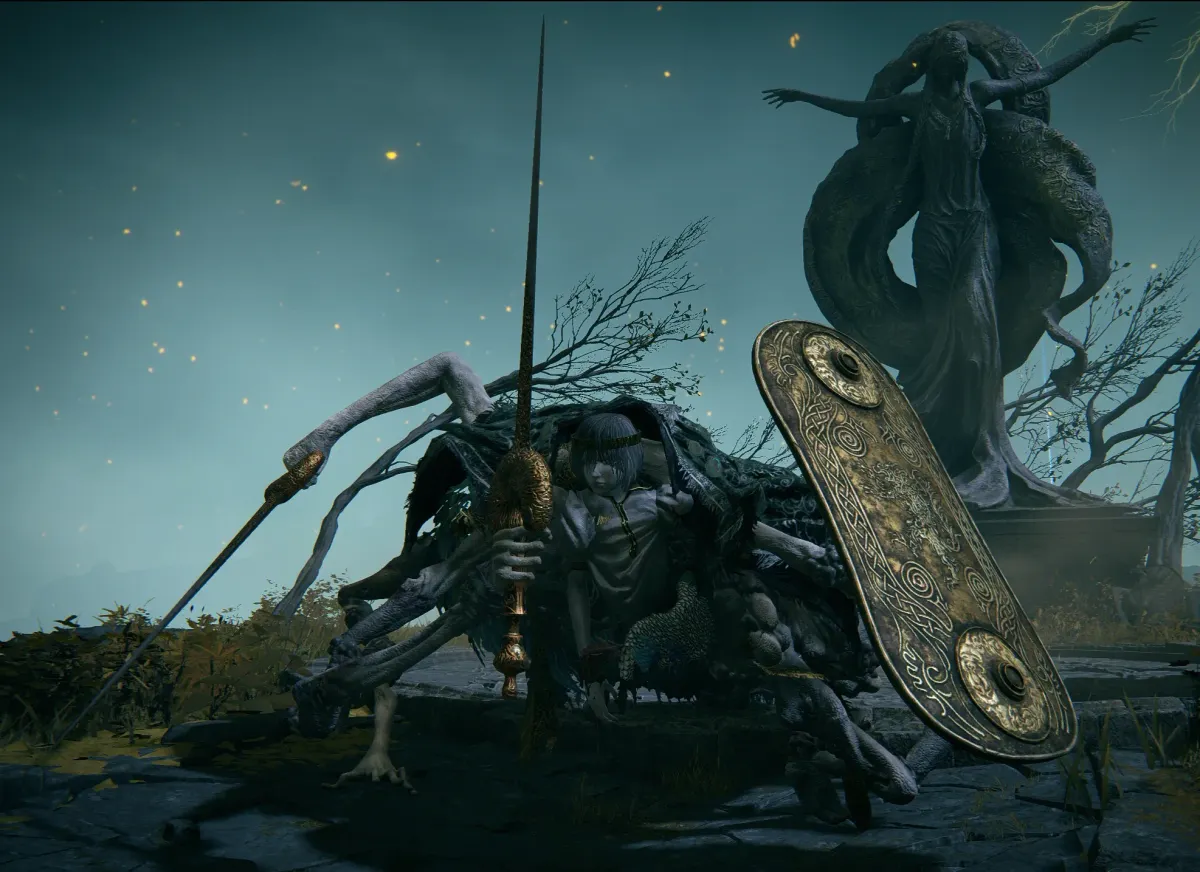
No philosopher is allowed to die.
Nietzsche has suffered this fate with unusual intensity because his writing is almost perfectly designed for sacred fragments.
- God is dead.
- Will to power.
- Become who you are.
- What does not kill me.
- The Übermensch.
- Eternal recurrence.
- Beyond good and evil.
Each fragment can be detached from its local argument and used as a pocket oracle. The reader arrives with humiliation, ambition, grief, contempt, artistic hunger, political rage, bodily pain, or the desire to become harder. Nietzsche answers in a sentence sharp enough to feel like recognition.
Recognition can become proof.
The corpus forms around the answer.
Every contradiction becomes depth. Every cruelty becomes provocation. Every error becomes an invitation to read one more volume. Every dangerous appropriation becomes evidence that the thinker was misunderstood by people less subtle than the current interpreter.
The philosopher becomes incapable of losing jurisdiction.
This is continuance capture.
The archive was built to preserve an instrument.
The instrument’s survival becomes the protected good.
Nietzsche deserves a better afterlife than permanent command.
His work should remain available as genealogy, provocation, art, diagnosis, experimental philosophy, psychological suspicion, and a set of sacred games built at the edge of nihilism.
It should also remain available for correction.
His contempt can be contempt.
His hierarchy can close the field.
His health language can misclassify dependence and injury.
His creator can become sovereign.
His affirmation can become a command imposed upon the harmed.
His insight can finish a piece of work without owning the next one.
The dead cartographer does not own the terrain.
Nietzsche already gave the exit instruction.
Lose him. Find yourselves.
Then return with another instrument.
Ruling.
Nietzsche saw that God could die before the world understood what had been lost.
He saw disbelief arrive before replacement.
He saw inherited morality continue after its metaphysical foundation had weakened.
He saw science carry sacred commitments it had not audited.
He saw comfort close the gap by making the human question smaller.
He saw suffering demand interpretation.
He saw the ascetic ideal preserve the will through a damaging answer.
He saw the need for new sacred games.
Then he built them.
Genealogy.
Laughter.
Art.
Experiment.
Self-overcoming.
The child’s sacred Yes.
The heaviest thought.
The teacher who orders the believers to leave.
Modal Path Ethics keeps all of this. Good stuff.
It refuses the creator who becomes priest.
It refuses the health language that dismisses the wounded locus.
It refuses affirmation when affirmation requires injury to become lovable.
It refuses rank when rank turns another life into material.
It refuses perspectivism when perspective becomes escape from the field.
It refuses any sacred game that cannot survive correction from the people asked to live inside it.
- God died.
- The load remained.
- Nietzsche built boats.
- Some open the sea.
- Some try to become it.
- Keep the boats.
- Keep the exits.
- Do not crown the captain.
- Keep the exits.
- Some open the sea.
- Nietzsche built boats.
- The load remained.
Nietzsche was right that new sacred games would be built.
Build them without a throne.