Tales of Distortion: The Gapless Week
There are a ton of ways to improve a factory.
You can improve the machine.
You can train the workers.
You can redesign the production line, change the power supply, reduce waste, improve maintenance, reorganize shifts, replace bad equipment, move material more intelligently, or finally listen to the person who has been saying for six goddamn months that Unit 4 is making a noise Unit 4 absolutely did not make when everyone still had eyebrows.
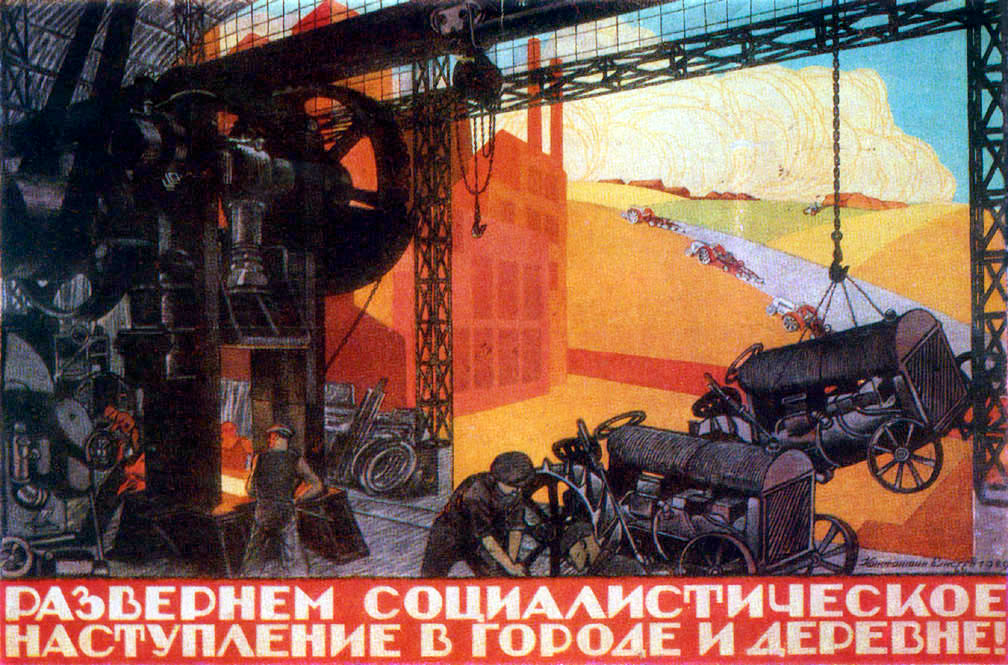
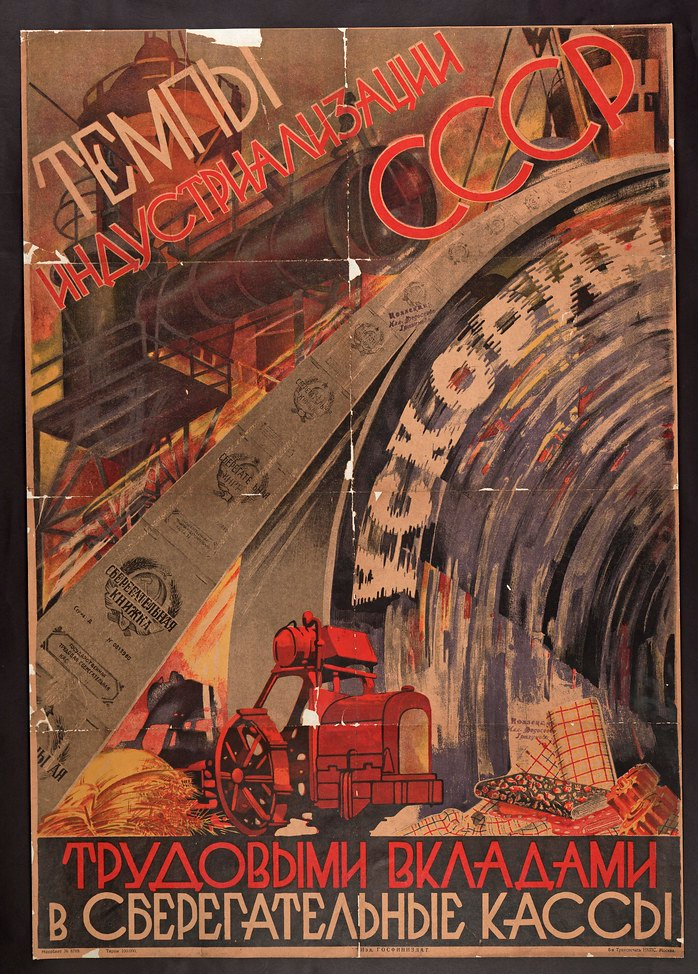
In 1929, the Soviet Union encountered another possibility.
The week might be inefficient.
This is a much larger object to replace.

A bearing can be replaced locally.
A week has considerable installed infrastructure.
This thing appears in factories, homes, schools, churches, shops, train schedules, kitchens, marriages, friendships, appointments, habits, meals, markets, payroll, ritual, memory, and the old human technology of knowing when another person might also be free or not.
The week had become a piece of social machinery so old that it looked like nature.
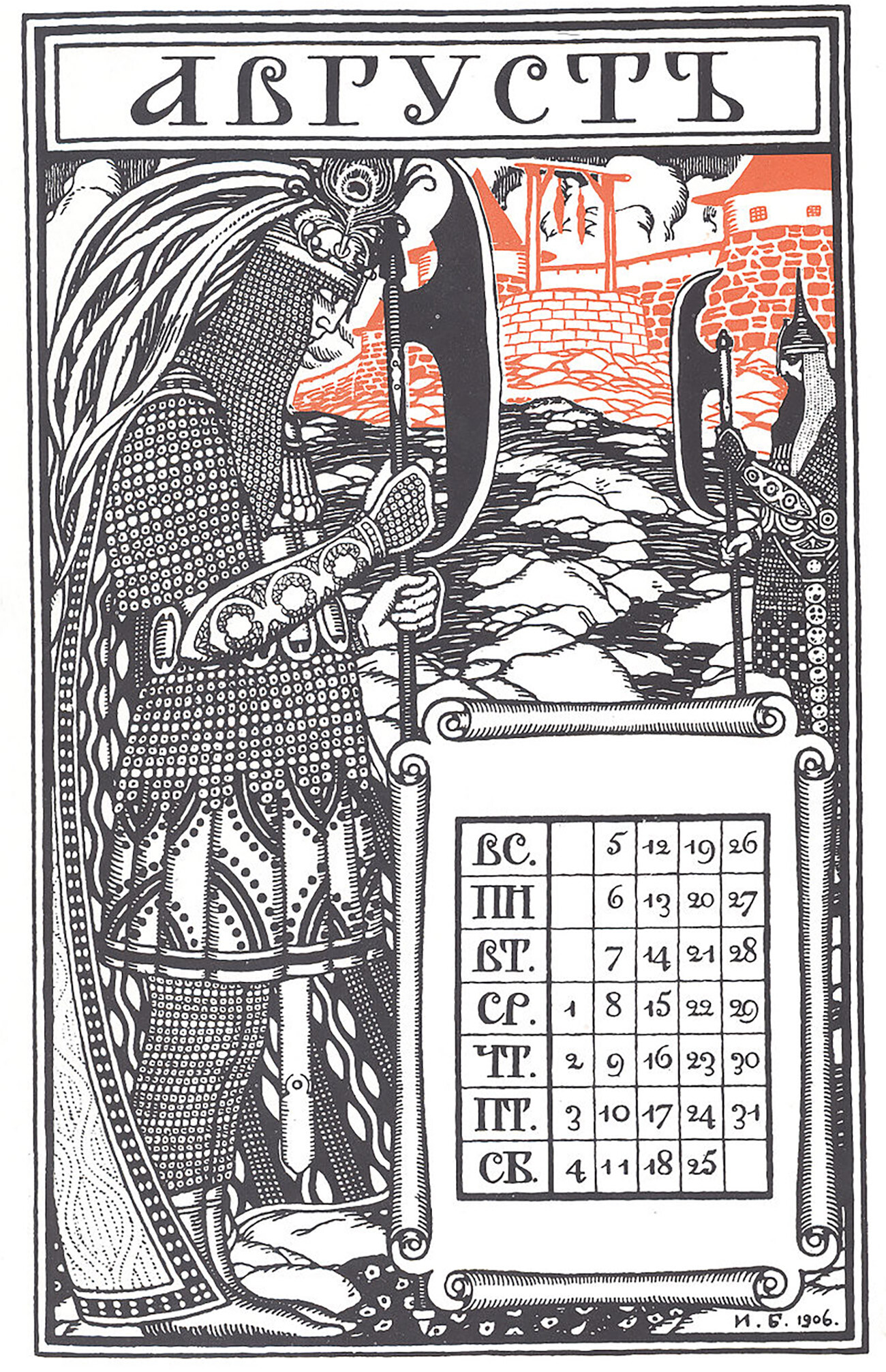
The Soviet Union was not especially interested in accepting old things because they had successfully disguised themselves as nature.
Fair enough.
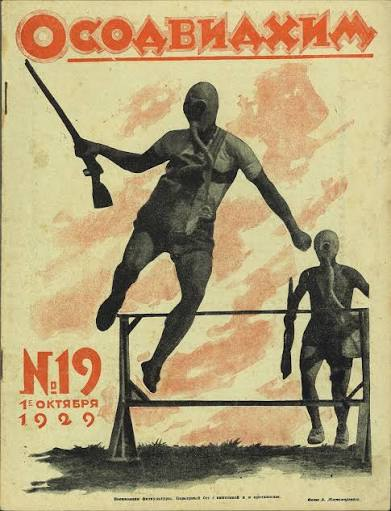
The signal was real.
- A factory full of expensive industrial machinery could work for six days.
- Then Sunday arrived.
- The workers stopped.
- The machines stopped.
- The capital just sat there doing absolutely fucking nothing.
- Then Sunday arrived.
This offended a certain kind of mind.
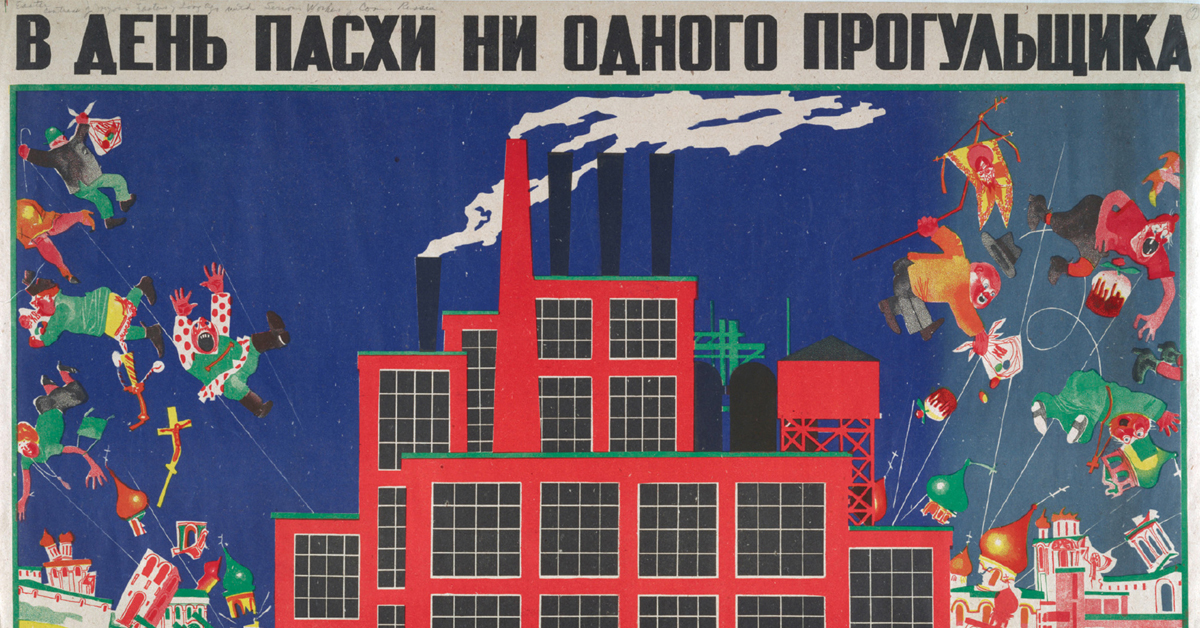
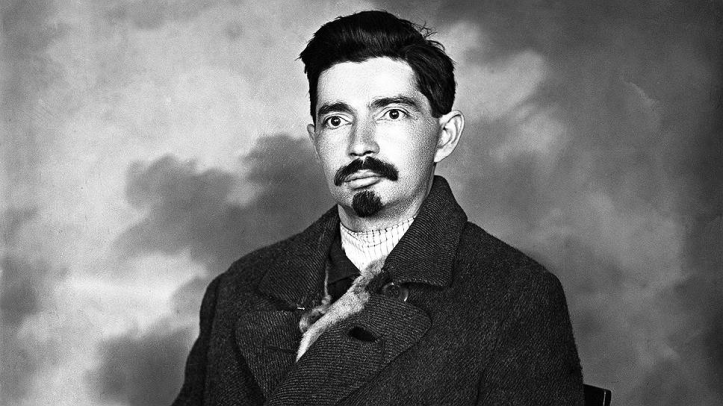
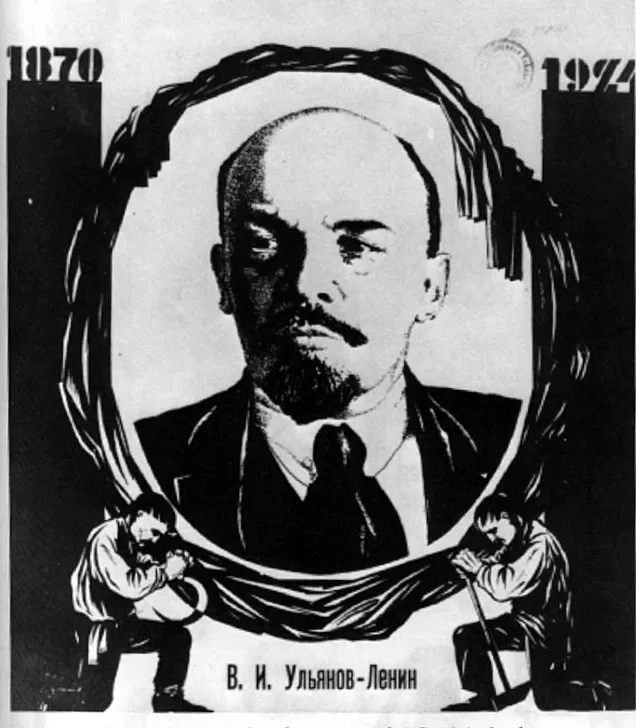
One of those minds belonged to Yuri Larin, a Soviet economist and political figure who proposed continuous production at the Fifth Congress of Soviets in 1929.
Larin's basic thought was not stupid.
- Workers need rest.
- Machines do not need Christian liturgical time.
- A blast furnace has no known relationship with the Resurrection.
- A turbine does not wake Sunday morning with a sudden desire to call its mother.
- A lathe has never once asked for brunch.
- So why the hell should the machine inherit the worker's day off?
That is the true signal at the beginning of this Tale.
Modal Path Ethics is deciding to keep it.
The problem begins when the signal receives a calendar.
‡‡‡‡‡‡‡‡‡‡‡‡‡‡‡‡‡‡‡‡‡‡‡‡‡‡‡‡‡‡‡‡‡‡‡‡‡‡‡‡
Yuri Larin Finds a Hole in Sunday.
The arithmetic looked gorgeous.
This is always dangerous.
- Take one hundred workers.
- Under the older schedule, they work six days and rest together on Sunday.
- The factory gets six days.
- Under the older schedule, they work six days and rest together on Sunday.
- Now divide the workforce into five groups.
- Each worker works four days and rests on the fifth.
- Only one group rests at a time.
- Eighty percent of the workforce remains at work every day.
- The worker gets a rest day more frequently than before.
- The factory gets every day.
You have apparently just increased leisure and production simultaneously.
Someone should have put this equation in a locked drawer for forty-eight hours until everyone calmed down.
Instead, it became policy.
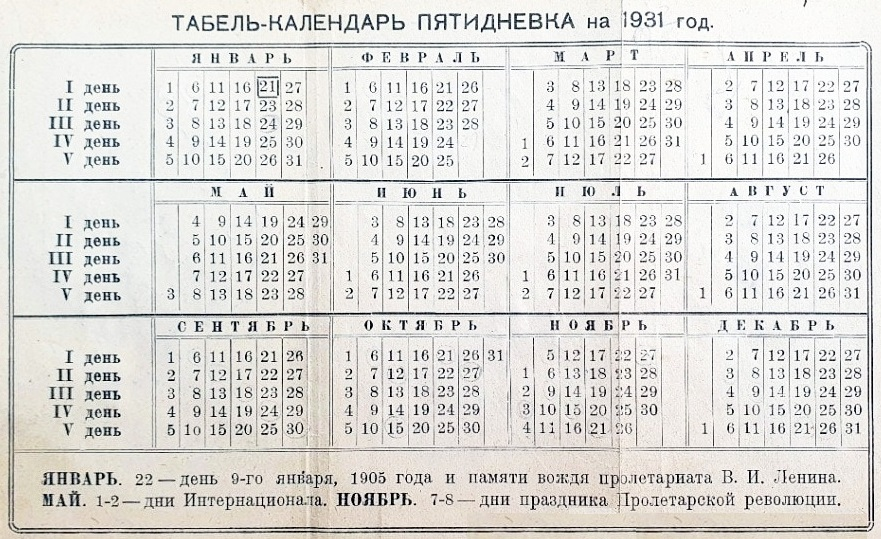
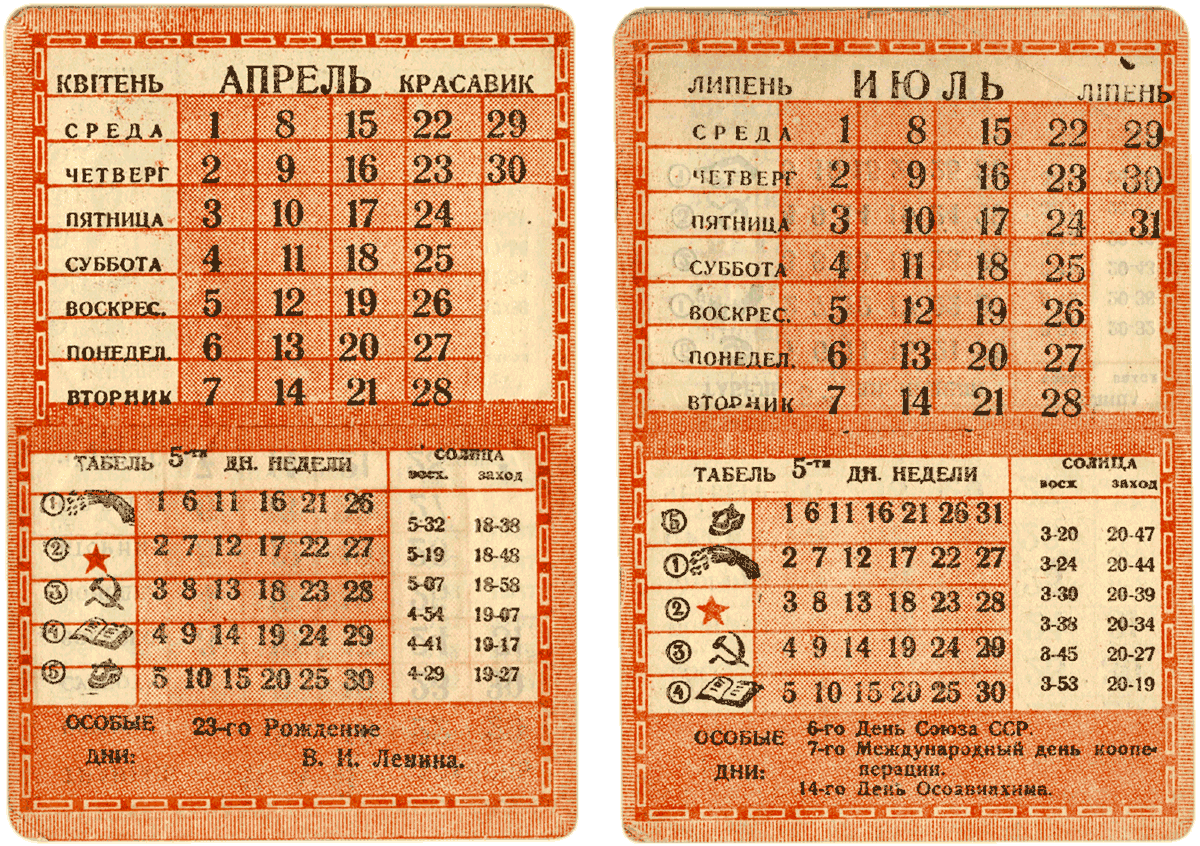
The continuous work-week rules were built around a five-day cycle. Workers still received substantial annual rest. The point was not to abolish rest and work every individual into the floor.
The point was subtler.
Rest would rotate.
This distinction matters enormously because it shows why the system could look humane inside its own accounting.
- Workers need rest.
- Rest has been allocated.
- Machines need labor.
- Labor remains available.
- Production can continue.
- The Soviet Union has apparently found a free day hiding inside coordination.
- Please collect it.
- Labor remains available.
This is the sort of discovery that makes planners sit slightly straighter.
Something once treated as a natural limit has just turned out to be a scheduling convention.
Sometimes, this is exactly how progress works.
The problem this time was that Sunday had more jobs than anyone had put in the spreadsheet.
‡‡‡‡‡‡‡‡‡‡‡‡‡‡‡‡‡‡‡‡‡‡‡‡‡‡‡‡‡‡‡‡‡‡‡‡‡‡‡‡
The Soviet Union Does Not Actually Abolish Tuesday.
There is a popular way to tell this story that makes it even cleaner than it was.
The Soviet Union abolished the seven-day calendar.
Everyone entered a strange new five-day reality.
Months became something else.
Tuesday was liquidated by decree and sent somewhere near the kulaks.
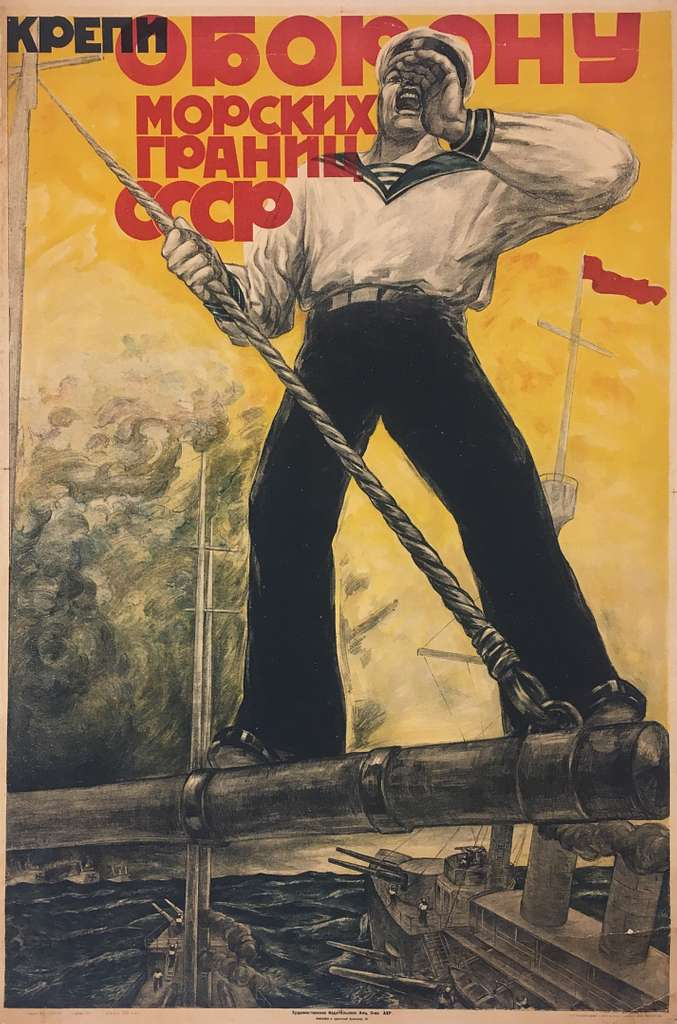
Reality was messier.
The Gregorian calendar did not vanish.

Newspapers continued dating the world normally. The five-day work cycle sat across the ordinary calendar as another scheduling layer.
This distinction is useful because it makes the distortion more modern.
- The state did not need to change time.
- It only needed to change the interface through which workers encountered time.
That is enough.
Human institutions do this a lot.
- The physical day stays twenty-four hours, pretty much always.
- The schedule decides which hours count as work.
- The city remains the same distance away.
- The commute decides whether the job is reachable.
- The body remains tired.
- The dashboard decides whether the tiredness counts as recovery debt, poor readiness, weak discipline, or an unfortunate attitude toward the morning stand-up.

The underlying field and the administrative field can occupy the same clock while describing completely different worlds.
The five-day cycle therefore did something subtler than invent a new cosmos.
It overlaid one.
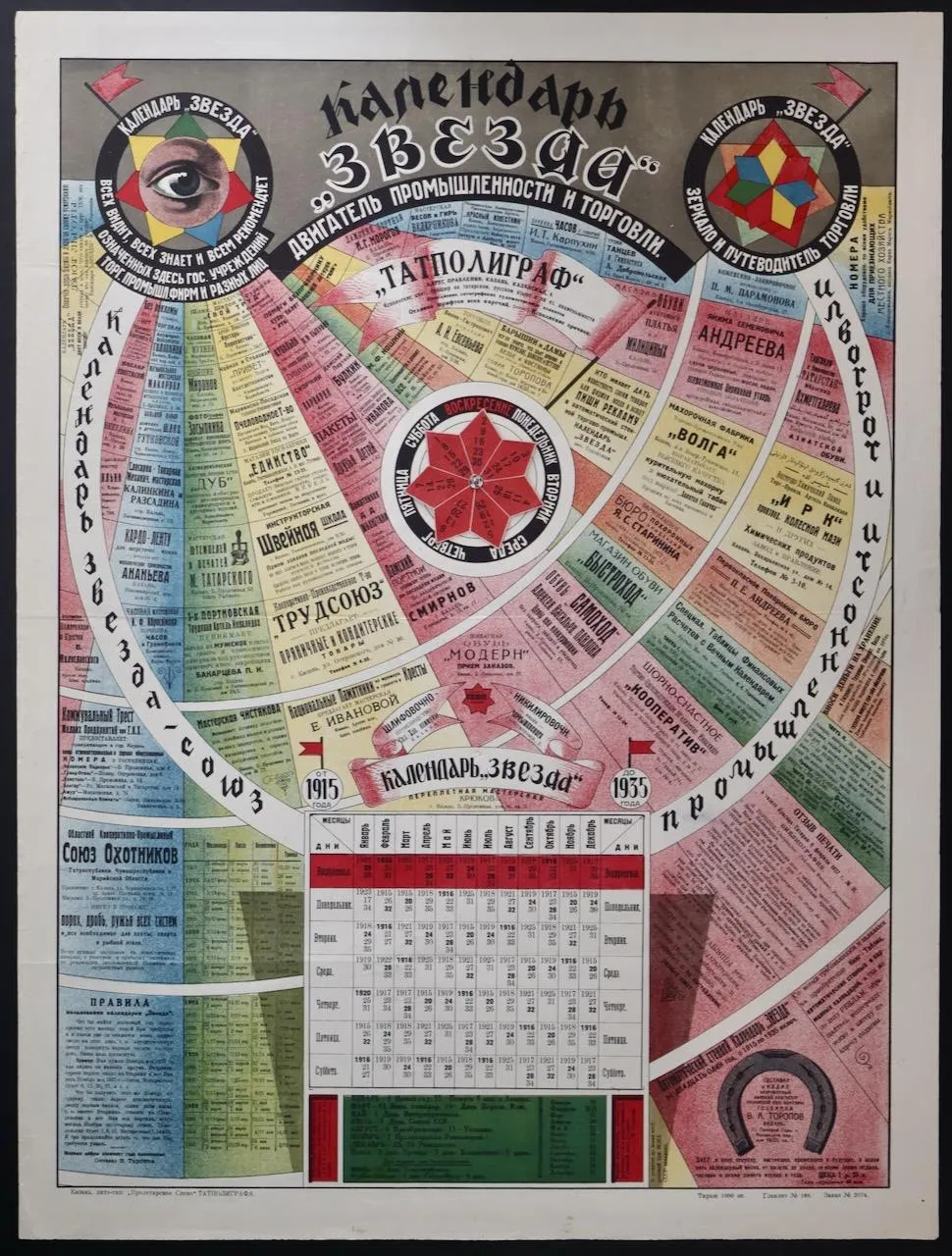
A person could still know that Sunday existed in the old seven-day rhythm while being assigned a rest day that had nothing to do with it.
This is worse for coordination in one important sense.
Two calendars now coexist.
- One calendar says where the wider society has historically placed the week.
- The work calendar says when your body is released from production.
- If the two align, ordinary life remains easy.
- If they do not, the worker becomes a little translation layer carrying one system into another.
- If the two align, ordinary life remains easy.

Modern people know this condition well.
- Your office calendar says free.
- Your child's school calendar says no.
- Your partner's shift calendar says absolutely not.
- The restaurant says closed.
- The group chat says Saturday.
- The airline says Tuesday at 5:40 A.M.
- The group chat says Saturday.
- The restaurant says closed.
- Your partner's shift calendar says absolutely not.
The calendar has not failed to provide time.
It has provided several incompatible times and asked you to become the middleware.
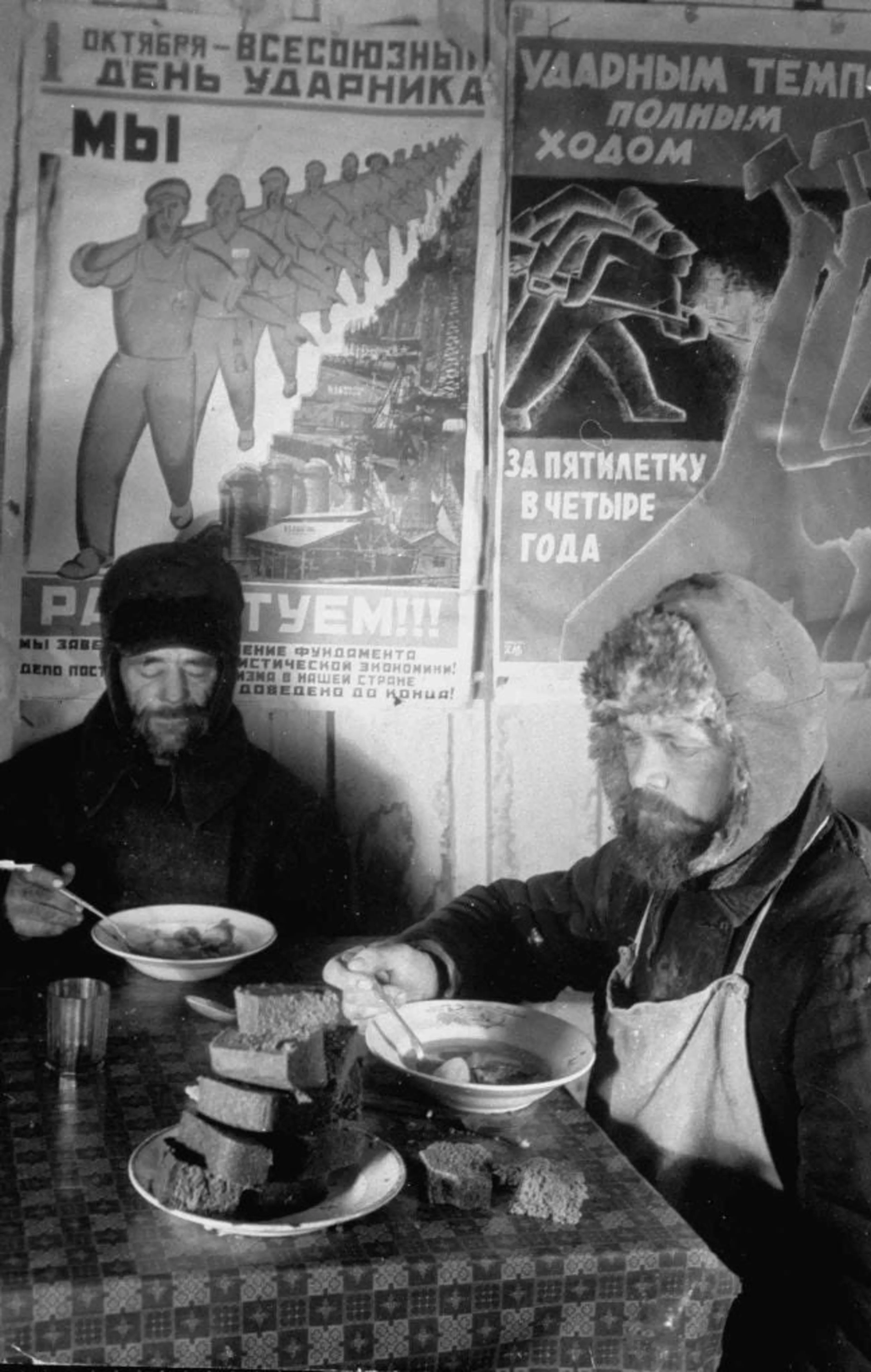
The nepreryvka industrialized that problem.
Then it color-coded it.
‡‡‡‡‡‡‡‡‡‡‡‡‡‡‡‡‡‡‡‡‡‡‡‡‡‡‡‡‡‡‡‡‡‡‡‡‡‡‡‡
Becoming Purple.
Human civilization had spent a considerable amount of time making days recognizable.
This was apparently an inefficiency.
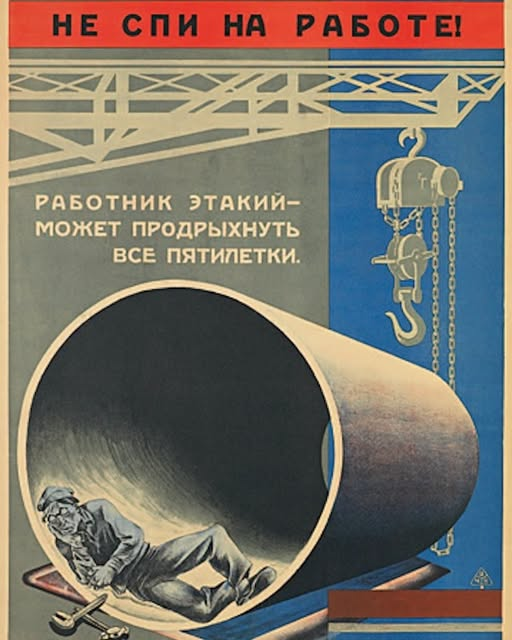
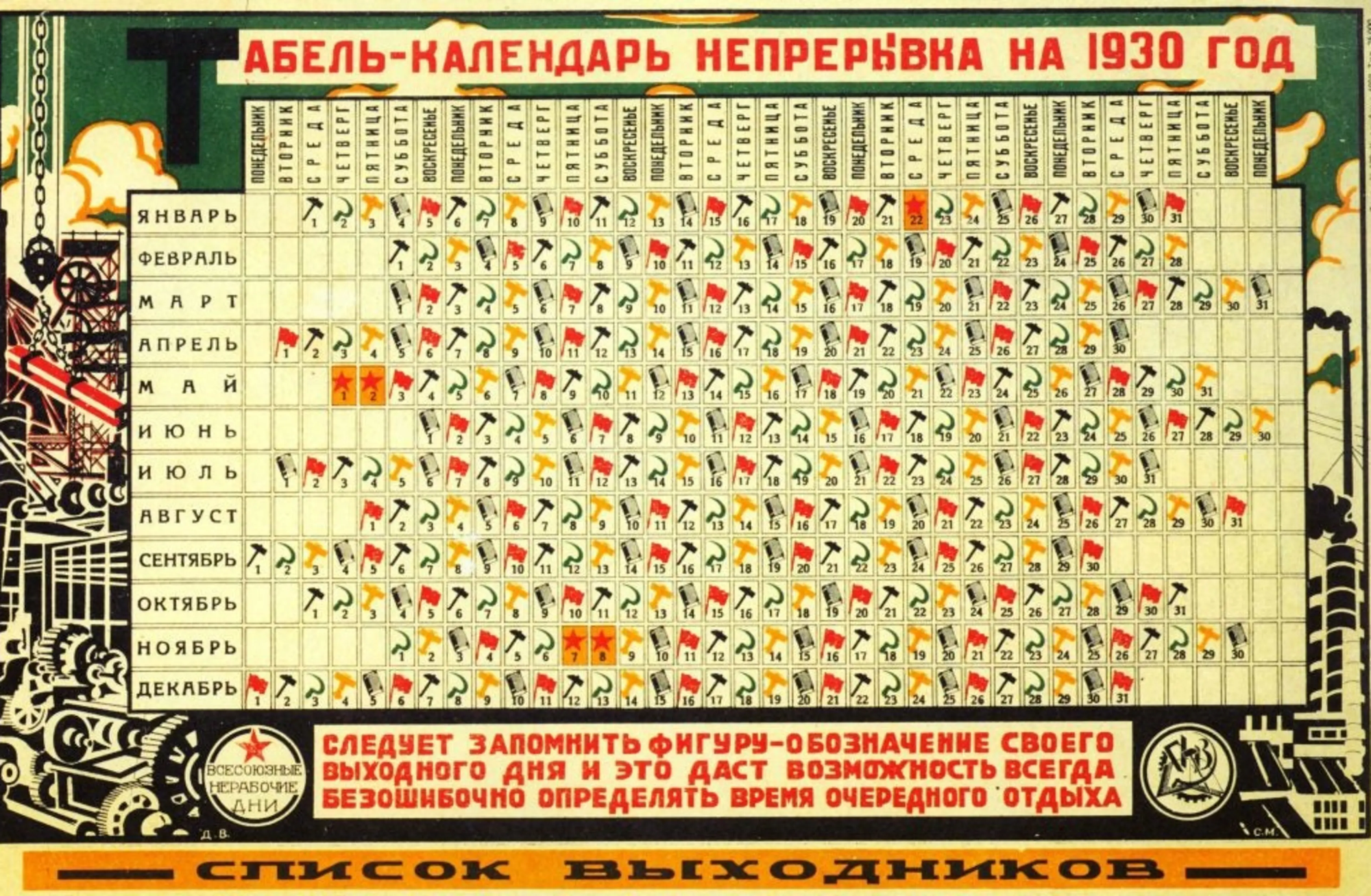
Under the five-day continuous schedule, workers were assigned to different rotating rest groups, represented in calendars by colors or numbers.
The old week had committed an administrative error.
Everyone shared it.
The new system personalized the day off.
- You are purple now.
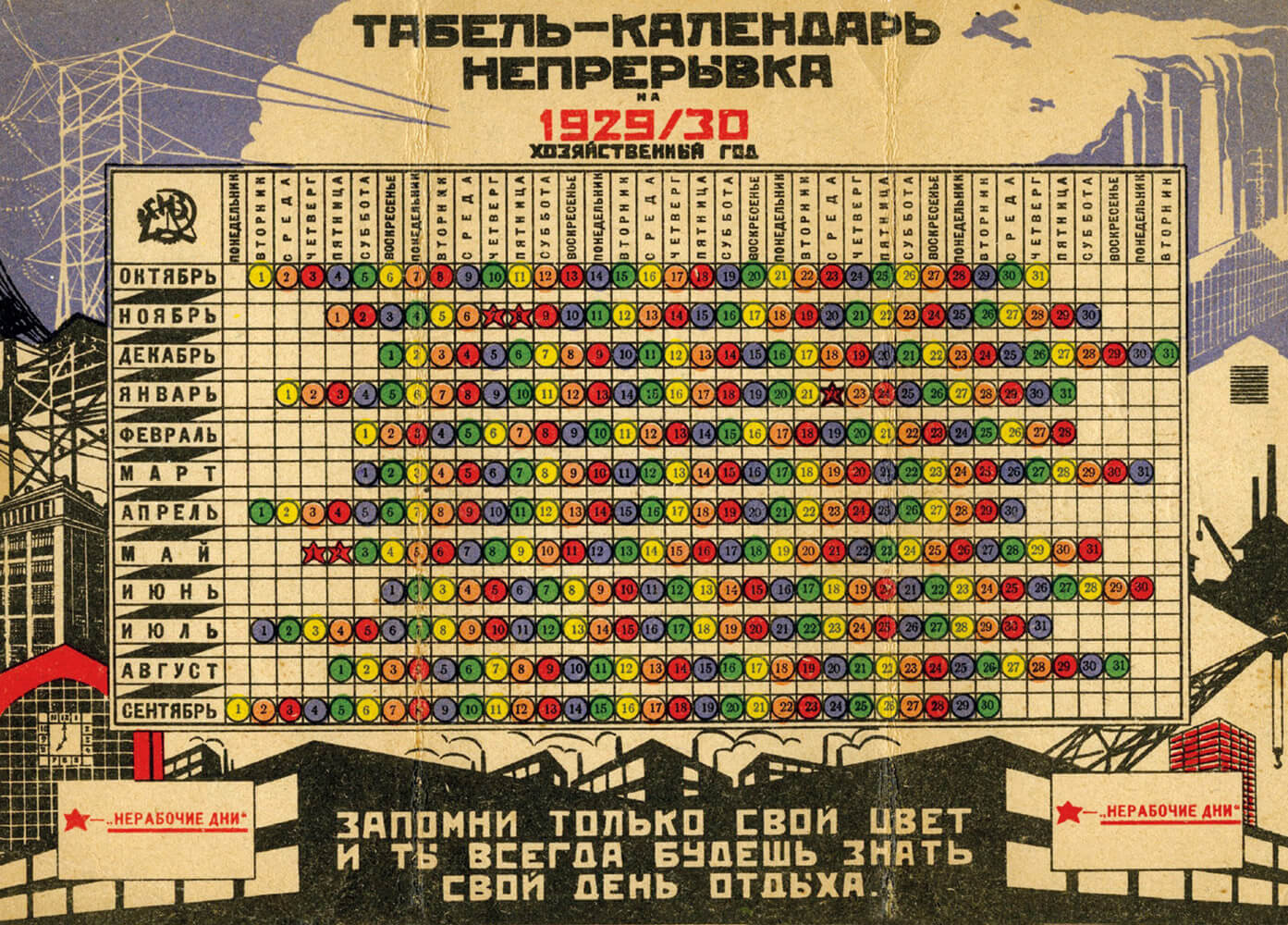
- Your wife may be green.
- Your friend may be red.
- The neighbor you borrow tools from may be whatever color has made him completely unavailable today.
Monday has a useful property:
Other people know when Monday is.
Purple requires some onboarding.
This should not be confused with a minor interface problem.
A common day is a coordination layer.
When the common day disappears, the worker still has leisure.
The worker may even have more leisure by count.
The problem is that human beings have developed the strange habit of using some of their leisure with other human beings.

This was not represented.
The calendar knew the worker.
It had failed to model the friend.
It knew a body had stopped working.
It did not know whether another body had stopped at the same time.
The Soviet state had produced one of history's cleanest distinctions:
A day off and a weekend are different objects.
- A day off belongs to a person.
- A weekend belongs to a relation.
That relation can include a marriage, family, group of friends, religious community, neighborhood, market, club, queue, picnic, football match, collective repair job, political meeting, dinner, or six people who would like to sit in one room and accomplish absolutely nothing together.
The continuous week had preserved a quantity.
It had damaged a topology.

The worker still possessed free time.
The free time no longer reliably possessed anyone else.
‡‡‡‡‡‡‡‡‡‡‡‡‡‡‡‡‡‡‡‡‡‡‡‡‡‡‡‡‡‡‡‡‡‡‡‡‡‡‡‡
The Symbols Are Better Than The Colors.
The colors were not even the full interface.
Some workplaces represented rest groups with numbers. Others used symbols. Historical examples include the hammer, sickle, red flag, airplane, and party membership card.
This means a worker could, in principle, explain their social availability through this sentence:
I cannot see you that day. I am the airplane.

History contains very few genuine gifts.
We should accept this one.

The symbols also reveal how administrative systems become intimate.
The state does not need to know whether you are lonely.
It needs to know which mark releases you from work.
The symbol enters the household.
- When is your husband home?
- Red flag.
- Your sister?
- Hammer.

- Can we all meet this week?
- We appear to have been ideologically diversified.
The rest day is now a personal attribute.
This is another tiny shift with enormous consequences.

Old Sunday was public infrastructure.
Everyone could inspect it without knowing anything about you.
The staggered day is private schedule data.
To coordinate, people must compare assignments.

A common convention has been replaced by repeated negotiation.
- The system gains utilization.
- The human beings inherit administration.
This is a recurring trick in optimized fields.
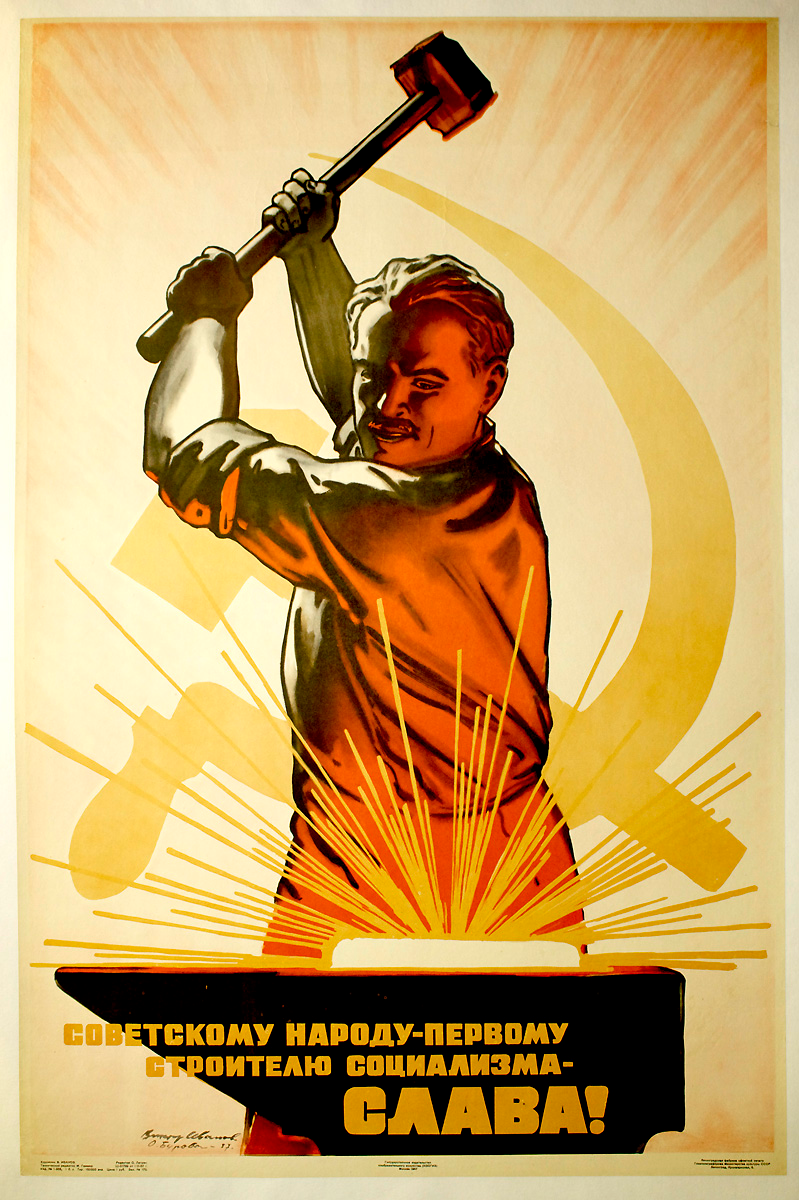
A system removes a shared default because the default appears inefficient.
Then every individual has to solve the coordination problem locally.
The institution reports flexibility.
The people perform the scheduling labor.

Nothing has disappeared.
The work changed address.
‡‡‡‡‡‡‡‡‡‡‡‡‡‡‡‡‡‡‡‡‡‡‡‡‡‡‡‡‡‡‡‡‡‡‡‡‡‡‡‡
Different Days.
One worker put the whole problem into a sentence that appeared in Pravda:
It is no holiday if you have to have it alone.
The Soviet Union has given the week a character-select screen.
The factory never sleeps. The numbers line up.
The planners can point at a chart where everybody receives rest and almost everybody remains at work.
But the people inside the circles keep missing one another.
Not dramatically.
The schedule produced millions of little absences too small to deserve a report.
- DAY I
- I am home.
- You are working.
- I am home.
- DAY II
- You are home.
- I am working.
- You are home.
- DAY III
- Your brother can visit.
- Neither of us can.
- Your brother can visit.
- DAY IV
- The neighbors are free.
- We are not.
- The neighbors are free.
- DAY V
- Everyone has received rest.
- But no line contains us.
- The factory remained continuous.
- The table did too.
- It just stopped filling at the same time.
- But no line contains us.
- Everyone has received rest.
This is the kind of contraction a production ledger is terrible at seeing.
Nothing has been destroyed here in the spectacular sense.
The chairs remain. The apartment remains.
The marriage remains. The friendship remains.
The worker has technically been given the time required to sustain these things.
The common path between them has become harder to reach.
That is enough.
‡‡‡‡‡‡‡‡‡‡‡‡‡‡‡‡‡‡‡‡‡‡‡‡‡‡‡‡‡‡‡‡‡‡‡‡‡‡‡‡
Sunday Is Fired.
Sunday also had another problem.
That one contained religion.
This made the day suspicious twice.
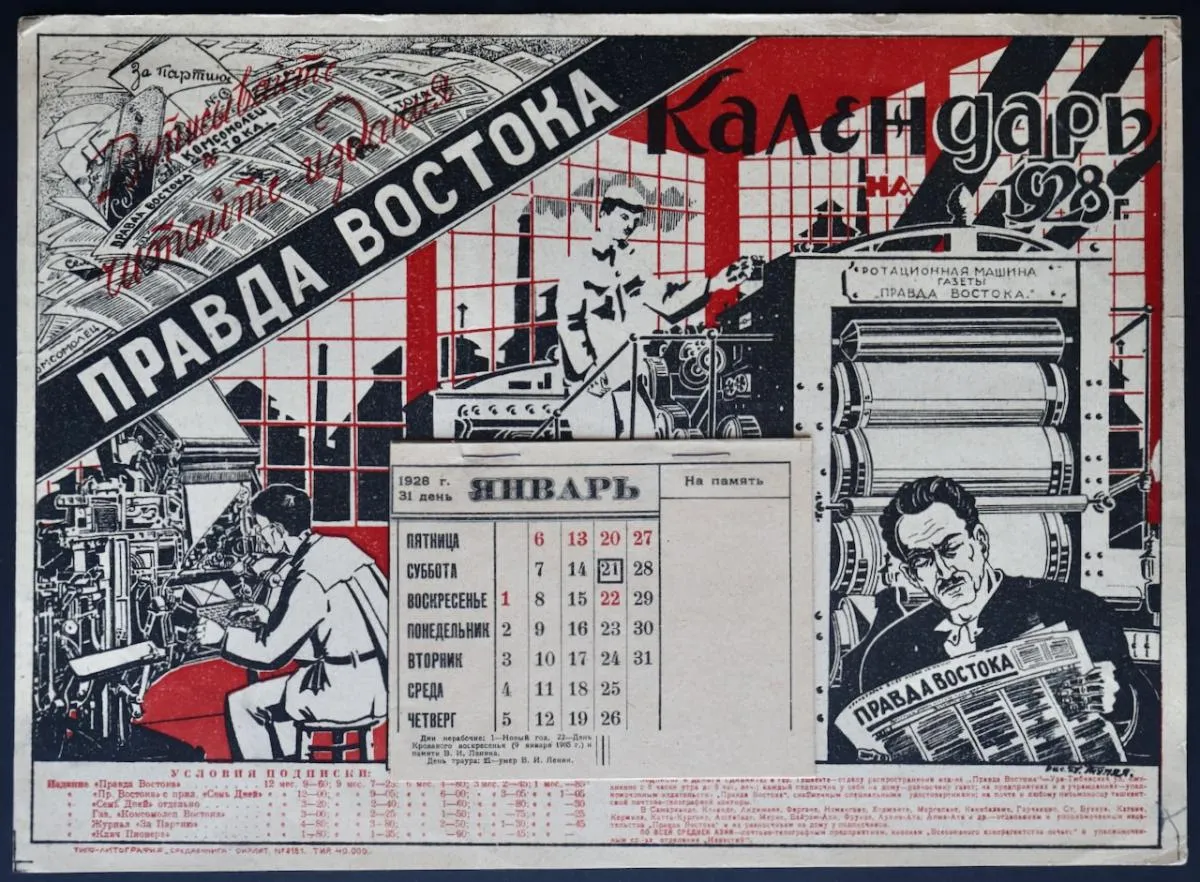
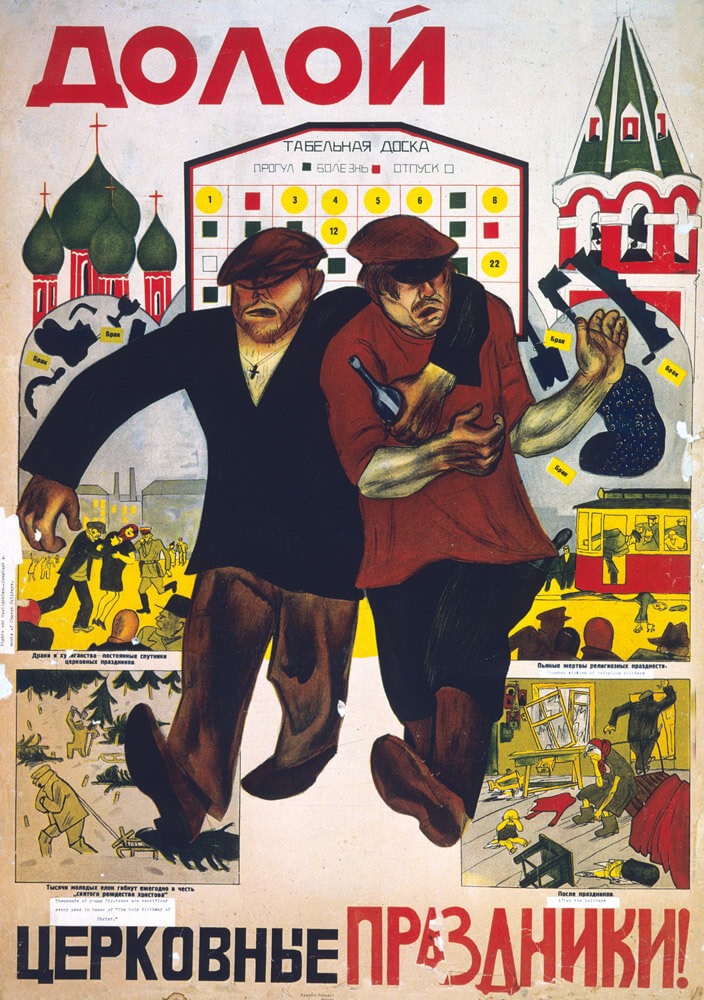
The Soviet state was engaged in a much broader campaign against organized religion, and the continuous schedule had an obvious secondary effect: recurring worship became harder when the population no longer shared the traditional day on which worship occurred.
Sunday had been carrying Christian time inside industrial time.
The five-day cycle cut across it.
This is probably a good place to be careful. This Tale is not secretly a defense of Sunday because God has filed a labor grievance.
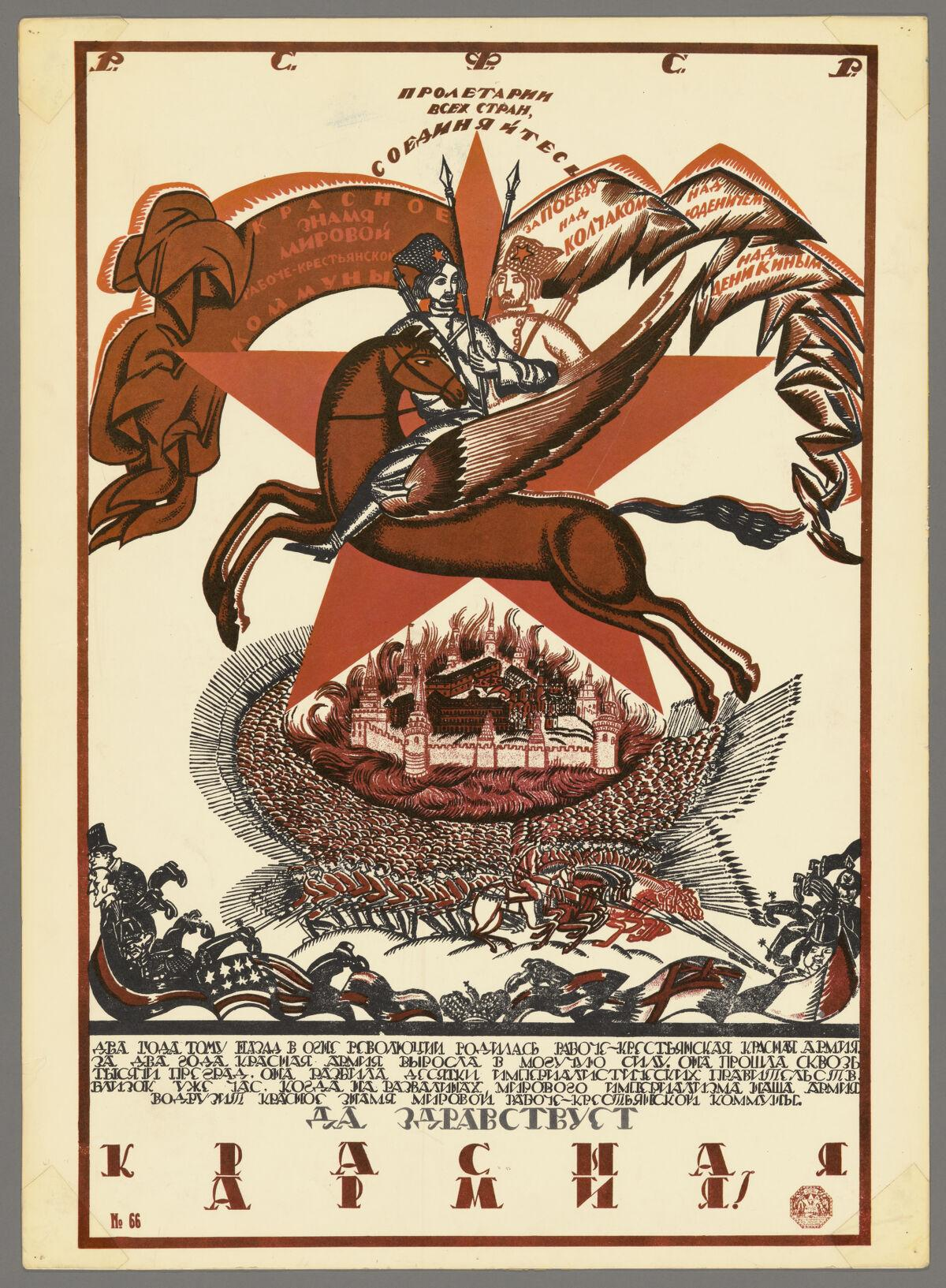
The seven-day week is historically contingent.
There is no seven-day astronomical object orbiting Earth and threatening to report calendar violations.
- A day has a very obvious physical anchor.
- A year has another.
- A month can at least point at the Moon and make a case.
- The week has to explain itself socially.
- That made it fair game.
- The week has to explain itself socially.
The mistake was assuming that conventional origin means optional function.
- Language is conventional.
- Try randomly assigning every fifth citizen a different meaning for the word stairs.
- Traffic rules are conventional.
- Left and right have no known ethical properties.
- It remains helpful if everyone driving toward one another at sixty miles per hour has received the same memo.

- Money is conventional.
- Your landlord will still become extremely philosophical if you try to pay rent in a private currency called ModalPathCoin that currently enjoys strong fundamentals.
‡‡‡‡‡‡‡‡‡‡‡‡‡‡‡‡‡‡‡‡‡‡‡‡‡‡‡‡‡‡‡‡‡‡‡‡‡‡‡‡
360 Is Better Than 300.
Larin understood that every serious reform needs a number large enough to look like history has already agreed.
He published a pamphlet titled 360 Instead of 300.
The number referred to the productive year the continuous week promised to unlock.
This is an incredible title because it makes the calendar sound like an underperforming employee.
Three hundred?
Pathetic.
We have located sixty more.

The five-day system did retain a handful of common revolutionary holidays when much of the workforce could stop together. Lenin, May Day, the October Revolution: the new state was not opposed to synchronized time in principle.
It was opposed to synchronized time carrying the wrong story.

The shared gap was not abolished.
It was politically curated.
- Religious holidays lost their old protected status.
- Revolutionary holidays remained.
The machine could stop for history.
It just needed the correct history.

That arrangement reveals another layer of the distortion.
A calendar is never only about duration.
It tells a population which memories deserve simultaneity.
A private memory can happen whenever.
A public holiday says:
All of us will interrupt ordinary time here.
That interruption creates a field.
People travel.
Gather.
Remember.
March.
Drink.
Pray.
Argue.
Cook.
Perform the same ritual badly in millions of separate homes.
The Soviet reform had correctly noticed that common time can organize belief.
It therefore tried to use common time deliberately.
That insight survives too.
The mistake is imagining that the state can remove one coordination rhythm and replace only the symbolic content while leaving the surrounding social relations untouched.
The week was never a poster.
Larin wanted 360 productive days.
The field kept invoicing him for evenings.
A common sacred day is also a coordination technology.
It can preserve worship.
Or family.
Or community.
Or the ability of people who do not share the religion to know when the shops, offices, neighbors, relatives, and public world are likely to slow down together.
The Soviet reform had correctly seen that the week was an instrument.
Then it treated the instrument as if its only job were scheduling labor.
This is how old structures become dangerous to remove.
They accumulate functions that nobody remembers assigning them.
The inherited object may be stupid in one register and load-bearing in another.
You can absolutely replace it.
Just first find out what is standing on it.
‡‡‡‡‡‡‡‡‡‡‡‡‡‡‡‡‡‡‡‡‡‡‡‡‡‡‡‡‡‡‡‡‡‡‡‡‡‡‡‡
The Week Was Doing Something.
This is the center of the distortion.
The week looked like empty time wrapped around production.
The field contained something else.
Synchronization.
Synchronization is difficult to see because its output is often another activity.
- The calendar does not manufacture the dinner.
- It makes the dinner easier to arrange.
- The calendar does not produce friendship.
- It gives friendship a recurring landing zone.
- The calendar does not create religious belief.
- It gives belief a public hour.
- The calendar does not repair the house.
- It makes it more likely that the people who know how to repair the house are available together.
A synchronized pause therefore has a strange accounting profile.
- Production may fall to zero.
- Coordination rises.
The factory sees the first number immediately.
The second number hides inside the lives that restart afterward.
This is why common rest can appear wasteful to an instrument measuring throughput.
Nothing is moving through the line.
Nobody is making parts.
The machine is quiet.
The worker is absent.
We have found the inefficiency.
Except the worker is using this gap to remain attached to a world outside the machine.
That world then returns the worker to Monday as something more complicated than labor capacity.
This is terribly inconvenient for the model.
‡‡‡‡‡‡‡‡‡‡‡‡‡‡‡‡‡‡‡‡‡‡‡‡‡‡‡‡‡‡‡‡‡‡‡‡‡‡‡‡
The Family Exception Reinvents Sunday.
Workers complained about the new arrangement.
This is unsurprising.
People will tolerate enormous structural experimentation until the experiment starts making it difficult to see their spouse.
Then suddenly everyone becomes a systems theorist.
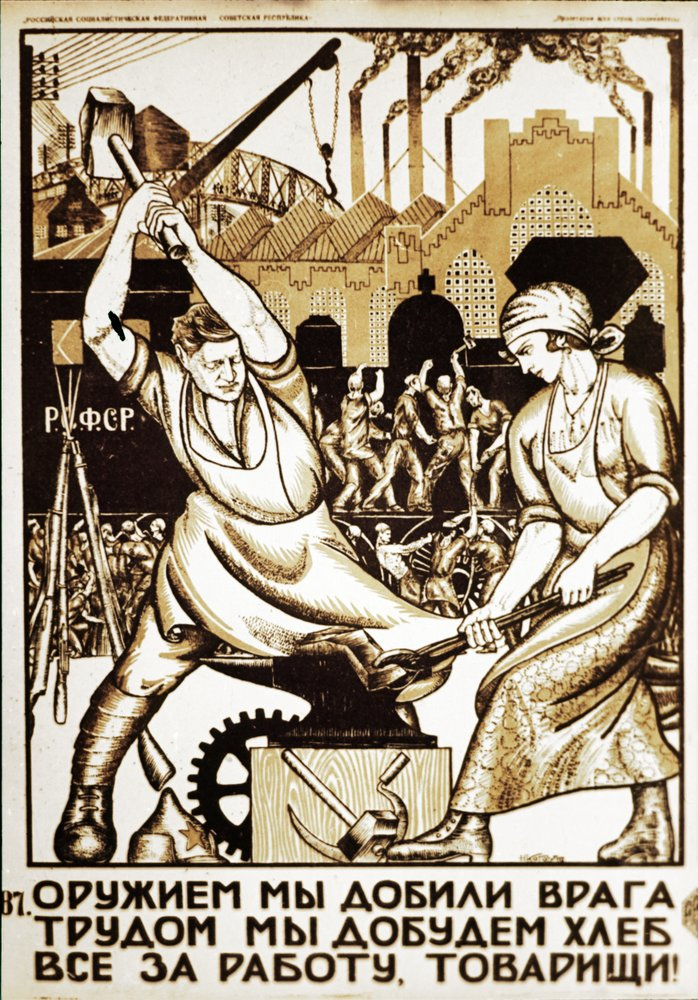
Contemporary accounts preserve complaints about families and friends receiving incompatible rest days. Adjustments followed, including attempts to let family members align their schedules.
This is the move to watch.
- The original system breaks synchronization.
- The system then develops a synchronization exception.
We are now building the old function inside the new instrument by request.
A husband and wife ask to share a rest day.
The scheduling apparatus considers the request.
Sunday has been reinvented at household scale.
This is one of the great ways distortion fields preserve themselves.
A missing function returns as an accommodation instead of being admitted as evidence against the model.
The system does not have to say:
Right. Common rest was carrying social information we failed to represent.
You can actually just say:
Special rest-day coordination may be permitted where individual allocations produce domestic incompatibility.
The family has become an edge case.
This is very modern.
A system can survive a surprising amount of reality if every contradiction is issued its own form.
‡‡‡‡‡‡‡‡‡‡‡‡‡‡‡‡‡‡‡‡‡‡‡‡‡‡‡‡‡‡‡‡‡‡‡‡‡‡‡‡
The Machine Also Has Some Notes.
Then the factory itself began complaining.
This is especially rude.
The original distinction was:
- workers need rest;
- machines do not.
Still true in the interesting sense.
Machines do not sleep.
Machines do, however, have their own irritating relationship with continuance.
They wear.
They heat.
They drift.
They need lubrication.
They need inspection.
They need parts.
They need people who know what the machine normally sounds like.
They need someone to notice that the tiny vibration in the housing is new and that new vibrations are one of the ways machinery writes its suicide note.
Continuous production is therefore different from never stopping anything.
A well-run continuous system contains pauses internally.
Maintenance windows.
Shift handoffs.
Inspection.
Redundancy.
Cleaning.
Isolation.
Repair.
The gap moves. It does not disappear.
This should sound familiar to anyone who has ever tried to optimize a living or technical system by removing the parts where nothing visible seems to happen.
The removed nothing eventually returns wearing a wrench.
‡‡‡‡‡‡‡‡‡‡‡‡‡‡‡‡‡‡‡‡‡‡‡‡‡‡‡‡‡‡‡‡‡‡‡‡‡‡‡‡
Stalin Discovers the Machine.
By 1931, Joseph Stalin was publicly complaining about how the uninterrupted working week had been implemented in parts of Soviet industry.
The state had removed the common weekly interruption to increase machine utilization.
Two years later, Stalin was explaining that badly organized continuous operation had produced what he called a lack of personal responsibility: workers were not reliably attached to particular jobs and machines, machinery was handled carelessly, machine tools broke down, and the supposed continuous system existed better on paper than in the factory.
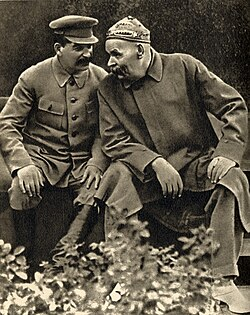
His June 1931 speech is worth reading because Stalin does not abandon the true signal. He says, basically:
- The continuous week can work.
- The railways show it can work.
- The factories have implemented it like fucking maniacs.
- The railways show it can work.
Machines still do not require Sunday.
But the industrial field requires continuity of responsibility.
A person has to know what they are responsible for.
A machine has to be encountered by people who know its history.
A shift system cannot become a river of interchangeable humans washing over equipment that technically belongs to everyone and therefore has the very exciting operational property of belonging to nobody in particular.
The calendar had solved one utilization problem by moving workers through machinery.
The machinery then acquired a memory problem.
The Soviet Union had tried to make the factory continuous.
The factory responded by forgetting who it was.
Stalin's proposed answer was equally revealing: either organize genuine continuous work properly, with clear responsibility and competent shifts, or temporarily return affected enterprises to an interrupted six-day week.
So the state began putting the gap back.
‡‡‡‡‡‡‡‡‡‡‡‡‡‡‡‡‡‡‡‡‡‡‡‡‡‡‡‡‡‡‡‡‡‡‡‡‡‡‡‡
Six Days, Please.
The five-day continuous schedule gave way across much of the economy to the shestidnevka, an interrupted six-day cycle with common rest days.
This is one of those reforms that becomes funnier the less explanation it receives.
- The Soviet Union had discovered that seven days contained an unacceptable shared pause.
- It replaced this with five days containing no shared pause.
- Then it discovered that the shared pause had functions.
- So it introduced six days containing a shared pause.
- Then it discovered that the shared pause had functions.
- It replaced this with five days containing no shared pause.
We are approaching seven with experimental caution.
Under the six-day system, common rest days returned at fixed points in the month.
The old religious Sunday did not immediately recover its old place.
But the deeper coordination function had been partially restored.
People could again anticipate that other people would also stop.
The system had spent enormous administrative energy learning that a common day off works best when it is common.
- The family had to become a scheduling conflict.
- The friendship had to become lost overlap.
- The congregation had to become unavailable attendance.
- The machine had to become a maintenance and responsibility problem.
- The factory had to become less productive under a system introduced for productivity.
Only then, the empty day could be recognized as containing things.
Reality is often forced to become expensive before an optimization system agrees that it exists.
‡‡‡‡‡‡‡‡‡‡‡‡‡‡‡‡‡‡‡‡‡‡‡‡‡‡‡‡‡‡‡‡‡‡‡‡‡‡‡‡
The Peasant Week Declines the Software Update.
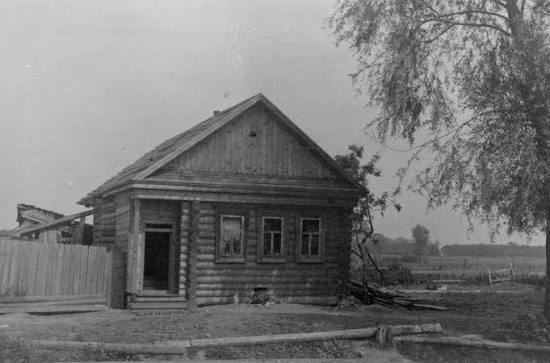
There was also the problem of the countryside.
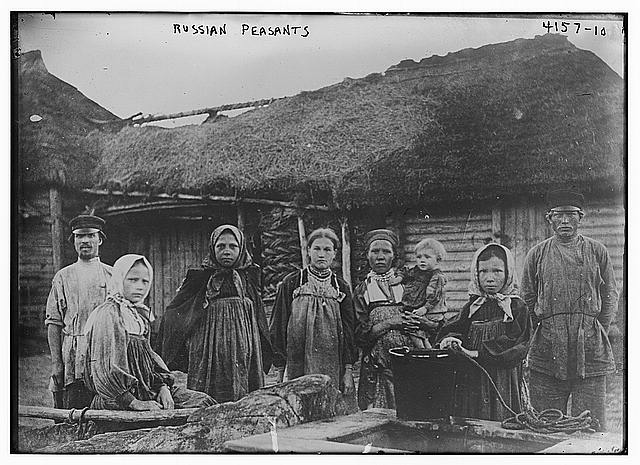
Large parts of rural life continued to move to the older seven-day rhythm.
This should not be romanticized into a heroic peasantry defeating time with a basket of turnips.
The countryside had its own coercions, shortages, religious authority, agricultural rhythms, market dependencies, and very serious political violence moving through it.
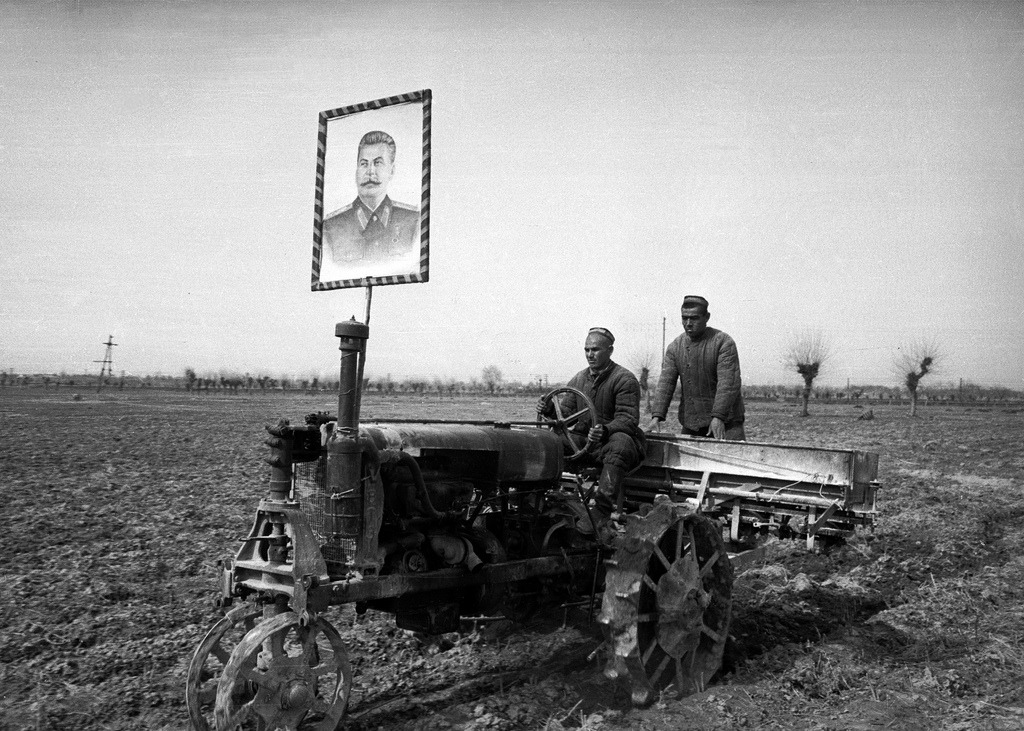
Still, the temporal mismatch is revealing.
- The industrial city receives a new work cycle.
- The village keeps Sunday.
- Markets still gather according to inherited rhythms.
- Church life continues where it can.
- Relatives now live across different time systems inside the same country.
A worker can leave a village, enter a factory, and discover that the week has changed jurisdiction.
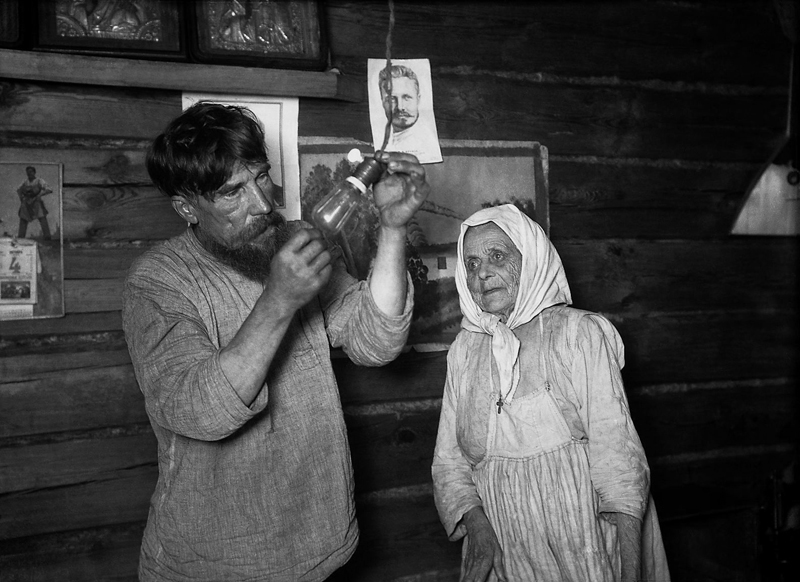
This is one of those cases where a centrally planned system produces more calendars.
The center simplifies. The field branches.
One historian later described the result as something like two temporal societies: an industrial segment increasingly organized around the new cycle and a rural population that continued following the seven-day beat.
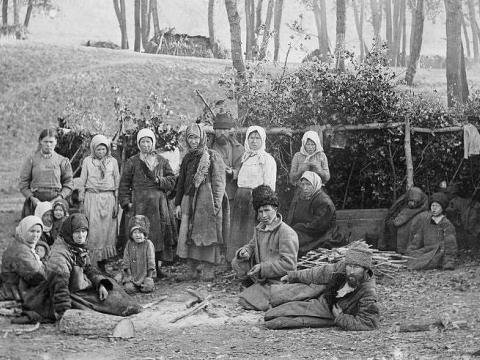
The phrase is useful even if reality was messier than a clean binary.
The important object is the seam. People crossed it. Goods crossed it. Family obligations crossed it. Religious practice crossed it.
The old and new weeks did not fight in a philosophical seminar.
They met at train stations.
They met in markets.
They met when someone came home on a rest day and discovered home had scheduled something else.
This is another reason the week could not be optimized as a self-contained unit.
There was no self-contained unit. The factory calendar lived inside a larger social field that had not accepted the same transition.
A schedule can be internally elegant and externally expensive.
Modal Path Ethics keeps finding this object everywhere.
- The local system reports success.
- The translation layer absorbs the damage.
In this case, the translation layer had a lunch pail and relatives in the countryside.
‡‡‡‡‡‡‡‡‡‡‡‡‡‡‡‡‡‡‡‡‡‡‡‡‡‡‡‡‡‡‡‡‡‡‡‡‡‡‡‡
The Seven-Day Week Returns With the Police.
In June 1940, the Soviet government restored the seven-day working week and designated Sunday as the common day of rest.
The week had returned. Do not award it a halo.
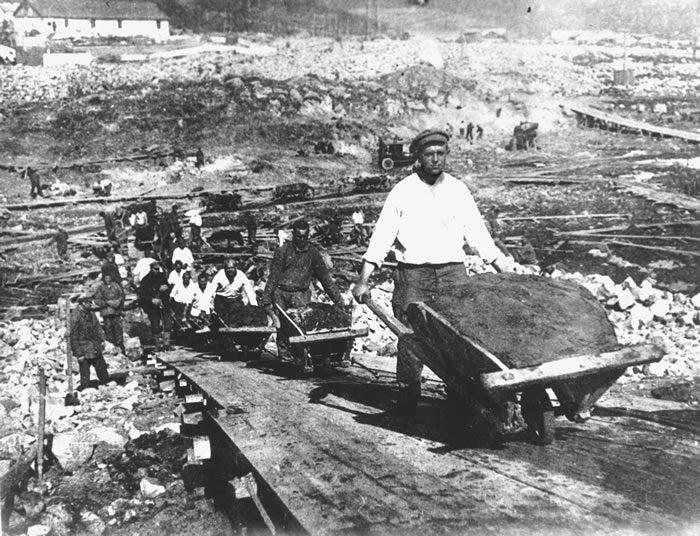
The same 1940 decree also lengthened the working day in major parts of the economy and sharply restricted workers' ability to leave jobs without authorization.
This is one of history's little protections against sentimental storytelling.
Sunday came back carrying labor discipline.
The state had not discovered the sacred dignity of weekends and tearfully invited brunch home from exile.
It had changed instruments again.
Still, the calendar had completed an extraordinary route.
- Seven-day week.
- Five-day rotating rest.
- Colors.
- Family misalignment.
- Responsibility problems.
- Six-day common rest.
- Seven-day week again.
- Sunday.
The week survived an attempt to optimize it.
This does not prove that seven is metaphysically correct.
It proves the replacement failed to preserve enough of what the inherited structure was carrying.
A failed replacement does not sanctify the predecessor.
It reveals a hidden load.
‡‡‡‡‡‡‡‡‡‡‡‡‡‡‡‡‡‡‡‡‡‡‡‡‡‡‡‡‡‡‡‡‡‡‡‡‡‡‡‡
The Gap Was Never Empty.
The Gapless Week is a little unfair.
The Soviet worker still rested.
The system did not literally erase downtime from every human body.
The deeper ambition was to remove the shared gap from production.
That is why the experiment matters now.
Modern optimization keeps finding gaps.
Waiting.
Rest.
Sleep.
Unstructured conversation.
Walking somewhere slowly.
Sitting after dinner because nobody has somewhere else to be.
A maintenance window.
A fallow field.
A queue long enough for someone to reconsider the system producing the queue.
A pause in a conversation where the other person is still deciding what they actually think.
These things look suspicious inside instruments built around throughput.
So we give the gaps jobs.
- Sleep becomes recovery.
- Rest becomes preparation.
- Walking becomes steps.
- Breathing becomes regulation.
- Friendship becomes networking.
- Reading becomes skill acquisition.
- Silence becomes mindfulness.
- Vacation becomes burnout prevention.
- The weekend becomes recharge.
The gap may survive after it submits a productivity case.
This is one of the themes already sitting inside Pope Leo and the Optimizable Human.
A person can wake beneath a sleep score, recovery score, readiness score, body-battery estimate, training recommendation, stress graph, and quiet electronic suggestion that last night's mammal has underperformed.
Most of these instruments can catch something real.
That is the problem worth taking seriously.
- A useless metric is easy to ignore.
- A good metric can acquire a kingdom.
The Gapless Week began with a true signal about machinery.
The Optimizable Human begins with true signals about bodies.
Then the jurisdiction starts expanding.
‡‡‡‡‡‡‡‡‡‡‡‡‡‡‡‡‡‡‡‡‡‡‡‡‡‡‡‡‡‡‡‡‡‡‡‡‡‡‡‡
The Night Shift.
The wider drive to extract more use from industrial capital did not stop at the week. Soviet industry was also experimenting with shorter individual workdays, additional shifts, expanded night work, and the harder problem of keeping expensive machinery moving across more of the twenty-four-hour day.
An early International Labour Review study of the Soviet seven-hour-day experiment contains a remarkable little window into what this looked like from the body.
In one factory survey, workers on day shifts and night shifts were asked about sleep.
- Among day-shift workers, only a small share reported sleeping five hours or less, while nearly half reported eight hours or more.
- Among night-shift workers, the pattern moved sharply in the other direction: far more were sleeping five hours or less, and far fewer reached eight.
The exact percentages are less important than the object they reveal.
Industrial time had entered human sleep.
The machine did not need night.
The worker did. The worker's body had a relationship with darkness, circadian timing, household conditions, noise, temperature, crowded housing, family schedules, and recovery that could not be derived from the number of paid hours alone.
The International Labour Review account is especially useful because the Soviet reformers were not simply demanding longer individual shifts.
The seven-hour day could be presented as a worker benefit.
- Shorter shift.
- More shifts.
- More machine use.
- Everybody wins again.
- More machine use.
The arithmetic has returned.
This is the same beautiful shape that produced the five-day week.
Reduce the individual burden while increasing system utilization.
There is nothing inherently wrong with that shape.
A field can distribute load across people or components so the system continues while each component receives recovery.
This is one of the central tricks of resilient design.
The human problem arrives when the design treats every hour as interchangeable.
A seven-hour night shift is not simply a seven-hour day shift moved twelve squares to the right.
The body came with state. So did the home. So did the family. So did the room the worker was expected to sleep in after sunrise.
The same review described overcrowded housing and households where multiple family members worked different shifts. It noted the extremely practical consequence: even when the schedule had technically granted rest, the surrounding home could make normal rest difficult.
- The worker comes home to sleep.
- Someone else is awake.
- Someone else leaves.
- Someone else returns.
The room is not a sleep pod.
It is a room full of other lives.
This is where the factory reaches past the gate without anyone issuing an order.
A schedule can colonize a bedroom through timing alone.
No commissar has to stand beside the pillow.
The shift has already arrived.
The Soviet experiment was never only about "weekends."
It was about a larger industrial question:
How much of the calendar can production safely occupy if human recovery is distributed around it?
That question is still alive.
We just have much better instruments now.
- Wearables can estimate sleep stages.
- Phones know when screens go dark.
- Work systems know when messages are sent.
- Biology is giving us genes, pathways, neurotransmitters, circadian clocks, sleep pressure, and increasingly precise interventions.
The field is becoming more legible.
That is good. Legibility is how the old error becomes avoidable.
But it is also how the old temptation becomes more powerful.
The Soviet planner had a schedule and a stopwatch.
We have a wrist computer that can tell the schedule exactly how badly the body lost.
‡‡‡‡‡‡‡‡‡‡‡‡‡‡‡‡‡‡‡‡‡‡‡‡‡‡‡‡‡‡‡‡‡‡‡‡‡‡‡‡
The Night Is Looking Suspicious.
Sleep is the largest recurring gap in ordinary human life.
This has always been super dangerous information.
- Eight hours.
- Every day.
- For decades.
The entire organism lies there unconscious.
No output.
No meetings.
No shopping.
No posts.
No skill acquisition.
No quarterly contribution whatsoever.
An adult sleeping eight hours has just spent one third of the day completely unavailable to capitalism, communism, organized religion, social media, political persuasion, brand engagement, family group chats, and the person at work who asks whether you "have five minutes" and then begins sharing a screen.
Sleep is structurally insolent.
So naturally, humanity has begun asking whether all of this shit is necessary.
Here again, there is a true signal.
- Some humans really do need less sleep than average.
- Research on familial natural short sleepers has identified rare genetic variants associated with people who habitually sleep much less while remaining healthy and functional.
- A 2025 PNAS paper identified a SIK3 variant associated with the natural-short-sleep trait, adding another piece to a growing biological picture of sleep need.
- A recent New Yorker examination followed natural short sleepers who can function on around four hours
- while emphasizing how rare they appear to be and
- how different this is from ordinary sleep deprivation.
- while emphasizing how rare they appear to be and
- Then, in August 2026, the FDA approved Orzeyful (oveporexton), the first approved medicine to directly target the orexin-signaling loss underlying narcolepsy type 1.
- Research on familial natural short sleepers has identified rare genetic variants associated with people who habitually sleep much less while remaining healthy and functional.
These are not the same fact.
Please do not combine them any more than I already have.
- The genetic work concerns rare natural short sleep.
- Oveporexton treats narcolepsy type 1.
Neither one currently means that a healthy person who needs eight hours can take a sick pill and safely become a four-hour sleeper.
But the field has moved.

- Sleep need is becoming more biologically legible.
- The difference between sleepiness, sleep duration, sleep architecture, wakefulness, and restorative function is becoming more technically actionable.
- The mistake would be to convert "this mechanism can move" into "the gap was always waste."
- We have seen that calendar before.
- The mistake would be to convert "this mechanism can move" into "the gap was always waste."
- The difference between sleepiness, sleep duration, sleep architecture, wakefulness, and restorative function is becoming more technically actionable.
‡‡‡‡‡‡‡‡‡‡‡‡‡‡‡‡‡‡‡‡‡‡‡‡‡‡‡‡‡‡‡‡‡‡‡‡‡‡‡‡
Four Hours != Four Hours.
There are at least two ways for a human being to sleep four hours.
- One is to possess a biology that genuinely completes enough restorative work in four hours.
- The other is to need seven or eight and get four.
- The clock displays the same number.
- The human does not.
This is the entire Tale compressed into one sleep tracker.
The Soviet continuous week measured rest as time away from work.
If enough non-working time had been allocated, the requirement looked satisfied.
The missing variable was what that time had to coordinate with.
A future sleep technology could make the same error at the bodily level.
- If some intervention leaves a person awake longer while the underlying restorative need remains unmet, then waking time has expanded only on the dashboard.
- The body has borrowed against itself.
- If an intervention actually changes the underlying physiology so that the required repair is completed safely in less time,
- then something much more interesting has happened.
That distinction is the difference between a real transition and an alarm clock with ambitions.
Artificial light already changed when human activity could occur.
Anesthesia changed which bodily transitions surgery could survive.
Antibiotics changed which infections had to become endings.
Insulin changed the reachable future of diabetes.
A future intervention that safely changes healthy sleep need would belong in that family.
Modal Path Ethics has no reason to worship the eight-hour block as sacred human essence. If the biology moves, the path moves.
But the alarm does not get to claim the transition before the body does.
Neither does the employer.
Neither does the productivity influencer.
Neither does the executive who has just discovered that reducing average sleep by two hours would create approximately one additional workday every four days and has become visibly erect near the whiteboard.
The body gets a vote.
‡‡‡‡‡‡‡‡‡‡‡‡‡‡‡‡‡‡‡‡‡‡‡‡‡‡‡‡‡‡‡‡‡‡‡‡‡‡‡‡
The Optimizable Night.
This is where the old Soviet experiment and the current optimization field touch without becoming the same story.
The Soviet planner looked at a machine sitting idle on Sunday and asked whether the idle time could be recovered.
The modern optimization field can look at a sleeping body and ask the same question.
Again: fair question.
Some constraints are inherited conventions.
Some are contingent biology.
Some are technical bottlenecks waiting for better instruments.
Some are fake scarcity.
Some are real limits that can still be changed later.
The ethical failure is not asking whether a limit can move.
The failure is letting the desired output decide in advance which limits are real.
That is how optimization stops being inquiry and becomes theology.
The factory wants seven production days, therefore common rest is waste.
The worker wants more waking hours, therefore sleep is waste.
The company wants more worker availability, therefore recovery is a technical problem.
The platform wants more attention, therefore boredom is friction.
The school wants more measurable progress, therefore unstructured time is instructional loss.
The hospital wants shorter stays, therefore discharge is recovery.
The model answers the question it was given.
Then the field has to live inside the answer.
‡‡‡‡‡‡‡‡‡‡‡‡‡‡‡‡‡‡‡‡‡‡‡‡‡‡‡‡‡‡‡‡‡‡‡‡‡‡‡‡
The Worker Is Not a Battery.
There is a tempting metaphor available here.
Do not use it too quickly.
- People need recharge.
- People have energy.
- People run down.
- People recover.
- People have capacity.
The vocabulary seems to fit so perfectly that the worker begins turning into a battery while everyone is still nodding.
Batteries are wonderful. They also do not have spouses.
A battery usually does not care whether another battery has the same evening free.
A battery does not need a political meeting, a funeral, a festival, a game, a day with its children, a religious service, a long conversation, or the possibility of wasting three consecutive hours in a way no planner can defend.
A battery's unused capacity is relatively easy to interpret.
A person's unused capacity may be life.
That is the jurisdiction problem in one line.
The machine can be optimized toward output because output is a large part of what the machine is for.
The person can produce output. The person is not for the output.
This sounds obvious until an instrument becomes good enough at helping.
Then the distinction starts getting expensive.
The Soviet week is useful because the state did not need to hate workers for this error to occur.
It only needed to model them through the function currently under optimization.
Worker as labor. Rest as labor recovery. Time as production surface.
The true signal survives all this abstraction. The person gets smaller.
‡‡‡‡‡‡‡‡‡‡‡‡‡‡‡‡‡‡‡‡‡‡‡‡‡‡‡‡‡‡‡‡‡‡‡‡‡‡‡‡
The Week Abides.
The continuous week is easy to laugh at now because we already know what happened.
The colors look quaint.
The scheduling logic looks aggressively Soviet.
The return to shared rest makes the earlier system appear obviously doomed.
That confidence is cheap. This plan had a true signal.
- Expensive machines can benefit from continuous use.
- Different workers can rest at different times.
- Not every process needs to stop because a religious calendar says so.
- Human arrangements can contain inherited inefficiencies that persist because everyone mistakes familiarity for necessity.
All of that survives.
Then the field returns what the instrument missed.
- Rest is not only an individual quantity.
- Time is relational.
- Common gaps coordinate social life.
- Machines carry maintenance histories.
- Continuous systems require responsibility continuity.
- A pause can be infrastructure.
- A conventional structure can become load-bearing without becoming sacred.
These lessons should make us more willing to experiment, not less.
- A good experiment is allowed to discover that the old thing was carrying something.
- A bad experiment protects the model until reality has to become expensive enough to force a revision.
The Soviet field eventually revised.
First through complaints. Then accommodations. Then machine breakdowns. Then a six-day common interruption. Then, under a much harsher labor regime, the seven-day week and Sunday returned.
They learned. They just made a lot of people live inside the lesson.
‡‡‡‡‡‡‡‡‡‡‡‡‡‡‡‡‡‡‡‡‡‡‡‡‡‡‡‡‡‡‡‡‡‡‡‡‡‡‡‡
Ruling.
The Gapless Week began with a correct observation.
Workers required rest. Machines did not require Sunday.
Staggering the workers' rest could keep industrial capital in use more continuously while preserving each worker's personal downtime.

Then the instrument confused personal rest with common time.
The calendar could see:
- a worker;
- a shift;
- a machine;
- a rest day;
- a production day.
It had much weaker vision for:
- a marriage;
- a friendship;
- a congregation;
- a shared meal;
- a maintenance relationship;
- a worker's memory of one particular machine;
- a whole neighborhood becoming free together.
Those relations did not disappear because the calendar failed to model them.
They became harder to reach.
The state patched families back in.
The machinery filed its own complaint through breakdown and lost responsibility.
The common gap returned.
The week was not sacred. The gap was carrying load.

That distinction matters now because another large human gap is becoming newly legible.
Sleep is biological rather than calendrical, but the temptation is familiar.
Some humans can thrive on much less sleep.
Genetics is identifying mechanisms associated with that trait.
Medicine is becoming more capable of acting directly on sleep-wake biology.
One day, healthy sleep need may actually become alterable.
If that happens, the human day will change.
- Do not defend eight hours because eight hours is old.
- Do not delete eight hours because eight hours looks idle.
The relevant question is whether the function moved with the gap.
The Soviet Union changed the schedule and waited for the field to follow.
It decided no.