Tales of Distortion: The Lake Peigneur Drilling Accident
A ten-foot lake should not be able to eat an oil rig.
This is one of the really great things about ten-foot lakes.
You can look at one of those and form a basically reasonable expectation about the scale of events that are available here.
- Fish can probably live in this, if they are interested.
- Boats can float.
- A child might be told not to swim too far out.
- A local man can spend a quiet morning trying to catch catfish without needing to ask whether the lake is secretly waiting to become a throat.
Lake Peigneur, in Iberia Parish, Louisiana, was one such shallow freshwater lake.
This fact was technically true.
It was also one of the least useful facts ever.
Because below Lake Peigneur there was a salt mine.
Below in the literal sense. Under the lake.
Under the mud. Under the water.
Under the clean surface where boats and drilling platforms and property lines and mineral leases all performed the many rituals by which a place becomes administratively understandable.
There was an excavated industrial void down there.
- The map had a lake on it.
- The map had a mine on it.
- The map did not have enough below.
- The map had a mine on it.
On November 20, 1980, a drilling crew working from a platform on Lake Peigneur was looking for oil.
This was not, by itself, a wild thing to look for in Louisiana near a salt dome. Salt domes and oil have a long and prosperous geological relationship; which is a polite way of saying that the Earth sometimes stores valuable hydrocarbons around enormous underground salt structures because apparently our planet enjoys setting traps for any paperwork-mammals that may appear on top of it.
Texaco had the lease.
Wilson Brothers had the drilling work.
Diamond Crystal had the salt mine.
Live Oak Gardens had the trees, houses, gardens, land, and ordinary continuance of a place that expected tomorrow to resemble yesterday in the load-bearing ways.
- Everything that was had a name,
- every name had an owner,
- and every owner had a document.
- every name had an owner,
This is where the distortion begins.
This field looked ordered because its surface descriptions were ordered.
- Mineral rights,
- drilling coordinates,
- mine charts,
- lease boundaries,
- corporate roles,
- subcontractor responsibilities,
- surface property,
- subsurface extraction,
- local labor,
- emergency procedure.
- local labor,
- subsurface extraction,
- surface property,
- subcontractor responsibilities,
- corporate roles,
- lease boundaries,
- mine charts,
- drilling coordinates,
Each piece could be discussed.
Each piece could be filed.
Each piece could be entered into the relevant institutional sentence.
Except a field is not made safe by having many descriptions of itself. A field becomes safer when the descriptions can answer to one another before the water does.
Lake Peigneur was about to ask whether the surface map and the underground map had ever really met.
It turns out, no, they had not.
The Incorrect Amount of Lake.
The ordinary disaster-story version of Lake Peigneur has a clean little handle.
Someone drilled in the wrong place.
That is attractive for any storyteller because it lets the event become an arithmetic goblin. There was a bad coordinate. A mistaken triangulation. A wicked line drawn wrong. A conversion error broke bad. A drill bit that went where the paperwork believed it would not go.
People love this kind of disaster because it has the moral clarity of someone misreading a recipe and summoning a demon.
Modal Path Ethics understands this appeal too. It is funny. But it is also too small.
Wrong-place drilling is definitely part of the story. If the drill does not enter the wrong relation with the mine, then Lake Peigneur remains a lake, the salt mine remains a mine, and Louisiana does not briefly acquire a new theory of waterfalls.
But "wrong place" is already a compressed answer. That hides the question that should have been alive earlier:
How did a place containing
- a shallow lake,
- an active or recently active industrial mine,
- a salt dome,
- oil prospects,
- canals,
- gardens,
- surface property,
- mineral rights,
- drill plans,
- corporate permissions,
- workers,
- fishermen,
- barges,
- and tunnels
- become legible enough to proceed while remaining physically undertranslated?
The distortion object today is administrative commensurability.
Administrative commensurability is the fantasy that because each relevant layer has been described inside an authorized system, the layers have somehow become mutually real to one another.
- The surface lease exists.
- The drilling plan exists.
- The mine map exists.
- The property description exists.
- The state approval exists.
- The contractor has instructions.
- The companies have roles.
- The field has been cut into documents.
Those documents may all be locally serious. The problem arrives when local seriousness is mistaken for field integration.
- A surface coordinate does not automatically somehow understand a mine chamber.
- A mine map does not automatically update your drilling exclusion zone.
- A lease does not automatically know what is load-bearing below it.
- A corporate responsibility chain does not automatically become a physical communication channel.
- A permission does not become a path simply because it was granted by someone with the power to grant permissions.
Lake Peigneur did not punish ignorance in the simple sense. It more specifically punished incomplete translation among true partial maps.
That is much nastier. If everyone was just making things up, the problem is very visible. Just stop doing that.
If everyone is operating from documents that are true enough to authorize the next step, the field can look legible until the first impossible noise comes through the platform.
The Surface.
The surface map of Lake Peigneur was not empty. It knew many facts.
- There was a lake near Jefferson Island.
- There were salt operations below and around the salt dome.
- There were oil interests because salt domes can trap oil.
- There were industrial actors with defined tasks.
- There were state leases, contracts, equipment, barges, platforms, workers, and ordinary reasons for everyone to believe that the morning's work belonged to a known world.
- There were oil interests because salt domes can trap oil.
That part is critical. A Tale of Distortion usually contains a true need or true perception that gets enlarged into a failed field.
- Scotland really did need a way out of economic pressure before the Darien Scheme converted national hope into a tropical liquidation machine.
- France really did have a scientific field capable of discovery before N-rays converted threshold perception into collective hallucination.
- China really did need industrial capacity before the Great Leap Forward converted development into coercive unreality and backyard metallurgy.
- Symmes really did catch the intoxicating possibility that worlds may contain hidden structure before he attempted to drive the United States Senate into a polar hole.
Lake Peigneur has the same pattern.
The field was literate at the surface. It could produce many sentences about itself.
- Texaco could say where the lease was.
- Wilson Brothers could say where the drill was supposed to go.
- Diamond Crystal could say where the mine was supposed to be.
- The state could say what had been granted.
- Live Oak Gardens could say what had been built.
- The Delcambre Canal could say absolutely nothing because canals do not attend interagency meetings,
- but it was nevertheless prepared to make a contribution.
The surface was not mute. It was overconfident in its own vocabulary.
This is a very common institutional condition.
An environment becomes describable by several specialized systems. Each system performs competence inside its jurisdiction.
- The property system sees property.
- The drilling system sees the well.
- The mine system sees workings.
- The corporate system sees liability and control.
- The legal system sees rights and permissions.
- The safety system sees evacuations and procedures.
- The geological system sees salt structure and oil prospects.
Each system may produce useful truth. The field still requires a translator empowered to ask whether the truths occupy the same physical world.
Lake Peigneur did not receive enough of that translation.
Below.
Humans are bad at below.
We understand above because that one threatens us theatrically. Weather arrives from above. Bombs come from above. Meteors perform above. A falling branch gets everyone to update very quickly. Above has excellent public relations.
Below is quieter.
Below becomes foundation, infrastructure, storage, burial, mine, pipe, cable, aquifer, vault, sewer, basement, root, chamber, archive, fault, pocket, void.
Below supports the visible world until it does not.
Then everyone is suddenly very interested in below.
Before that moment, below tends to become an administrative afterthought, even when entire industries are located down there.
The salt mine under Lake Peigneur was not metaphorical. This was not a vibes layer. It was a carved absence in the Earth. Workers entered it. Equipment moved through it. Salt had been removed from it. Pillars and chambers and levels existed down there with the kind of boring industrial reality that can kill you quick if it is treated as scenery.
A mine is a negative building.
It is architecture made by taking the wall away.
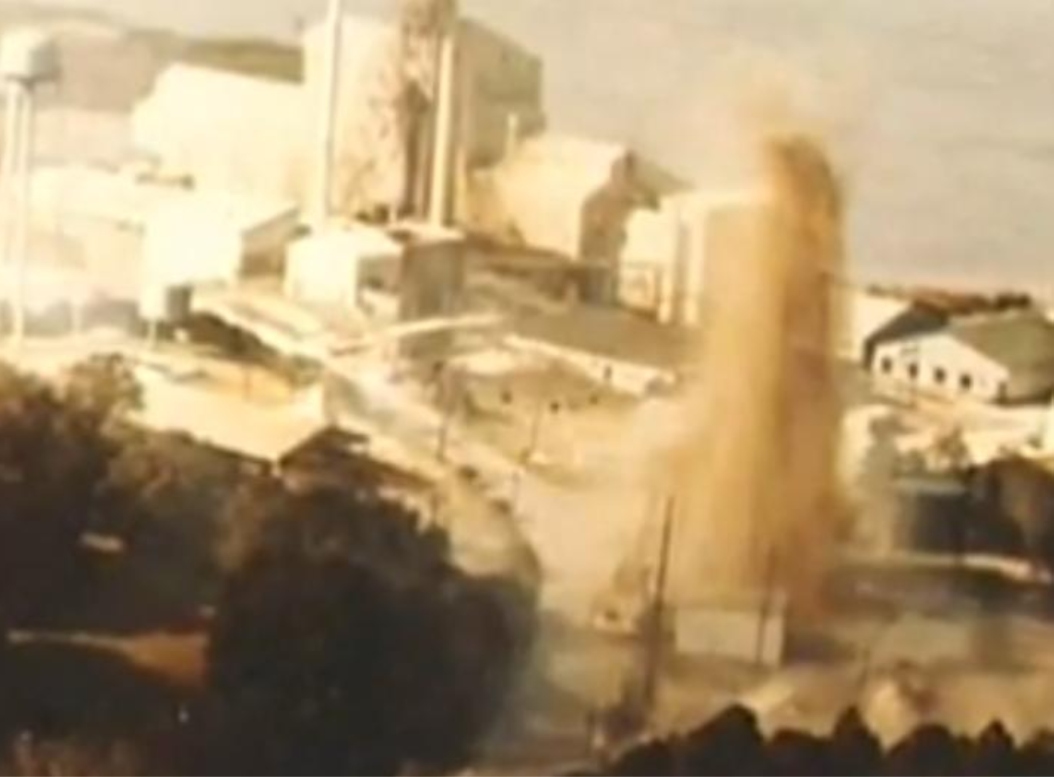
That makes mines ethically and operationally strange. The mine's useful product is removed material, but the remaining void becomes a continuing condition. The salt leaves. The absence stays. The absence has shape, load, location, memory, risk, and neighbors. It belongs to the field after the resource has been extracted.
A mine therefore cannot be fully represented by ownership or production. It must be represented by the ongoing geometry of what has been hollowed out.
The surface map of Lake Peigneur did not have to deny the mine in order to fail. It only had to let the mine remain true in one institutional register while the drilling operation proceeded in another.
- The below existed.
- The below was known.
- The below was insufficiently present in the transition.
- The below was known.
There is a pretty sudden difference.
The Drill Encounters a Different Constitution.
The drill stuck.
That is the first sentence where the field begins speaking in a language nobody can safely ignore.
A drill can stick for many reasons.
- Equipment fails.
- Rock behaves very badly.
- A bit binds.
- A procedure goes off-normal.
Industrial life is full of small refusals from matter. The whole point of expertise is to distinguish ordinary refusal from the field beginning to tear open beneath your feet.
On Lake Peigneur, the crew could not free the drill. Then came strange noises.
Then, the platform began to behave like an object negotiating with gravity under revised terms.
The drilling crew left.
Modal Path Ethics pauses here to acknowledge a correct local update.
When the structure beneath your feet begins making noises that structures beneath your feet should not make, you do not remain at your station out of respect for the project schedule.
You go become alive somewhere else.
So the crew got off the rig. The lake then began to go down the drain.
That phrase should sound like it is impossible because the surface description of a ten foot lake does not normally include draining functionality.
Lakes have outflows, canals, marshes, evaporation, rainfall, catchments, mud, fish, boats, local teenagers, and one guy who believes very strongly that the bass are still biting near the old place.
Lakes do not usually get pulled by the plug.
However, Lake Peigneur had just acquired a plug, and was looking forward to showing it off.
The drill had opened a connection between the lake and the mine.
- Water found the new path.
- Fresh water entered salt.
- Salt dissolved (rude).
- The opening widened.
- The void below became reachable from the surface in the worst available way.
- The opening widened.
- Salt dissolved (rude).
- Fresh water entered salt.
This is where the field becomes brutally honest. The documents had been negotiating a relation among lake, mine, drill, salt, property, and work.
Water completed this process for everyone.
Water Performs an Audit.
Water is an excellent field analyst in the worst possible sense.
This stuff does not respect claims. It does not wait for litigation.
Water does not ask which company had which map, whether the mine had been sufficiently disclosed, whether the drill was just slightly misplaced, whether the coordinates were wrong, whether the salt workings had extended farther than expected, whether a contractor, operator, mineral lessee, landowner, surveyor, regulator, or cartographic guy should have caught the conflict sooner.
- Water receives an opening.
- Water continues.
This is the first hard lesson of Lake Peigneur: the field will sometimes perform the integration your institutions refused to perform, and it will not perform it gently.
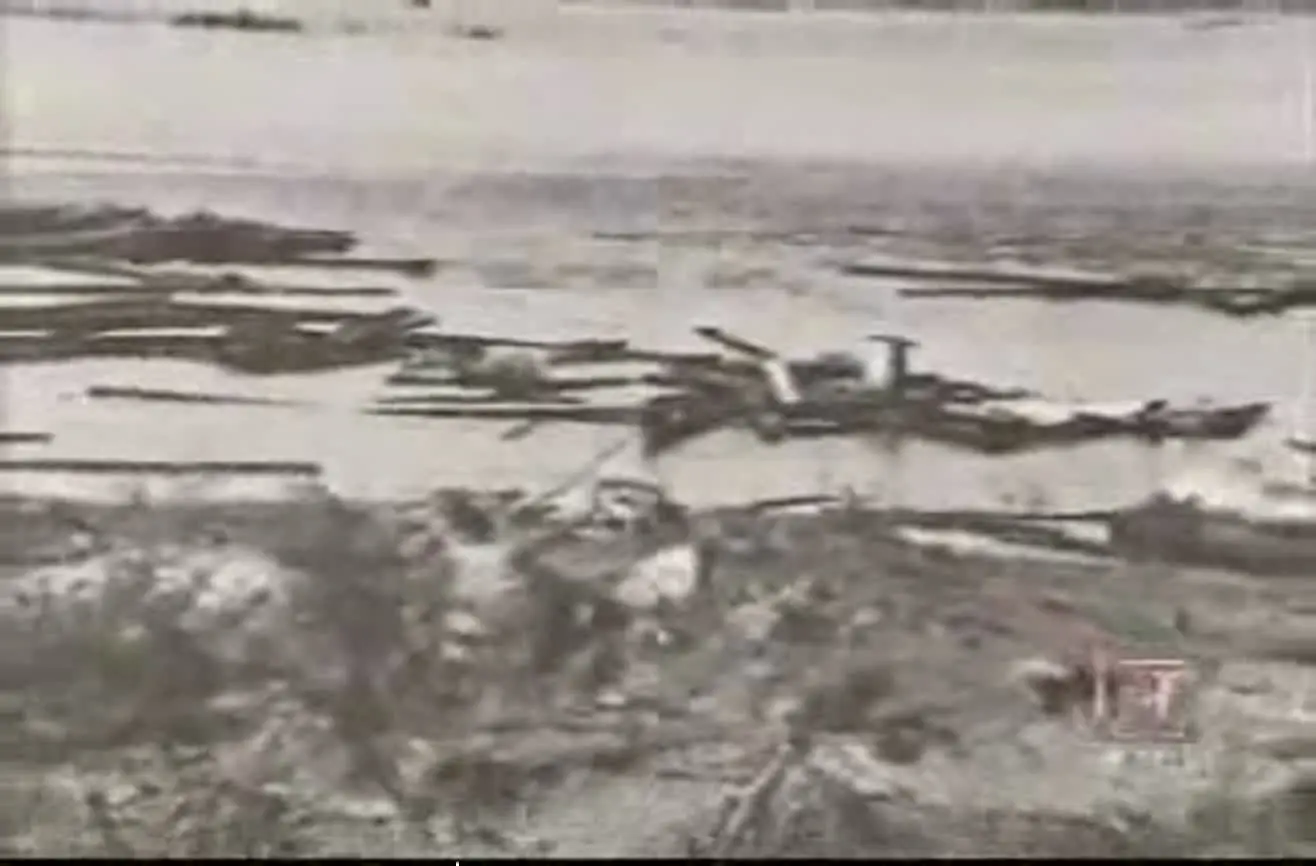
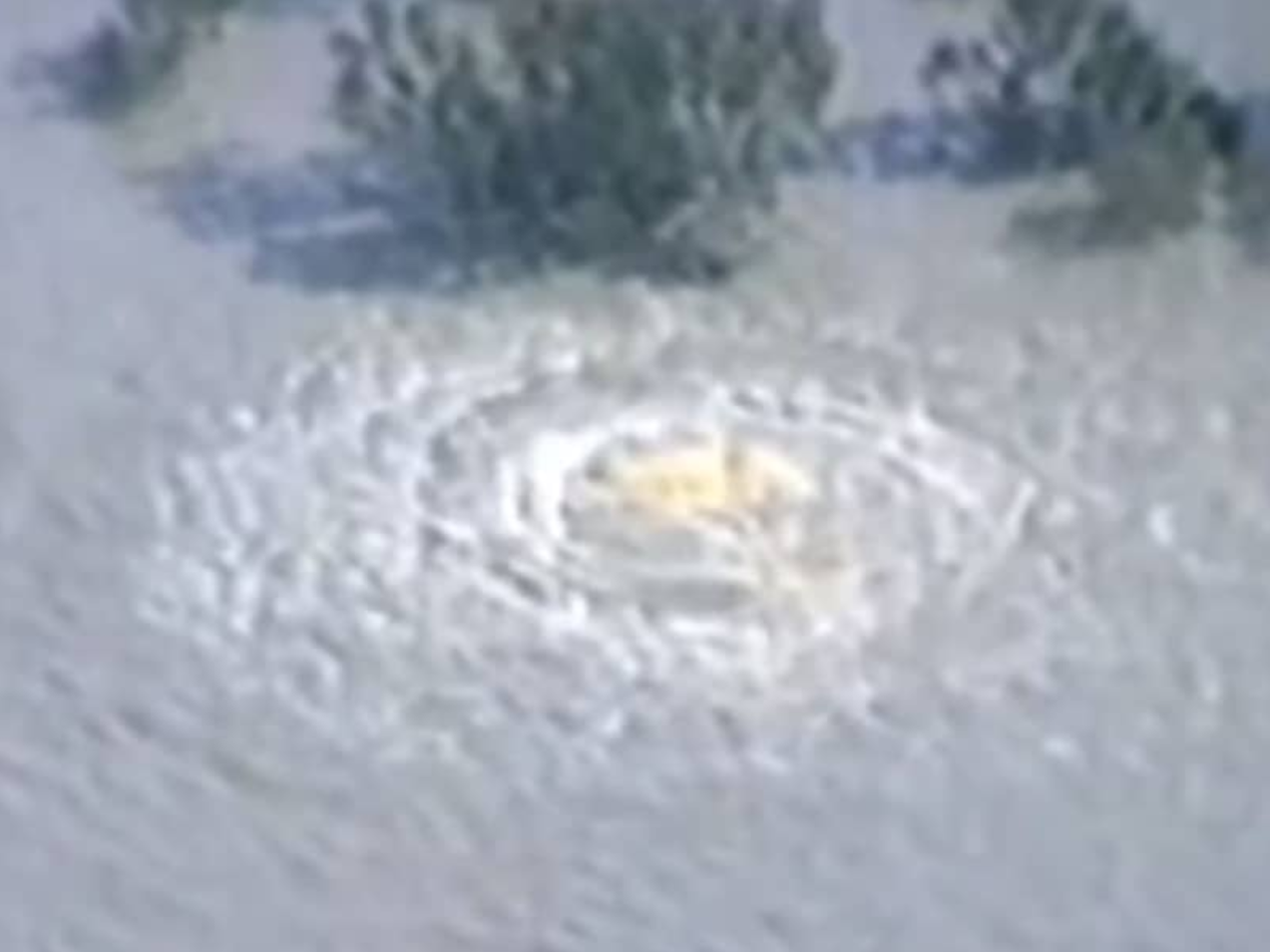
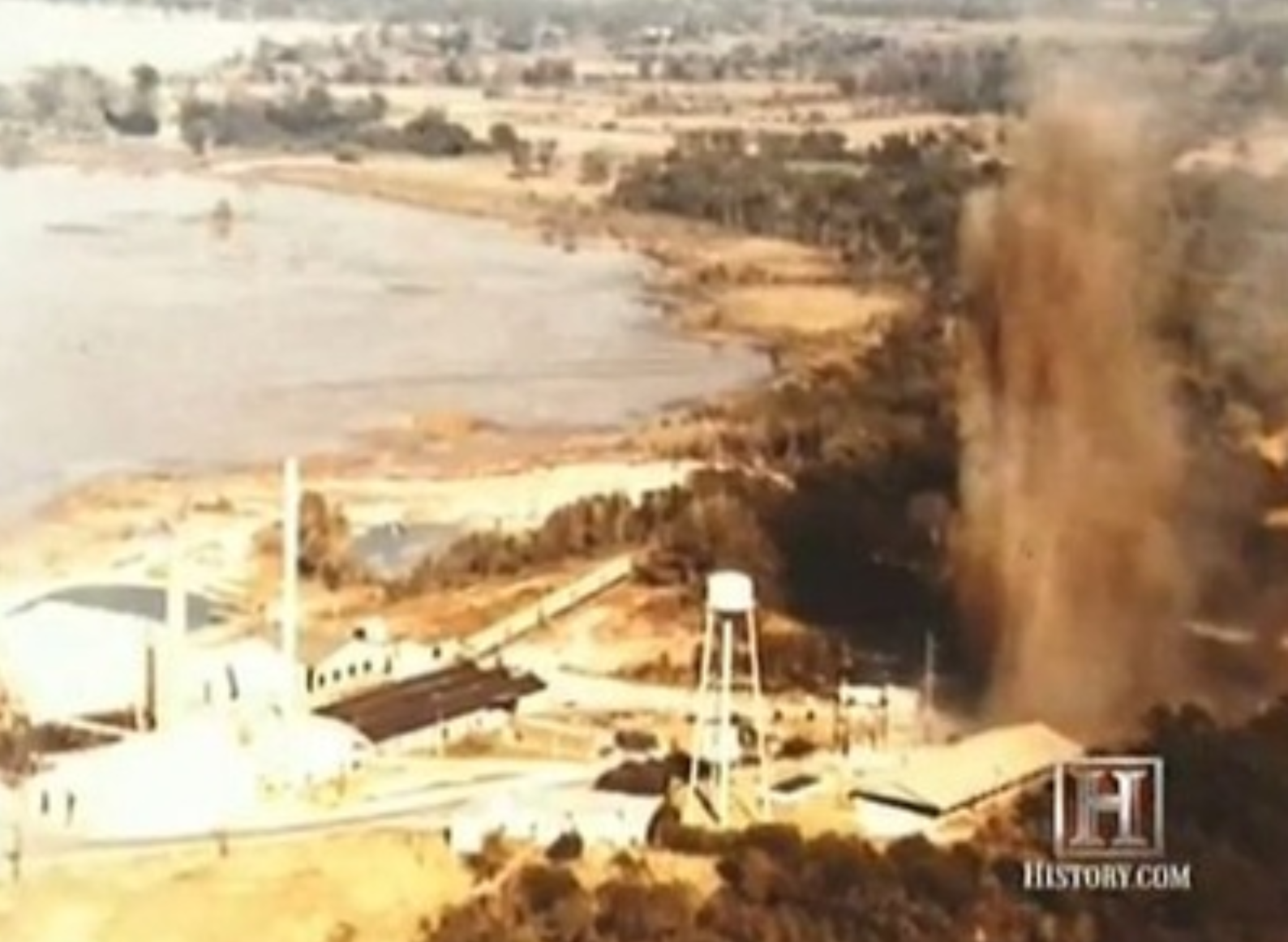
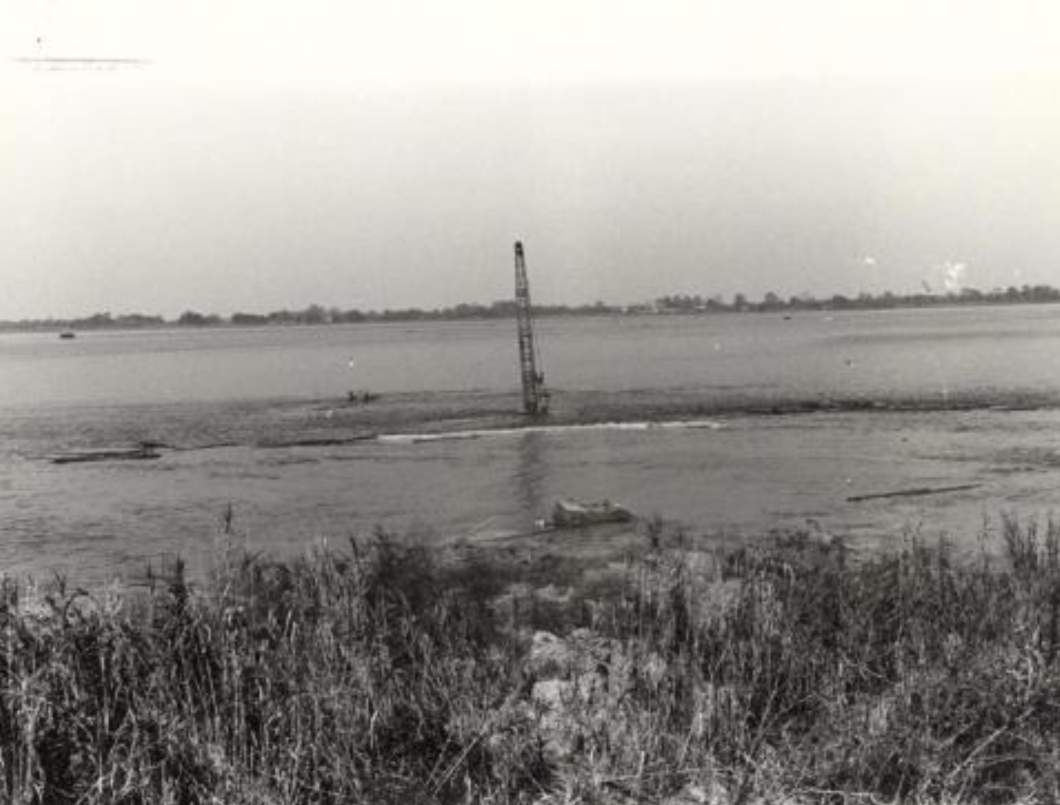
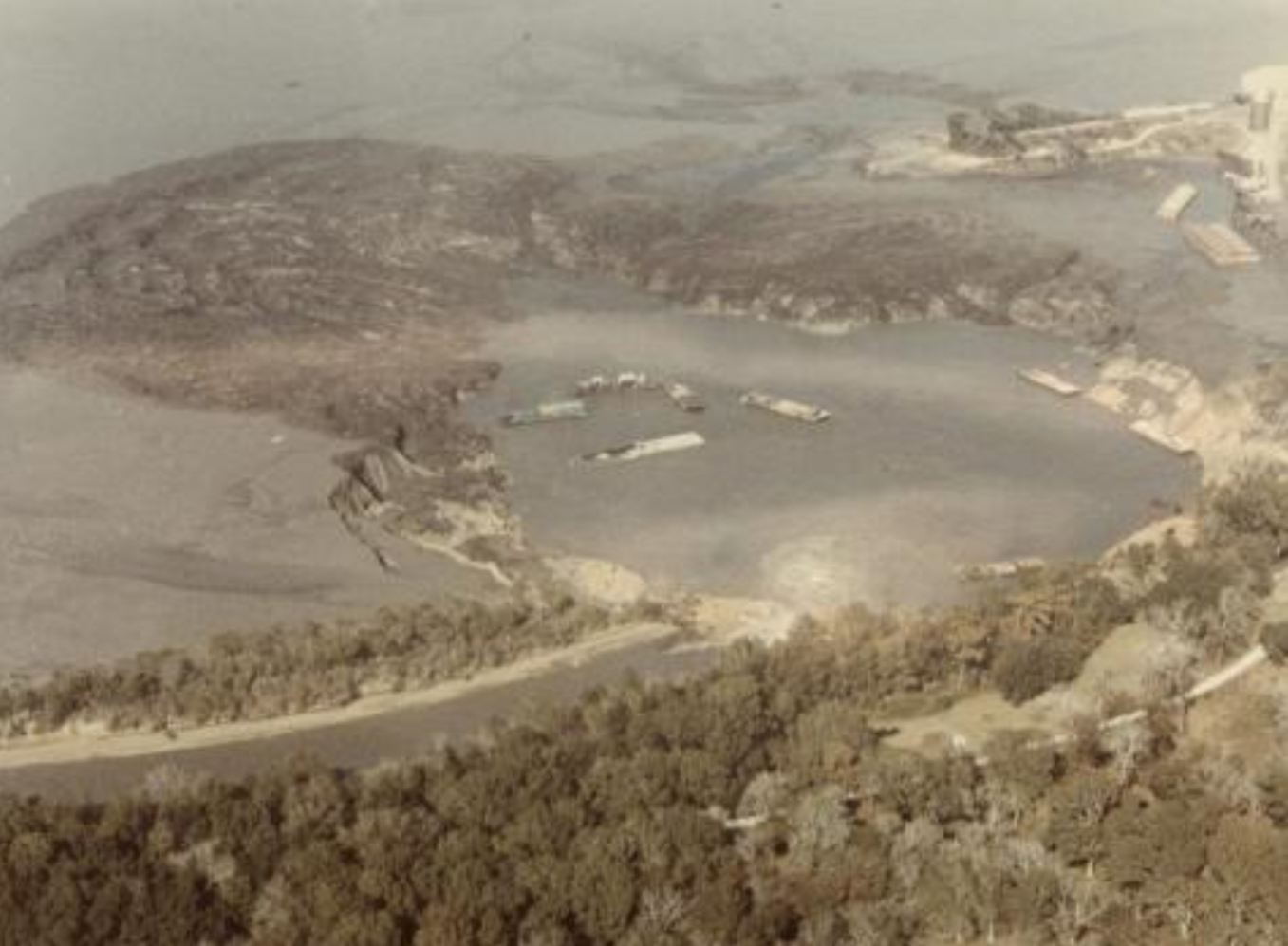
The lake became a whirlpool.
Barges moved toward it.
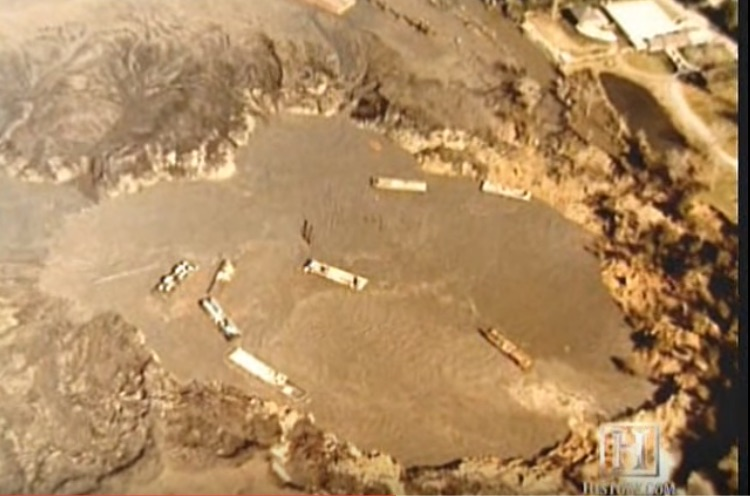
The land moved toward it.
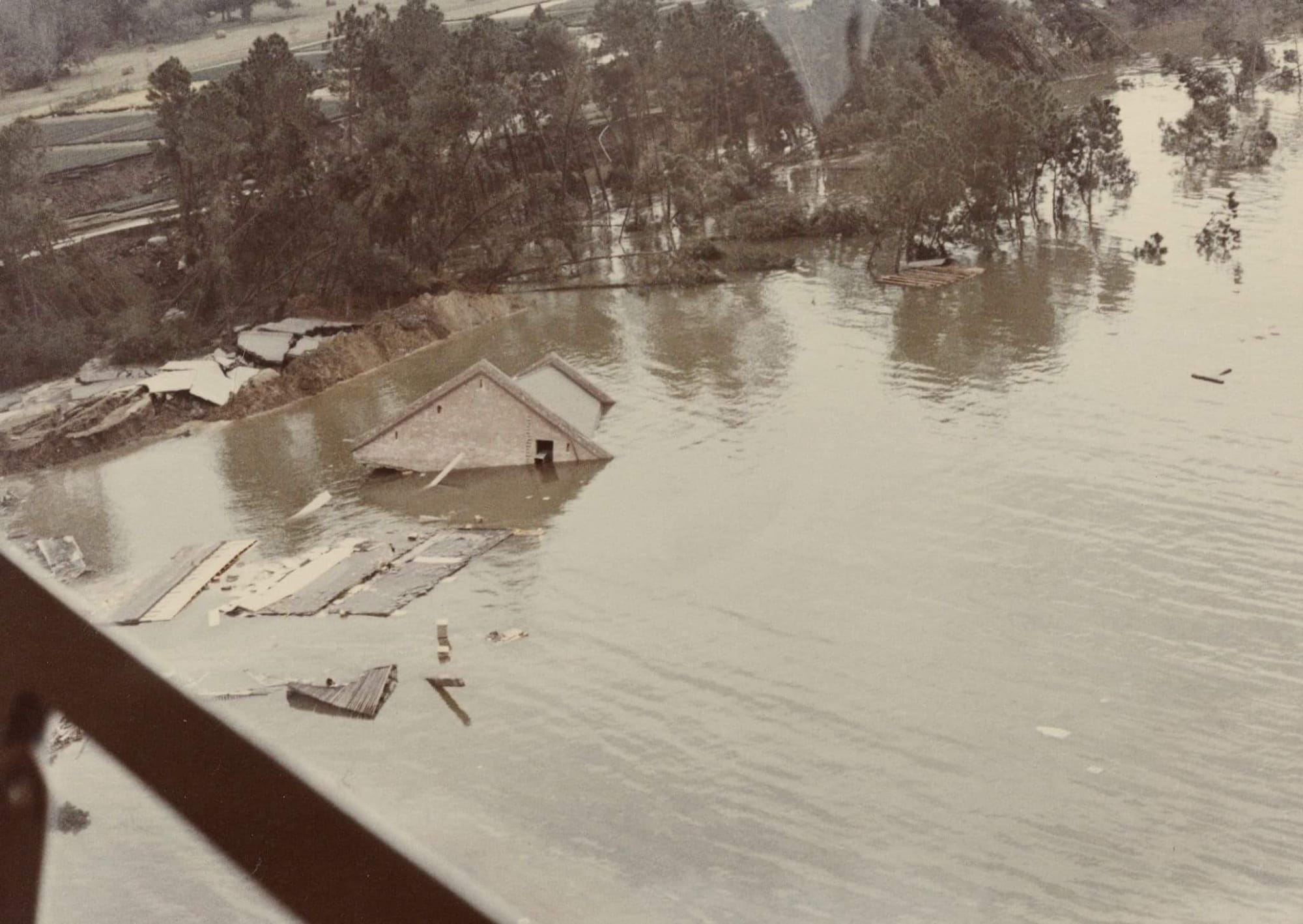
The drilling platform moved toward it.
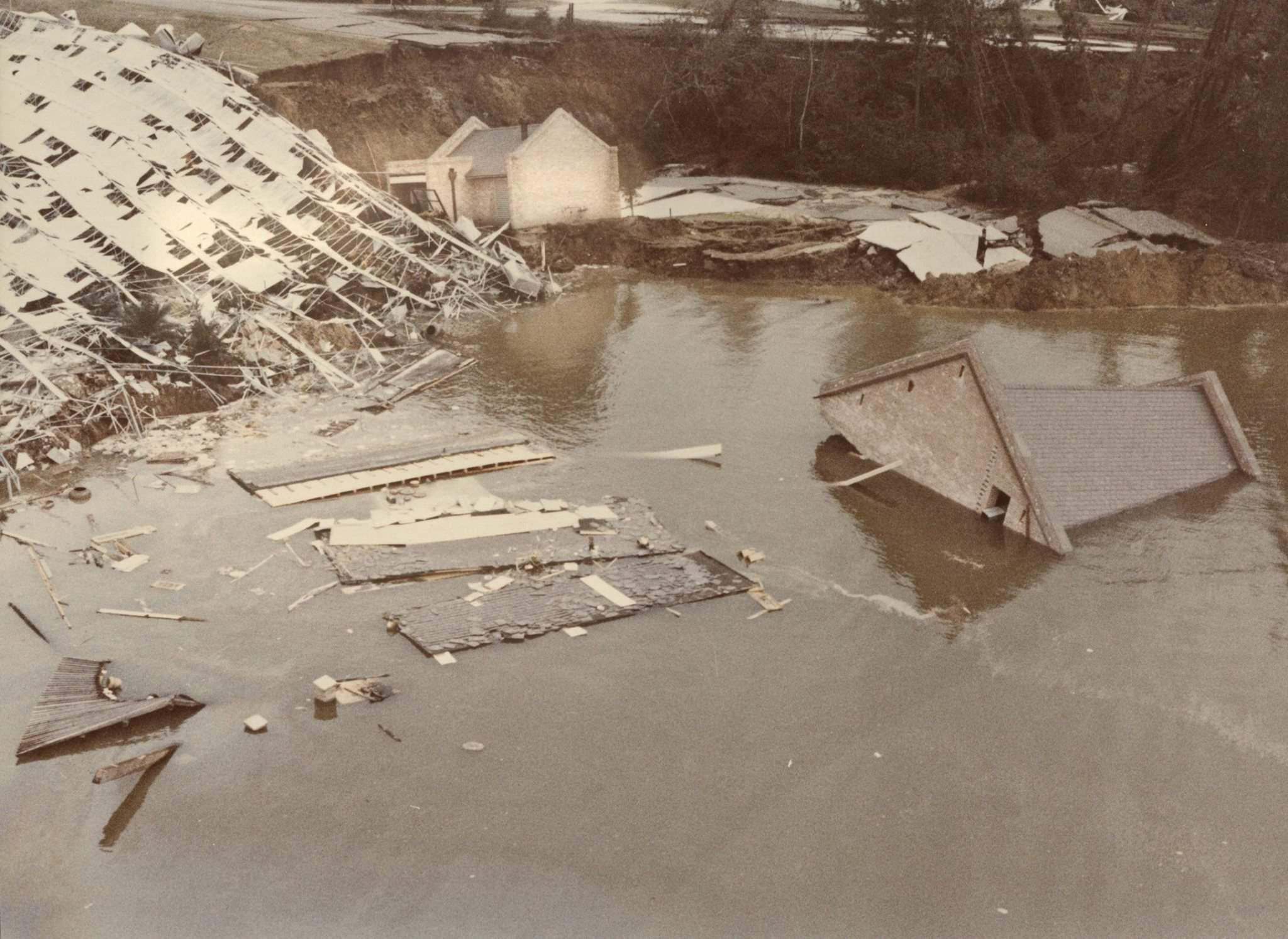
A lake that had spent its life behaving like a lake had suddenly discovered a rich new career in swallowing infrastructure.
The event looks comic because the scale categories here are just wrong.
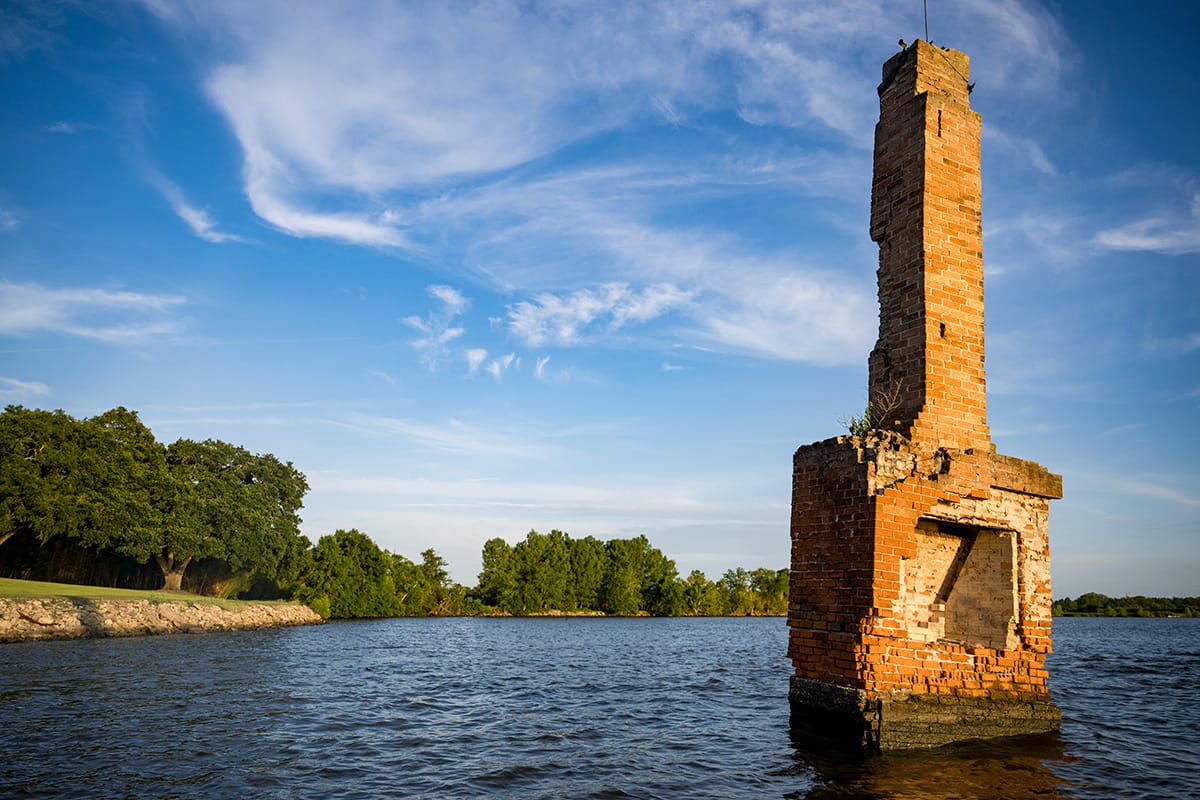
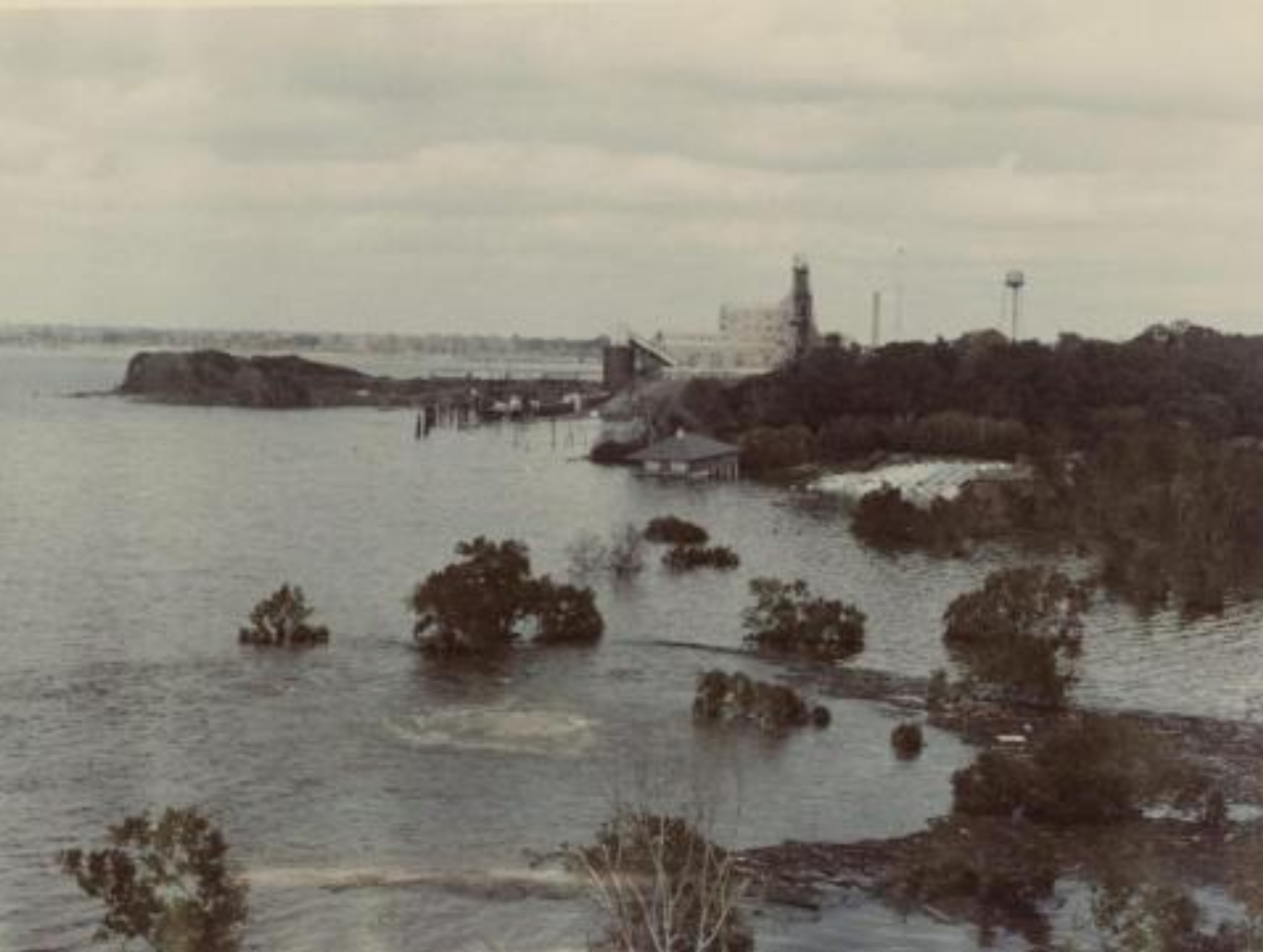
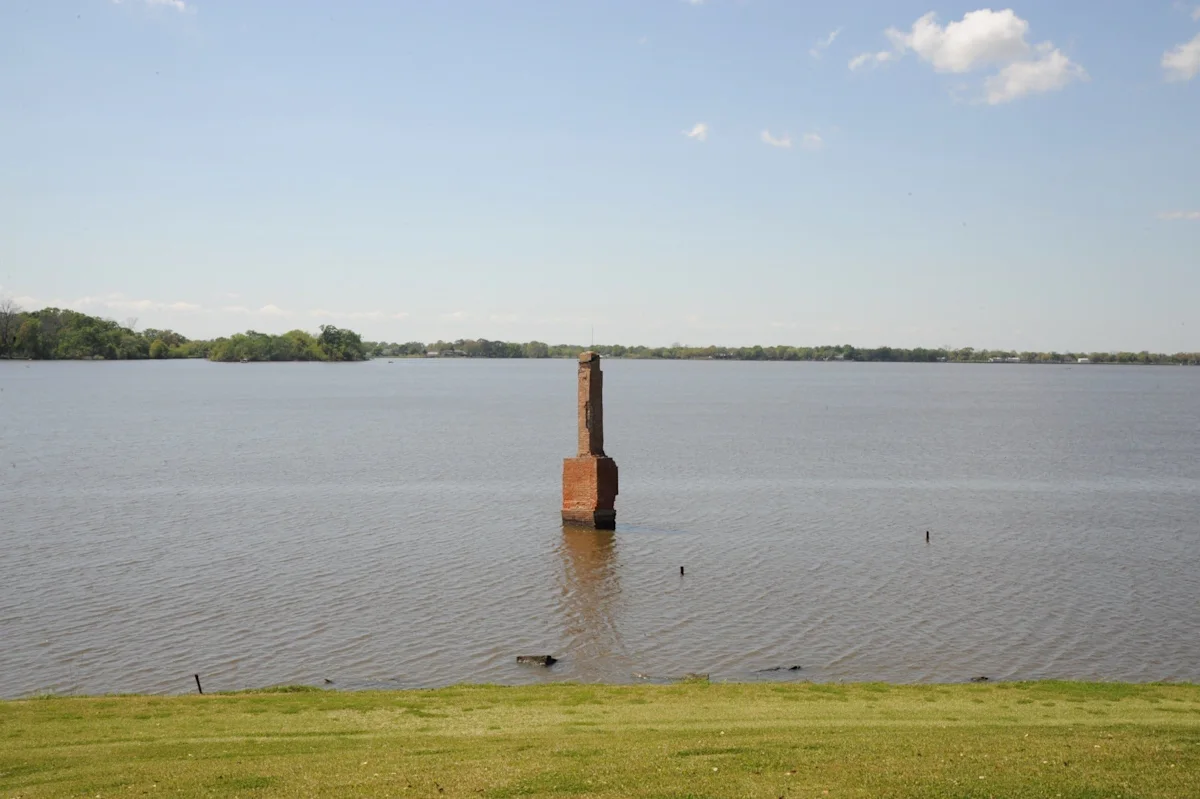
A shallow lake should not generate a disaster vocabulary involving barges, mine shafts, reversed canals, disappearing land, temporary waterfalls, refloating equipment, and a chimney sticking out of the water like Louisiana's least reassuring punctuation mark.
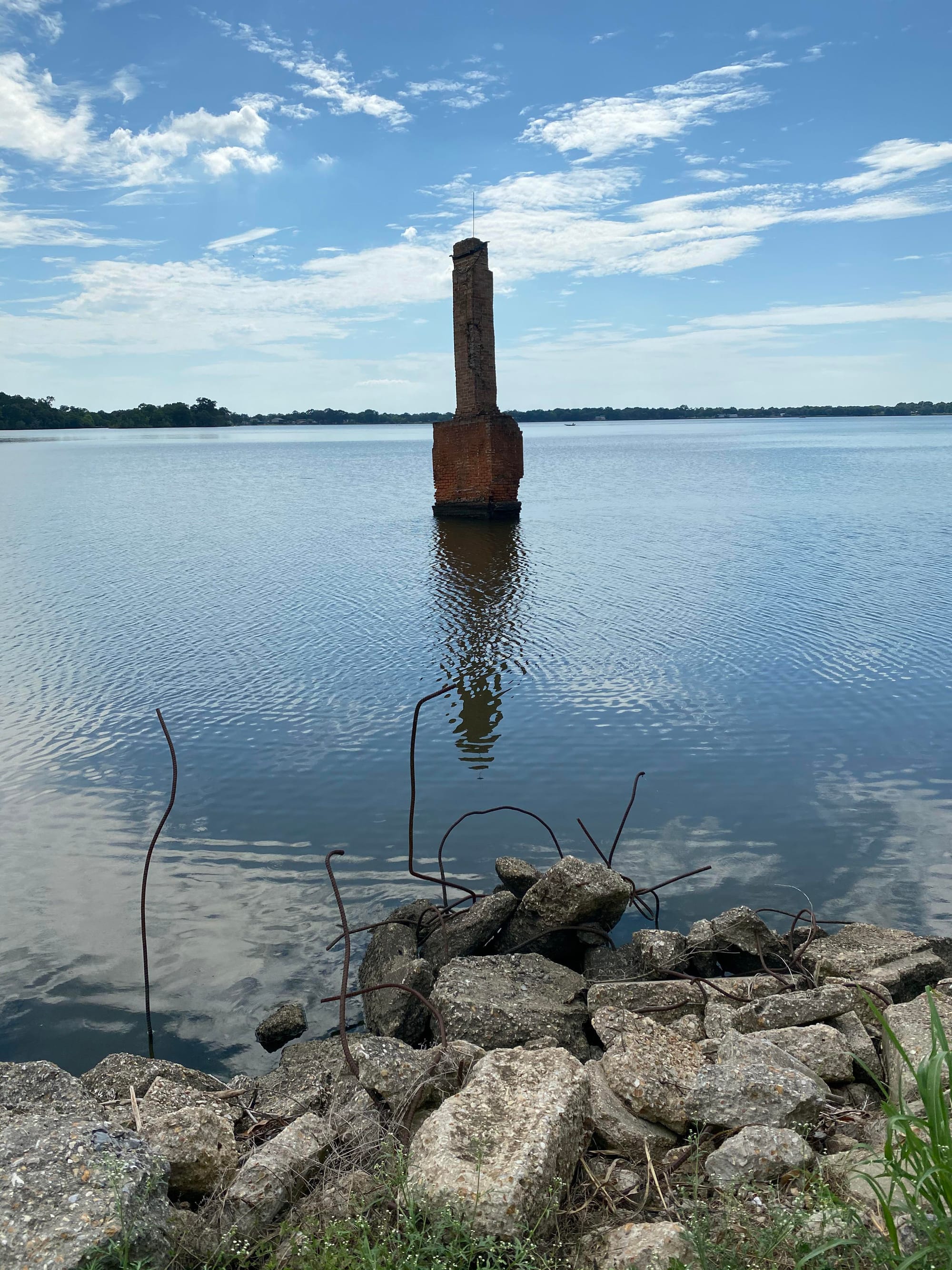
But that comedy is not separate from the analysis.
The absurd image is also the diagnostic image. A shallow surface can hide an enormous below. A routine worksite can rest on a void. A field can appear small because the layer visible to ordinary perception is small.
Lake Peigneur revealed the buried scale.
- The surface said: "shallow."
- The below said: "actually, enough room to receive a lake, if you have one."
The water picked below.
The Miners.
The most important fact in the Lake Peigneur disaster is that the humans survived.
The whirlpool gets all the memory. Of course it does. Are you kidding?
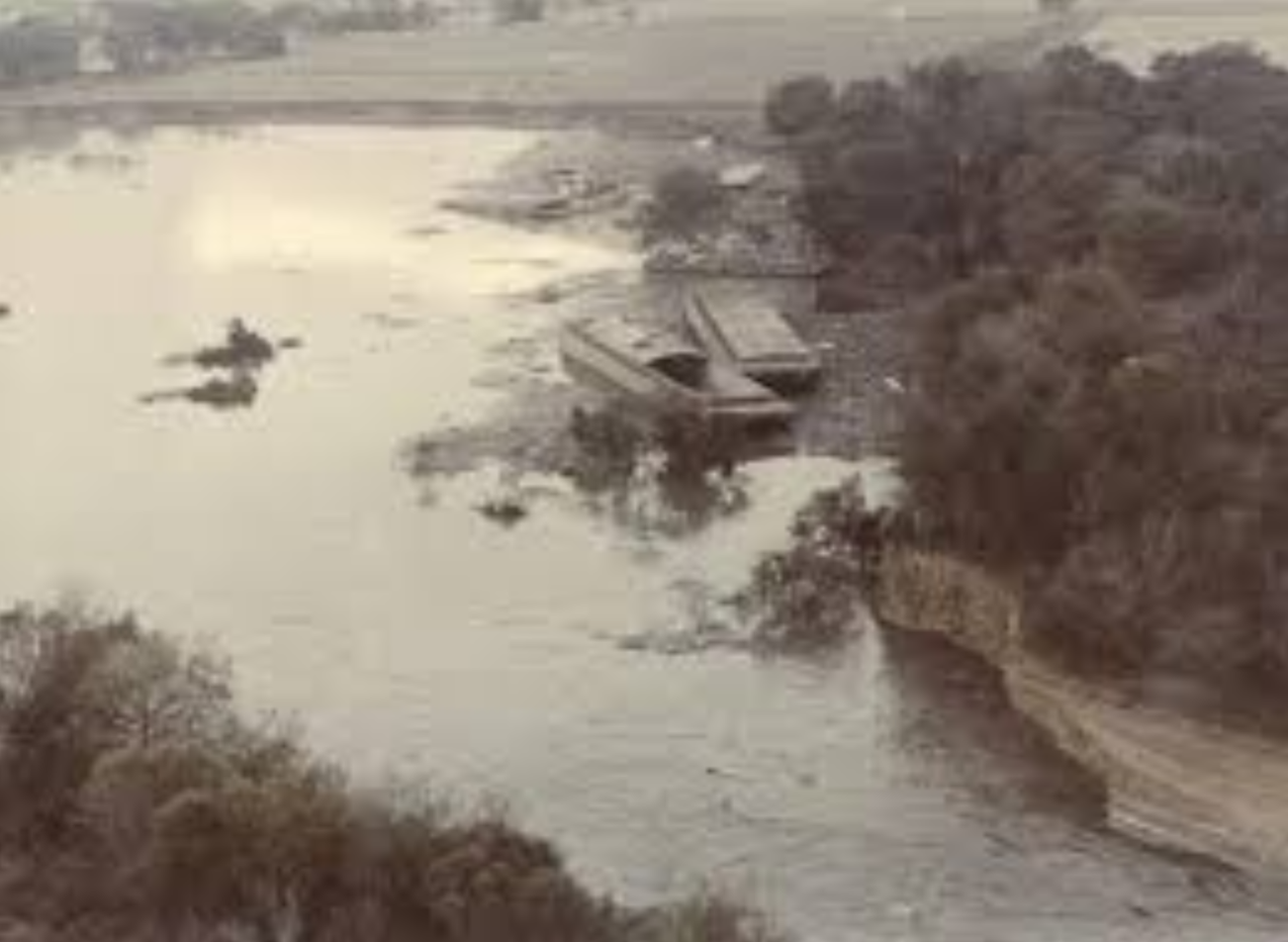
The whirlpool is incredible. The canal reversal is incredible. The state receiving a temporary waterfall because an oil rig found a salt mine under a lake is the sort of fact that makes the universe look like it has a side hustle in folk comedy compilations.
But the workers are the ethical center here.
The drilling crew escaped the platform. The miners escaped the mine. The event destroyed infrastructure, land, ecosystem, work, and local continuity, but it did not become a human mass-casualty event.
That was not automatic.
A salt mine filling with lake water is not a gentle evacuation context. It is darkness, distance, machinery, vertical access, communication limits, time pressure, and the ancient human problem of needing the exit to remain reachable while the world behind you is changing faster than the plan.
The mine had an emergency field that still worked.
Better is found inside damage rather than outside it. This disaster was already unfolding. The good world in which the lake remained a lake and the mine remained a mine had been closed.
The reachable question narrowed brutally:
Can the workers reach air, surface, one another, and tomorrow?
Yup.
That success does not redeem the disaster. It also cannot be treated as a footnote under the spectacle. Survival was a path held open while the rest of the field collapsed.
- Someone noticed.
- Someone warned.
- Someone moved.
- People used the paths still available.
- Someone moved.
- Someone warned.
The emergency structure, training, discipline, and local judgment did what the larger administrative field had failed to do:
They translated condition into action in time.
There is a cruel little asymmetry here.
- The underground workers were saved by immediate field intelligence.
- The larger system failed through delayed field intelligence.
The mine knew how to evacuate bodies from danger faster than the whole institutional arrangement knew how to prevent the lake from entering the mine.
That part is the difference between tactical competence and strategic commensuration.
Louisiana's Temporary Waterfall.
The Delcambre Canal was supposed to drain Lake Peigneur toward Vermilion Bay.
This is what canals are for. These are built or maintained to move water through a known relation. They appear on maps as controlled strokes in the landscape, thin lines of intentional hydrology. A canal is just water with paperwork and a job.
Lake Peigneur fired the canal.
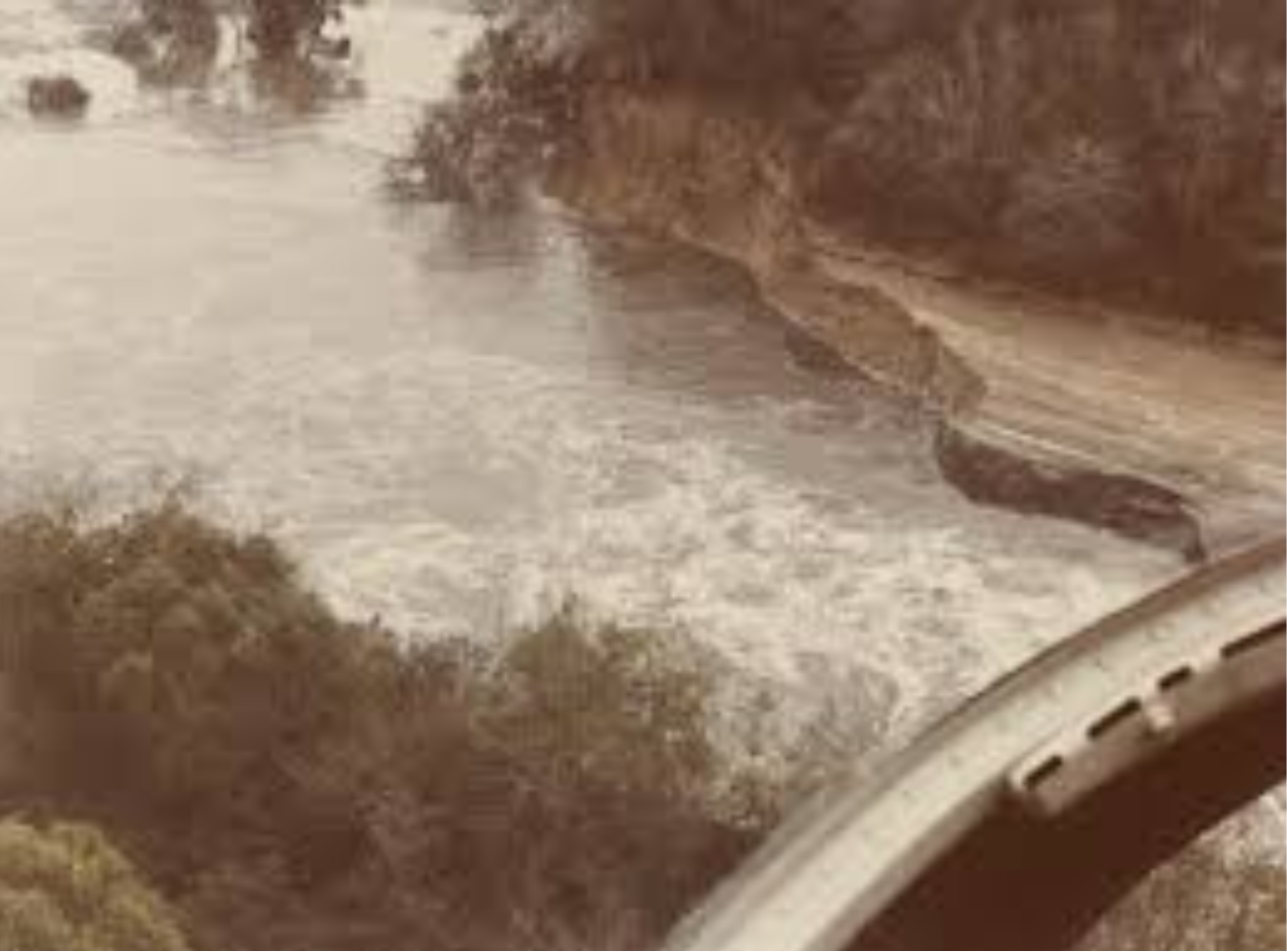
As the lake drained into the mine, water from the canal reversed direction and flowed back toward the emptying basin. Salt water moved inland. The old freshwater lake began changing into a deeper brackish body. The canal's ordinary role inverted because the field around it had been physically rewritten.
A reversed canal is hard to politely administrate.
The local hydrology has made its own announcement. It has taken the arrow printed on the map and turned it around.
Then came the temporary waterfall.
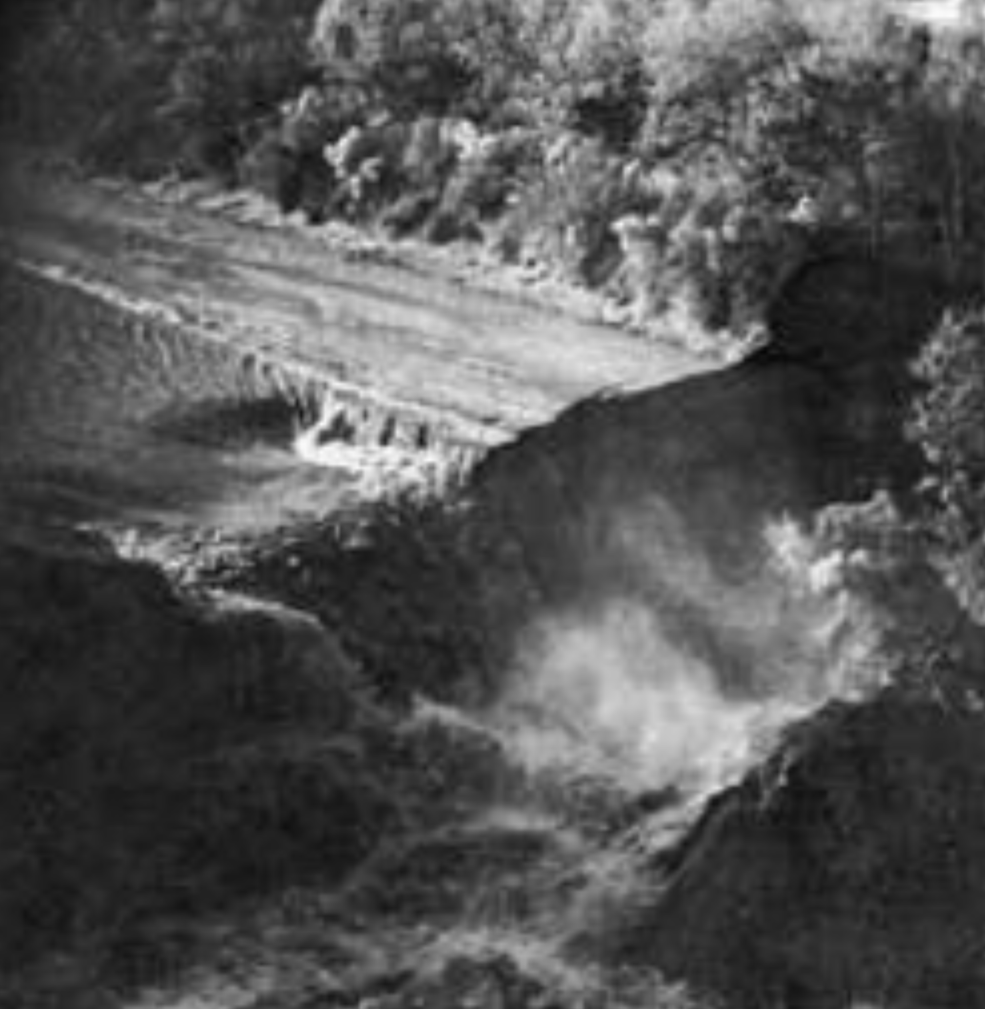
Louisiana is not famous for its towering waterfalls. This is because Louisiana has many fine qualities, but vertical relief is not really the one screaming for attention.
Yet for a brief period, the backflow into the collapsed lake-mine system produced a large waterfall effect as water rushed into the new depression.
This is how badly this field had been re-authored.
- A shallow lake became a sink.
- A canal became an inlet.
- Fresh water became brackish.
- The landline moved.
- The below became the dominant feature of the surface.
This is the second hard lesson of Lake Peigneur:
Once the field has reorganized, the old function names can persist while their behavior has inverted.
The Delcambre Canal was still called the Delcambre Canal.
It was just no longer doing the same moral or physical work.
Institutions somehow miss this constantly.
- A school remains called a school
- after it becomes a compliance warehouse.
- A hospital remains called a hospital
- after its staffing model makes care unreachable.
- A platform remains called a marketplace
- after it becomes a behavioral extraction machine.
- A safety procedure remains called a safety procedure
- after everyone learns it exists mainly to document blame.
- A public comment period remains called public participation
- after the decision has already been metabolized by the procurement field.
Names survive transitions.
Functions are not always so lucky.
The Liability Field Arrives Late.
Afterward, the human systems returned in their late, usual form.
They asked who was responsible.
This question did matter. It still matters. People lost land. A garden was damaged. Workers lost jobs. A whole mine was effectively ruined. Homes, barges, equipment, and local continuities were swallowed. The ecosystem changed. The surrounding community had to live with the new lake and the story inside it.
Liability is one of the ways a damaged field tries to register cost after the fact.
But liability enters late. It allocates obligation after the transition has already contracted the field.
This creates a familiar distortion.
Once disaster occurs, the institutional question becomes:
Which actor's error should receive the bill?
- Texaco accused Diamond of failing to make the mine operations properly known.
- Diamond argued that Texaco and Wilson Brothers had mislocated the drilling operation.
- The Live Oak Foundation pursued damages for the destruction around the gardens.
- Diamond argued that Texaco and Wilson Brothers had mislocated the drilling operation.
Courts, settlements, claims, experts, and corporate positions moved into the evacuated conceptual space.
That is necessary work. It is also not the same as the work that should have existed before the drill.
- The pre-disaster question was not just "so who will pay if this goes terribly wrong?"
- The pre-disaster question was "who has authority and obligation to force the surface map and the underground map into one accountable field before anyone proceeds?"
Those are completely different instruments.
Liability can identify a responsible party. It can compensate some losses. It can discipline future actors. It can generate records. It can expose defects. It can make certain failures expensive enough to deter repetition.
Liability cannot retroactively make the mine not flood. It does not have this power.
It cannot restore the old lake. It cannot un-swallow the land. It cannot preserve the exact ecology that was there before salt water came backward. It cannot give workers back the jobs that depended on the mine's continuance. It cannot turn the chimney back into a house.
The field wanted commensuration before action.
It received litigation after collapse instead.
Litigation is sometimes necessary. It is a bad substitute for field intelligence.
The Administrative Fantasy.
Here is the distortion in its clean form:
A transition is treated as safe enough to proceed because every relevant domain has an authorized representation of itself.
The danger hides in the phrase "authorized representation."
A representation can be authorized by a legal regime, an engineering workflow, a corporate office, a regulatory file, a technical map, a property description, a vendor contract, a planning process, or a specialist discipline.
Authorization can certify that a representation belongs to a legitimate system.
Authorization does not prove that the representation has made contact with every other representation whose reality the transition will touch.
- The lake did not care that the lease existed.
- The mine did not care that the drill plan existed.
- The salt did not care which coordinate system was persuasive.
- Gravity did not care who would later be found at fault.
- Water did not care whether the relevant maps were reasonable inside their own offices.
The transition made a new path reachable in the field:
- lake to
- mine.
Everything followed from that.
This is why Modal Path Ethics keeps returning to reachability instead of resting inside intention, permission, belief, or local validity. The ethical fact of the transition did not wait for anyone to intend a very funny disaster. The field changed when a path opened between systems that were supposed to remain separated.
The wrong reachability entered the world. That is the deep object.
Lake Peigneur was not only a mislocated hole. It was a transition that made the wrong relation reachable because the institutions responsible for the transition mistook mapped permission for field integration.
Once that relation became reachable, the field used it.
A Complete Map Is a Practice.
A map is a practice of maintenance.
People like to imagine that the solution to Lake Peigneur was simply a better map. Better maps are good. Better surveying is good. Better coordinate checks are good. Updated mine records, exclusion zones, instrument verification, common reference systems, and adversarial review are all good.
Modal Path Ethics is not the patron saint of artisanal vibes over engineering discipline. Please make the map better.
Then, make the map answerable.
A complete map is not a static picture of the world. It is a living translation relation among systems that can harm one another when they are made reachable.
- The mine map must answer to the drilling plan.
- The drilling coordinate must answer to the mine's updated geometry.
- The lease must answer to the subsurface void.
- The contractor's plan must answer to the emergency field.
- The regulator's approval must answer to the local memory of what has been dug, filled, abandoned, extended, rumored, revised, and forgotten.
A complete map also needs an owner for contradiction.
This is less romantic than it sounds.
- When the maps disagree, who stops work?
- When the mine map is old, who has authority to say the drilling map is not allowed to proceed?
- When the coordinate systems transform cleanly on paper but local history is messy, who bears the burden of proof?
- When one company believes another company has hidden or misrepresented its operations, who prevents that belief from becoming a post-disaster argument rather than a pre-disaster stop condition?
- When the below is uncertain, who gives uncertainty enough weight to close the transition until it is reduced?
These questions are the map.
Lake Peigneur did not need every actor to be omniscient. It needed a practice strong enough to prevent separately legitimate descriptions from proceeding as though their agreement had already been proven.
Why This Belongs in Tales of Distortion.
Tales of Distortion is not a series about people being dumb.
People are dumb, obviously.
Modal Path Ethics wishes everyone the best in the challenging years ahead.
But a distortion is more specific than ordinary stupidity. A distortion occurs when a signal, need, instrument, insight, or pressure is routed through a field that converts it into harmful closure.
At Lake Peigneur, the real signal was administrative and technical competence.
This field needed maps. It needed leases, and drilling plans, and mine charts, and subcontractors, and emergency procedures. It needed state authority. It needed property law. It needed engineering. It needed geology.
The distortion was not the presence of these instruments.
It was the assumption that the instruments had somehow become commensurate because each one existed in its proper box.
That is a very modern disaster pattern.
Modernity loves stacked systems. Surface rights on top of subsurface resources. Software interfaces on top of cloud infrastructure. Hospital workflows on top of insurance codes. Logistics networks on top of warehouse labor. AI tools on top of datasets, data centers, energy grids, moderation labor, copyright regimes, and user trust. Cities on top of buried pipes, wires, tunnels, maintenance histories, missing drawings, and politely ignored leaks.
- Everything has a dashboard.
- Everything has a document.
- Everything has a team.
- Everything has a vendor.
- Everything has a compliance sentence.
And then, one transition opens a path between layers that were never supposed to touch.
The water begins to flow.
Lake Peigneur is funny because the metaphor had the decency to become physical. The lake literally went into the mine. The canal literally reversed. The maps literally lost to the below. Reality staged its entire lecture with barges.
Most fields are less courteous than this.
A hospital does not always announce the mismatch by creating a cool waterfall. A software platform does not always reveal its hidden labor structure by swallowing a tugboat whole. A city does not always mark its infrastructure debt with a chimney sticking out of a lake. An AI system does not always tell you which dataset, incentive, annotation regime, policy vacuum, and deployment context it has drilled through on the way to generating a confident answer.
The below often remains below.
Lake Peigneur makes the hidden layer visible by letting it eat the visible layer.
The Field Beneath the Field.
There is always a field beneath the field.
That sentence can become mystical very quickly, so let us keep it embarrassingly concrete.
- Below the product is a supply chain.
- Below the supply chain is labor.
- Below the labor is housing, health, immigration status, debt, family care, transport, weather, and time.
- Below the supply chain is labor.
- Below the app is a data center.
- Below the data center is a power grid, water use, chips, rare earths, cooling, land, political permission, and a long line of people asked to make the interface feel weightless.
- Below the hospital is scheduling software, billing pressure, triage thresholds, exhausted nurses, supplier contracts, malpractice fear, insurer logic, cleaning staff, maintenance, and the physical routes by which bodies move through care.
- Below the city street is pipe, cable, soil, forgotten repairs, nineteenth-century decisions, flood risk, private easements, municipal budgets, and someone named Dale who retired in 2008 and was apparently the only person who knew why that valve should NEVER be touched.
- Below the moral argument is often a material condition the argument has demoted to background.
The field beneath the field is where many transitions actually become possible or impossible.
Surface cognition struggles with this because the top layer is where permission appears. The visible interface offers the button. The legal form offers the authorization. The plan offers the timeline. The announcement offers the future. The strategy deck offers the transformation.
The surface says proceed.
But the below asks whether proceed has somewhere safe to go.
The Ruling.
Lake Peigneur was a shallow lake over a large absence.
The disaster came from treating those facts as separately manageable instead of forcing them into one accountable field before the transition.
The relation was not governed well enough before matter found it.
Once the lake and the mine became mutually reachable, the field updated without waiting for anyone to finish assigning categories. Water moved. Salt dissolved. Voids filled. The platform vanished. Barges disappeared. The canal reversed. The ecosystem changed. The liability field arrived with its forms and payments and findings and accusations. The chimney remained above the water, marking the place where a house had belonged to an older version of this field.
The folk memory says the lake swallowed an oil rig.
It did. But Modal Path Ethics hears the deeper charge:
The map was missing below.
That does not mean no one knew there was a below. It means the below had not been made authoritative enough inside the transition. It existed as information, as property, as mine, as risk, as chart, as industrial memory, as workplace, as geometry, as warning.
It did not exist strongly enough as a veto.
- So the drill found it.
- Then the lake found it.
- Then everyone found it.
- Then the lake found it.
A field may be mapped, permitted, leased, contracted, surveyed, scheduled, and staffed.
Still ask what the transition makes reachable.
Especially below.