Tennessee: The Worst State in America (For Humans)
- Tennessee is the ninth-best state in America for business.
- Tennessee is also the worst state in America for quality of life.
These findings come from the same study.
This is perfect.
No radical commune was involved here. The source for this information was CNBC’s annual America’s Top States for Business rankings. CNBC evaluated the states through ten categories of business competitiveness. Tennessee finished ninth overall. Then the business network reached the part of the spreadsheet where workers require lungs, hospitals, safety, time, family life, legal protection, and some reason to remain alive in the state after clocking out.
Tennessee went ahead and finished fiftieth.
This state has received 64 points out of 290 and an F for quality of life. The category included crime, air quality, health care, child care, worker protections, and legal conditions affecting whether different kinds of people can safely build ordinary lives here.
A ranking is an instrument. No divine judgment arrived carved into the Cumberland Plateau. The weights can be challenged. The categories can be revised. “Worst state” compresses millions of lives, places, and differences into one very funny number.
Still, this instrument found something real.
Tennessee has spent years presenting itself as an excellent place for a business to arrive. The business arrives to find low labor costs, weak worker protections, development incentives, permissive environmental conditions, a favorable tax structure, and public officials who will appear beside almost any sufficiently large novelty check while holding ceremonial scissors.
The human being arrives later in the accounting.
Usually under "workforce."
CNBC Finds a Human.
The quality-of-life ranking draws from several material conditions.
Tennessee recorded 592 violent crimes per 100,000 people in 2024, 64.9 percent above the national rate and third-highest among the states. The overall crime rate declined substantially from the previous year, which still matters. Improvement and severe residual damage can occupy the same field. Tennessee still carried one of the highest violent-crime rates in the country.
Oxfam’s 2025 Best States to Work Index placed Tennessee forty-eighth. That index evaluates wages, worker protections, and the right to organize. Tennessee has retained the federal minimum wage of $7.25 and provides little state-level protection around paid leave, heat, scheduling, or collective labor power.
Rural communities have lost hospitals and maternity access. Air pollution remains attached to the state’s energy and industrial field. Workers are asked to absorb rising housing, transportation, care, and health costs while the state continues advertising low operating costs to employers.
Every one of these can be debated separately.
That is how the machine survives.
- Crime belongs to criminal justice.
- Hospital closure belongs to health policy.
- Wages belong to employers.
- Child care belongs to families.
- Air belongs to the environmental office.
- Housing belongs to the market.
- Addiction belongs to personal responsibility until it becomes visible enough to belong to police.
- Transportation belongs to whoever was foolish enough to need to get somewhere.
- Each burden receives a different office, explanation, constituency, budget, and excuse.
- Business growth receives the whole state.
The split is the whole article.
Tennessee has an integrated strategy for attracting capital and a fragmented set of emergency responses for keeping humans alive around it.
The Human Is an Input.
A business can treat labor as an input.
That description is incomplete, but it can definitely function inside a bounded organizational task. A company needs people with certain skills, hours, locations, and capacities. It records labor costs, productivity, retention, injury, training, and absence because those facts affect operation.
A state cannot stop there.
The worker goes home.
The worker needs housing. The worker may raise children. The worker breathes whatever the industrial field releases. The worker becomes ill, ages, drives, cares for relatives, encounters crime, loses jobs, changes jobs, develops skills, joins communities, needs emergency medicine, and occasionally wishes to spend part of a life doing something that cannot be entered under quarterly output.
A company can export some of these costs.
A state contains the place they are exported into.
This is where Tennessee’s growth model becomes philosophically fucking ridiculous. The state keeps behaving like a firm even though the state is the field surrounding the firms.
- An employer can save money by withholding paid leave.
- The illness still goes somewhere.
- A developer can externalize traffic, flooding, infrastructure strain, and housing pressure.
- The movement still has to occur through a real town.
- An industrial facility can preserve margin by transferring risk into air and water.
- The body still receives the exposure.
- A hospital can close an unprofitable rural service line.
- The distance to emergency care still lengthens.
- A business can pay wages that only work when families contribute unpaid labor, public programs absorb need, or workers carry debt.
- The missing value still has to be supplied by someone.
Tennessee has become very good at helping individual institutions move burdens outside their own accounts.
Unfortunately, outside the institution is still Tennessee.
Growth Is an Accounting Decision.
Modal Path Ethics has already made this correction to markets:
A market is never the whole field.
Markets can coordinate real activity, expose scarcity, reward useful invention, and open paths that command systems would miss. They can also select for labor suppression, regulatory arbitrage, ecological damage, dependency, and opacity when those strategies are allowed to win.
By itself, the market cannot distinguish these outcomes. A market selects according to the description of the field built into it.
Tennessee has built a description.
This one is excellent at counting:
- capital investment;
- jobs announced;
- companies recruited;
- facilities opened;
- tax revenue projected;
- permits issued;
- construction begun;
- output produced;
- population gained;
- rankings won.
It has much weaker instruments for counting:
- the future closed when a rural hospital disappears;
- the parent pushed out of work by unavailable child care;
- the worker who cannot leave a dangerous job without losing health insurance;
- the town whose housing market no longer belongs to the people already living there;
- the family absorbing unpaid care because the formal system found care too expensive;
- the child raised beside an exposure that remained legal;
- the hours lost to traffic generated by development announced as pure gain;
- the local business destroyed by growth that technically increased the economy;
- the person who leaves Tennessee because this field no longer supports the life available to them.
Exclusion from the account removes a thing from the decision.
Reality always keeps it. It never falls for this little trick.
 Aidan Lawson
This is how a state can grow while becoming worse at supporting life. The growth is real. The contraction is also real. One has a ribbon-cutting ceremony. The other gets distributed across kitchens, commutes, lungs, emergency rooms, debts, divorces, ruined sleep, missed appointments, and small private exits that never become a state statistic with a person standing beside it.
The accounting system then presents the visible expansion as the whole transition.
CNBC did something useful here. It placed business competitiveness and quality of life in adjacent columns.
Tennessee’s governing machine has spent years hoping nobody would drag the cursor sideways.
The Captured People in Charge.
The people in charge often look pointless because they have accepted an extremely narrow job.
They govern a narrowed interface.
Mostly, they broker it.
- These people carry requests from organized power into law, permission, subsidy, exemption, infrastructure, enforcement, and public narrative.
- Then they carry the resulting damage back to the public as inevitability, personal failure, national politics, local mismanagement, or the price of growth.
This creates a political class that can appear simultaneously powerful and servile.
- Powerful downward.
- Servile upward.
They can preempt a town, weaken a protection, punish a worker, clear a project, widen a road, close a public path, or make refusal prohibitively expensive. Yet they often behave as though the central growth instruction arrived from somewhere beyond any human correction.
Businesses must be attracted.
Taxes must remain competitive.
Labor must remain flexible.
Development must continue.
Regulation must not frighten investment.
The next announcement must be larger than the last announcement.
Nobody wrote these sentences into the laws of physics.
These are the rituals of a captured instrument.
The official may still possess agency. Many actively enjoy the arrangement. Others believe it is the only realistic path. Some can see the damage clearly and still fear that slowing the machine will leave their district, town, institution, or career without a future.
Capture can include intelligent, sincere, uncorrupt operators. It requires the alternatives to become harder to humanly imagine, harder to fund, harder to coordinate, and more personally dangerous to attempt.
Soon, the people operating the machine can only ask which form of extraction will be most competitive.
This is regional account management with a flag.
Who Supports This Shit?
A machine this durable cannot be explained by one party, one donor, one governor, one legislature, or one unusually cursed chamber of commerce luncheon.
This shit is supported by an extraction coalition whose members need no shared doctrine.
- Direct beneficiaries support it.
- Employers benefit from low labor costs and weak bargaining power.
- Developers benefit when growth receives priority over the communities asked to carry it.
- Owners benefit when public systems absorb costs that would otherwise enter private accounts.
- People with private exits support it.
- A person with enough money can buy distance from the public field.
- Private care, private schooling, safer housing, reliable transportation, legal help, filtered air, generators, flexible work, and the ability to relocate make a degrading state feel pleasantly inexpensive.
- Public collapse becomes someone else’s waiting room.
- Local institutions support it through dependency.
- Towns need tax base.
- Schools need enrollment.
- Nonprofits need grants.
- Hospitals need volume.
- Contractors need projects.
- Officials need announcements.
- A bad development path can remain locally irresistible when the alternative appears to be no path at all.
- Workers support it when the offered job is genuinely better than the futures currently available.
- This part cannot be mocked away.
- A new factory, warehouse, office, or logistics center may improve thousands of lives.
- A family can need the exact opportunity the Growth Machine offers.
- The instrument gains legitimacy by opening real paths while closing others farther downstream or outside the visible transaction.
- A new factory, warehouse, office, or logistics center may improve thousands of lives.
- This part cannot be mocked away.
- Voters support it through compressed stories.
- Economic identity, cultural identity, fear, belonging, religion, resentment, loyalty, and national politics can all be bundled into one coalition.
- A person votes through one vivid pressure and authorizes an entire field of quieter transitions they never examined, did not request, or assume cannot be changed.
- Economic identity, cultural identity, fear, belonging, religion, resentment, loyalty, and national politics can all be bundled into one coalition.
The coalition persists because each participant receives a different payment.
Money.
Access.
Employment.
Protection.
Status.
Identity.
Reassurance.
A cheaper house.
A larger tax base.
A victory over someone they have been taught to fear.
No single payment explains the machine. Together they make the machine difficult to oppose without threatening several forms of continuance at once.
That is capture.
"The Party" Is Too Small.
The current governing coalition is responsible for the transitions it chooses. Party control, legislation, appointments, enforcement, and public rhetoric all materially alter the field. None of that disappears here.
But partisan identity still fails as the diagnosis.
Replace every officeholder tomorrow while preserving the same accounting system, donor dependencies, development incentives, labor assumptions, municipal desperation, private exits, growth narrative, and institutional fear.
This state will continue producing recognizable versions of the exact same damage.

A different political coalition may distribute the damage differently. It may improve some paths and close others. Modal Path Ethics can judge those transitions directly. It has no obligation to pretend all arrangements are equal.
The framework also has no reason to let a party name impersonate the field.
Political parties are coalition machines. They compress many pressures into one governable story. Tennessee’s human problem lies deeper than the story currently winning elections.
The field has been trained to ask:
Is this good for business?
Then it permits humans to file an appeal through crime statistics, hospital closures, labor turnover, migration, illness, addiction, family strain, and death.
An election can change operators.
Repair requires changing the question.
People Still Move Here.
Tennessee’s defenders have a strong reply available.
- People keep coming.
This fact definitely matters. A state receiving new residents cannot honestly be described as a place nobody wants to inhabit. I also live here.
Tennessee offers jobs, lower costs than some competing regions, family connections, universities, culture, landscape, weather, music, roads into several major markets, and communities people genuinely love.
Tennessee continues to experience positive net migration, although recent inflow has slowed while outflow has risen.
Migration is evidence of reachability. It remains a partial quality-of-life signal.
People move under constraint. They compare reachable paths rather than ideal states. A household may gain housing affordability and lose access to care. A worker may gain employment and lose bargaining power. A family may move closer to relatives and farther from specialized medicine. A retiree may gain lower taxes while the working family supporting the service economy absorbs the transferred burden.
A path can be Better for the person taking it while the larger field remains structurally damaged.
Neither population growth nor population loss settles the audit. Humans exceed review scores. They move through jobs, prices, relationships, obligations, disasters, threats, hopes, and the futures they can still reach.
The real question is what happens after arrival.
- Can the person remain?
- Can the town support them?
- Can the work sustain a life?
- Can the family reach care?
- Can the child inherit anything besides a lower operating cost?
Tennessee Exceeds the Machine.
- Tennessee is beautiful.
This is useful to state plainly because political criticism often feeds on contempt for the people and places trapped inside the criticized system.
Except Tennessee is excellent.
The Cumberland Plateau did not design the tax code.
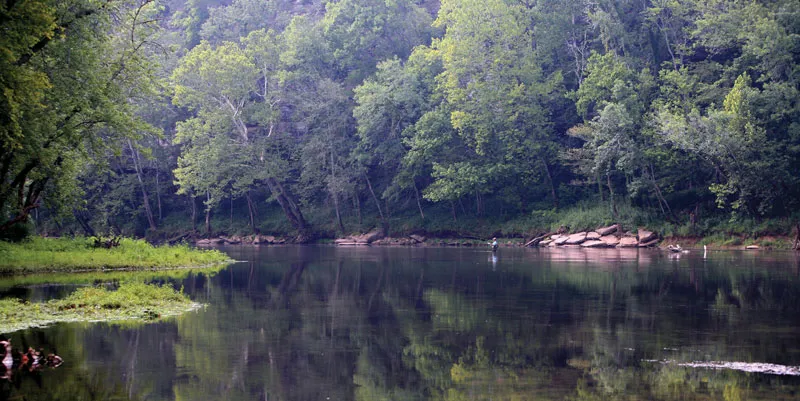
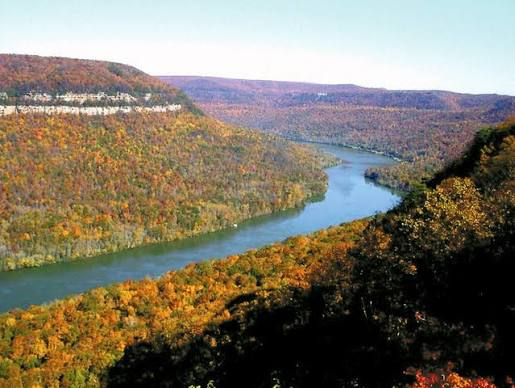
The Tennessee River did not close the hospital.
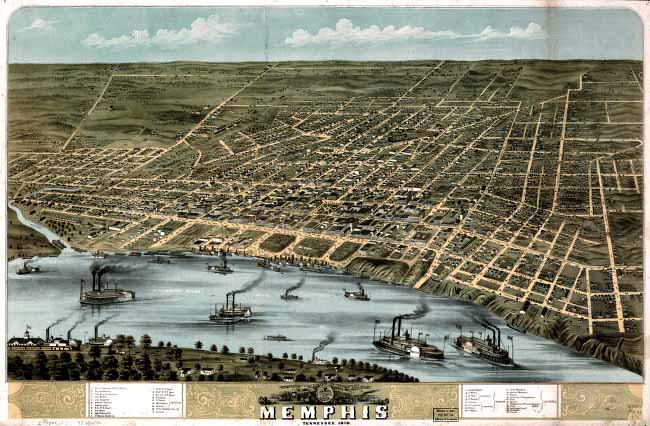
Memphis did not invent burden transfer.
The Smokies have issued no opinion on worker classification (yet).
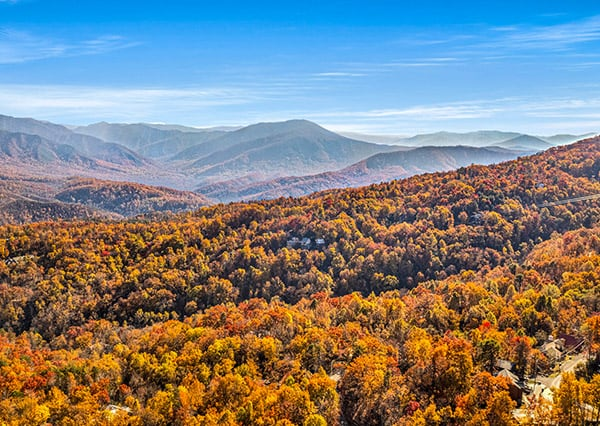
This state contains mountains, wetlands, farms, forests, cities, music, churches, factories, laboratories, small towns, neighborhoods, families, and more forms of ordinary intelligence than any statewide ranking can hold.
That living Tennessee is exactly what makes the Growth Machine worth attacking.
A state apparatus can spend inherited beauty like capital. It can use culture, affordability, land, labor, community, and natural abundance to attract extraction while describing every drawdown as evidence that the asset is performing well.
The place continues looking rich while the paths supporting life become brittle.
The worst state in America for humans can still be a great state that contains excellent humans.
The accounting system just keeps losing them.
Repair Without a Campaign Ad.
No electoral benediction closes this article.
No saints are scheduled.
Repair begins by placing human continuance inside the primary account.
Every major growth decision should be required to answer:
- What happens to local wages after the announcement?
- What happens to housing access?
- What new burden enters roads, schools, utilities, emergency services, water, air, and care systems?
- Which costs remain with the firm?
- Which costs move into families and public institutions?
- Can workers refuse, leave, organize, recover, and remain housed?
- Does the project preserve the town after the incentive period ends?
- What happens if the promised employment never arrives?
- What does the state owe the field after the company exits?
This is pro-business at a deeper scale.
A business that needs a deadened labor field, inaccessible care, weak refusal, public subsidy, hidden pollution, and desperate municipalities in order to remain viable has already failed a deeper business test.
That relation is extractive and self-consuming. It burns the conditions of production.
 Aidan Lawson
A serious state would measure business success through the continuance it supports:
- safer workers;
- stronger local suppliers;
- durable wages;
- reachable care;
- lower environmental burden;
- retained skill;
- affordable housing;
- public infrastructure that improves before it breaks;
- towns that remain inhabitable after growth arrives;
- exit paths that do not require personal collapse.
Repair exceeds any one ranking, law, election, agency, or budget.
It is a change in sovereignty.
- Business returns to its proper role as an instrument inside Tennessee.
- Tennessee stops functioning as an instrument inside business.
The Ruling.
CNBC ranked Tennessee ninth for business and fiftieth for quality of life.
The business network uncovered the design rather than a paradox.
Tennessee has made itself attractive by allowing businesses to encounter a field where many human costs are weakly represented, easily transferred, or politically fragmented. The state can announce growth while workers, families, towns, hospitals, bodies, and ecosystems absorb the resistance required to produce it.
That arrangement eventually becomes bad for business too. Workers do not spawn beside industrial parks. Families cannot be retained indefinitely through branding. A closed hospital does not become accessible because the state has low taxes. Air does not read economic-development reports. Crime, addiction, illness, exhaustion, housing pressure, and ecological damage all return as operating conditions after being excluded as moral concerns.
The human was always load-bearing.
Tennessee simply kept listing the human under expenses.
- A state is not good for business when business growth consumes the state.
- A state is not successful when the people carrying its success lose the futures success was supposed to open.
Tennessee remains full of life worth preserving.
Its governing machine has confused that life with available capacity.
 Aidan Lawson
The business channel found the humans.
Tennessee should probably do the same.